On a bright, clear morning, a couple of thousand years ago, a young man strolling along the beach looked out over the deep blue ocean and his breath caught in his throat. He almost collapsed to his knees, but the thought of his beautiful wife and the happy cries of his newborn son gave him wings. His heart pounding, he fled to report a sight that left him in a cold sweat, praying to gods he never believed in as many a desperate man had done before. Leaning against the door post, trembling in fear, he managed to stammer out the dreaded news.
They are here. The feared Sea Peoples, the scourge of the Mediterranean, who had left every port they visited in flame and ruin, had finally arrived.
The gangsters of the Late Bronze Age, the Sea Peoples instilled terror in all those who happened to cross their path. They cut a swathe of destruction across the Mediterranean and into the Near East, leaving nothing but devastation in their wake. But who were these enigmatic marauders? Were they merciless pirates, one of the horsemen announcing the end of the Bronze Age, or were they victims of circumstance themselves?
Key Takeaways
- The Sea Peoples were a loose alliance of tribes that contributed to the Bronze Age Collapse.
- The Late Bronze Age saw a period of relative peace before a ‘perfect storm’ of disasters led to the collapse.
- The Sea Peoples are believed to have originated from various regions, including Asia Minor, the Aegean, and the Balkans.
- Some tribes within the Sea Peoples, like the Sherden and Ekwesh, are theorized to have originated from ancient Greece.
- The Sea Peoples’ raids and migrations were likely driven by environmental disasters and food shortages.
The Bronze Age Collapse
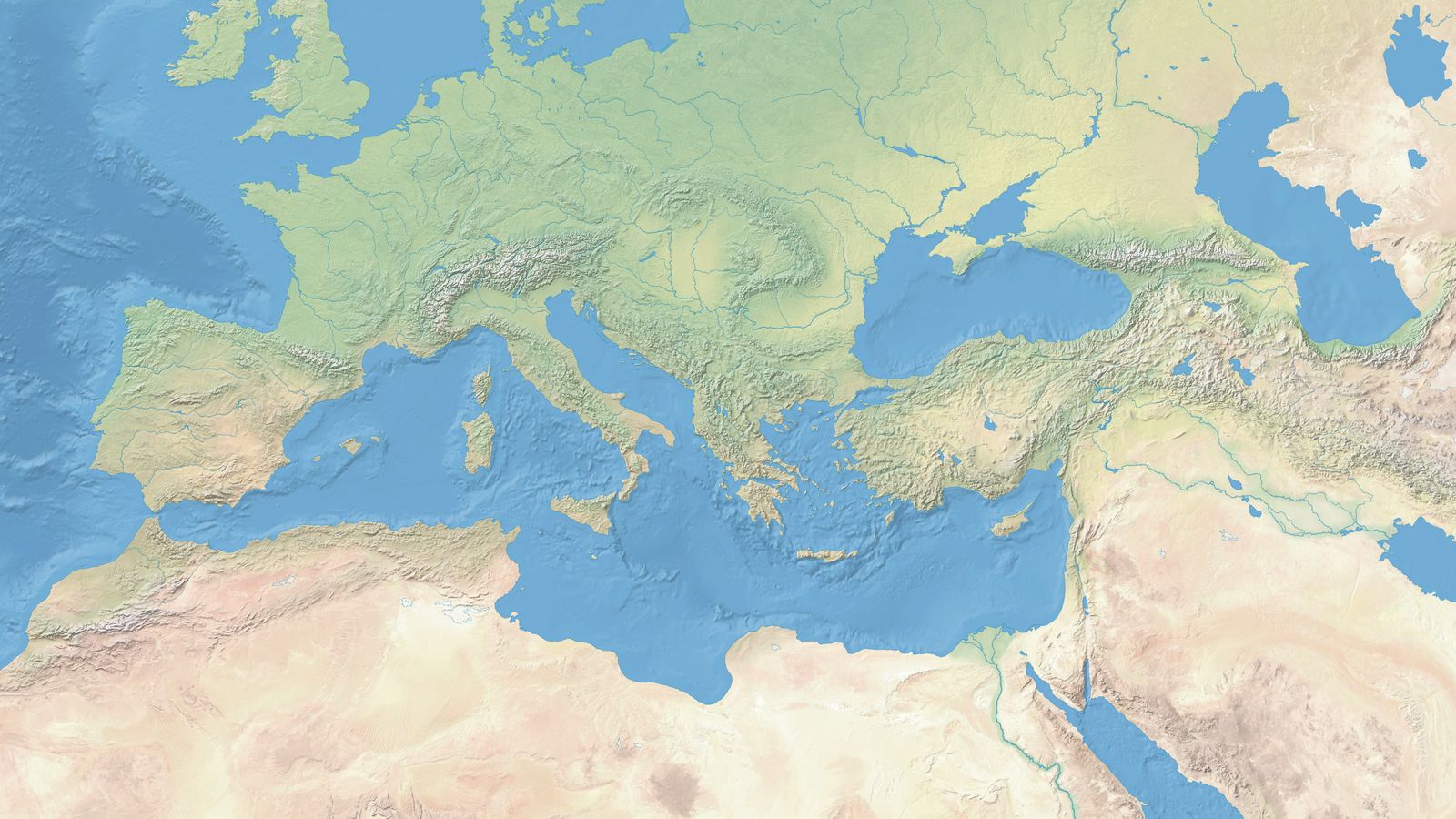
On the shores of the Mediterranean, from present-day Greece all the way to the golden sands of Egypt, once rose a mighty global community, shining as brightly as the age they’re known for. The Bronze Age, lasting from around 3300 BCE to 1200 BCE was a time of advancement and prosperity that saw the rise of some of the greatest ancient empires: Mycenae and Minoa in Greece, the great Hittite Empire covering central Turkey, north western Syria and Upper Mesopotamia at its height, and, in the south, the great and powerful Egypt with its grand pyramids and fertile Nile Delta, the shadow of its power reaching all the way to the southern tip of what we know today as Syria.
The Late Bronze Age saw a time of relative peace, with minor upheavals, with the great powers maintaining complex diplomatic relations and trade agreements. Cuneiform tablets found in the ruins of Ugarit show a wealth of correspondence between the young, and sadly last, king of Ugarit, the last king of the Hittite Empire, and Pharaoh Merneptah in Egypt, providing a rare glimpse into the workings of a truly global community; perhaps not global by today’s standards, but the globe was considered to be quite a bit smaller back then. The political systems of the day were based on royalty and an aristocratic class with social hierarchies that lead to specialized professions and trade goods of outstanding quality.
Copper and tin, the main components for bronze were prized commodities, and the various kingdoms and empires relied on their allies to supply them with whatever resources they lacked through fair trade. Advancements were made in art, architecture, technology and warfare with armies comprising of professional soldiers instead of bands of raiders or farmers defending their lands and homes with little more than pitchforks and enthusiasm. It was a prosperous time that benefitted everyone.
And then, suddenly, it all collapsed.
Around 1250 BCE to 1150 BCE, the great Mediterranean civilizations came crashing down in quick succession. Researchers agree that it’s unlikely that a single factor led to the Bronze Age Collapse, and it’s rare for academics to agree on anything. According to one researcher, Eric Cline, the Mediterranean civilizations faced a perfect storm of disasters.
Localized disasters, like earthquakes or volcanoes didn’t just affect the immediate surroundings. Due to the close trade relations between the various powers, if one area was struck by a disaster, all those relying on it suffered as well. Other disasters, like a mega-drought lasting from around 1250-1100 BCE, were more widespread, and lead to crop failures.
Egypt’s reliance on the great Nile River was quite possibly its only saving grace. Crop failures and food shortages led to internal strife and upheaval as commoners set out to bring down the upper classes, high in their ivory towers with plenty of food while the masses were starving. Malnutrition led to compromised immune systems which lead to disease and with the peasants and slaves dying, no-one was left to plant or harvest, leaving the fields bare.
With one disaster striking after the other, without any time to recover, the great cities and, finally, the great empires, fell like dominoes. Into this chaos sailed the Sea Peoples, a mysterious sea-faring group long considered to be one of the reasons for the great Bronze Age Collapse. They raided coastal cities, looting and plundering as they went, often leaving nothing but ruins in their wake.
In the short span of around 100 years, great cities were razed to the ground, once powerful civilizations fell never to recover, and the area witnessed death and devastation on an unknown scale. Those that survived the collapse were thrust into a Dark Age where much of the writing systems were lost, since only about 10% of the population could read and write and they didn’t quite make it, trade relations faltered, and the quality of life of your average citizen was greatly reduced. The glorious Bronze Age was over.
The Mysterious People from the Sea
The Sea Peoples is a collective name for a loosely allied band of marauders that arrived on the scene when things started to fall apart, but we don’t know much about them. The name ‘Sea Peoples’ was given to the travelling band of bandits by French Egyptologist, Gaston Maspero, in 1881. However, the name ‘Sea Peoples’ is a bit of a misnomer. While many of them arrived in the Mediterranean by sea, there are also many depictions of them arriving by wagon, so unless the wagons floated and the oxen swam across the Mediterranean, which would be quite a sight, they came across land as well leading to modern researchers referring to them more accurately as the Land and Sea Peoples.
For a long time, the Sea Peoples was considered one of the causes of the Bronze Age Collapse, but today they’re considered to be a symptom of the time rather than a cause. Many reports of the Sea Peoples mention them travelling with their families and even livestock which don’t really fit the idea of pirates taking advantage of weakened kingdoms to loot and plunder. Instead, researchers believe that the disasters plaguing the Mediterranean led to mass migrations as desperate people fled their homes and set off with their families to find a better life elsewhere.
Unfortunately, the Sea Peoples themselves never wrote anything down or, if they did, it has either been destroyed or it’s still waiting to be found. Thus, all the records we have about this mysterious group were written by those they attacked, leaving us with subjective and biased accounts. Much of what we know about the Sea Peoples comes from the birthplace of meticulous record-keeping: Egypt.
According to Egyptian inscriptions, the Sea Peoples wasn’t a single group; it was a loosely allied group made up of about nine separate states or tribes: the Shardana or Sherden, depending on the translation, Lukka, Teresh, Ekwesh, Shekelesh, Peleset, Tjeker, Denyen, and Weshesh. Together, these tribes apparently formed an alliance to take out the great powers of the Near East and Mediterranean. The Egyptian reliefs of the Sea Peoples also give us a good idea of what they looked like, how they dressed, what weapons they used, and what kind of ships they travelled with.
While this might seem like a wealth of information, it doesn’t answer the most important questions, but we’ll get to that in a bit.
The first mention of tribes that would later become part of the Sea Peoples shows up in the records of Ramses II. During the mid to late Bronze Age, Egypt was a kingdom to be reckoned with, governing an empire that extended north through Sinai, up the Palestine coast into Syria and south down the Nile into Nubia. During the fourth year of Ramses II’s reign, Sherden pirates attacked the Egyptian Delta.
Ramses II defeated them quite easily and incorporated the survivors into his own army, and they eventually became an important mercenary contingent. In around 1286 BCE, Ramses II and the Hittites clashed at Kadesh over control of Syria and both armies used mercenaries whose names would later appear on the lists of tribes that made up the troublesome Sea Peoples. The Lukka and Denyen fought on the side of the Hittites while the Sherden fought on the side of the Egyptians.
To the great relief of everyone, the Egyptians and the Hittites signed a peace treaty in 1268 BCE, leading to a stable political setup in the Near East.
The Sea Peoples show up again in Egypt around 1208 BCE, the fifth year of the reign of Pharaoh Merneptah, the son of Ramses II. Egypt was dealing with attacks from one of their oldest and fiercest enemies to the West – Libya. However, Libya wasn’t standing alone – it had help in the form of allies only described as ‘northerners’ which is a tad bit vague.
It was a large battle for the ancient world and, by the end of it, over 6000 Libyans and 1000 of their Sea Peoples allies lay dead. The Victory Stele, found in 1896 at the Temple of Merneptah in Thebes, tells the story of how Merneptah heroically and wisely overwhelmed the enemy and even provides a list of the tribes that allied with Libya: the Sherden, Lukka, Teresh, Ekwesh, and Shekelesh. We’re not sure why these tribes allied themselves with Libya and what their motivations were for attacking Egypt, but they were defeated so clearly they chose to back the wrong horse.
Thirty years later, the Sea Peoples were back yet again. Reliefs on the wall of Ramses III’s mortuary temple in Medinet Habu, Thebes, describe the “Battle of the Delta” that took place around 1175 BCE between the forces of Egypt and Sea Peoples invaders. The inscription on the outer wall of the second pylon is one of the longest hieroglyphic inscriptions ever found suggesting that this was a pretty important battle.
Depictions of Egyptian galleys with their lion-headed prows bravely facing off against the enemy galleys with bird heads carved onto the bow and stern tell the story of a great battle. The Battle of the Delta holds a special place in the annals of naval history since it was the first ever described clash of fighting ships.
Ramses III first launched a defense across land and the Egyptians, armed to the teeth, crushed the invading army. However, our wily pharaoh also realized that a second attack would come from the sea as there were reports that the enemy ships were chilling off the coast of Gaza. He was correct, and when the invading fleet finally moved towards the mouth of the Nile, the Egyptian forces were ready and waiting for them.
Ramses III had everything that could float – warships, galleys, and barges – filled with valiant warriors and archers lying in wait. Along the shores of the Nile, archers were waiting in the papyrus reed beds to provide some additional firepower. The invaders, perhaps having grown over-confident with their many victories up and down the coast – crushing the Hittites, Cyprus, the city of Ugarit as well as the kingdoms of Mycenae, sailed right into the trap.
With the archers on the riverbed raining down arrows, forcing the enemy fleet forwards, Ramses ordered his ships to block the exit of the Nile, trapping the invaders. Using grappling hooks to hold the vessels, the Egyptians boarded the Sea Peoples ships, slaughtering them. The Battle of the Delta was a great victory for Ramses III as he finally managed to succeed where the other great kingdoms had failed.
He slew the Denyen, turned the Tjeker and Peleset into ashes, and changed the Discord status of the Sherden and Weshesh from ‘playing Civilizations’ to ‘not available’.
According to the Great Harris Papyrus, named after Anthony Charles Harris who discovered it in a tomb near Medinet Habu, Ramses III followed in the footsteps of his ancestor and also included the Sherden as mercenaries in his great army, giving them land to settle with their wives and children. He provided them with jobs and, once they were settled, he taxed them to make sure they felt like part of the great Egyptian family. Nothing says welcome home like paying taxes.
However, there seems to be a bit of confusion on this point – some sources claim that Ramses II incorporated the Sherden into his army while others claim it was Ramses III. However, other sources state both pharaohs had the same idea. Unfortunately, I can’t read hieroglyphics so I can’t check the primary sources, but once Duolingo launches a course on hieroglyphics, I’ll get right on that.
From the Egyptian inscriptions, it seems that, while the Sea Peoples were wiping out the other great civilizations, Egypt had no problem dealing with these upstarts. The problem with Egyptian inscriptions is that the scribes writing them were more concerned with esthetics, religion, and not getting executed by petty pharaohs than historical accuracy. If the inscriptions are to be believed, every exiting pharaoh left the country in chaos and it was up to the next pharaoh to step in and restore order. So, either Egypt was an incredibly unstable country which would’ve made it hard to be as big and prosperous as it was, or we need to take all these dramatic accounts of pharaohs saving the day with a pinch of salt.
While our main source of information on the Sea Peoples is Egypt, the troublesome warriors are also mentioned in royal correspondence from Ugarit and Cyprus. According to these letters, the combined fleet of the Sea Peoples had massed off the southwestern tip of the Anatolian peninsula from where they attacked the western coast of Cyprus. Battles also occurred on the Anatolian mainland and the Great King of the Hittite Empire had to turn to his allies, the port city of Ugarit in northern Syria, for extra troops and supplies to fight off the invading force.
However, Ugarit was itself under threat by the Sea Peoples – the young king of Ugarit wrote that the enemy ships had already landed, setting fire to the towns and doing great damage to the country. Since much of Ugarit’s troops had already been sent to Hittite country to provide assistance, and many of their ships were stationed in Lycia, Ugarit was left poorly defended. Sadly, this cry for help never reached the allies – in fact, it never left Ugarit.
The clay tablet was found by archaeologists in a kiln, waiting to be fired before being sent, thousands of years later. Archaeological excavations of Ugarit provide a rare glimpse into the time of the Sea Peoples invasion. Ugarit, at the height of its power, was wiped off the map - bronze arrowheads, ash from burnt buildings and broken ceramics were all that remained.
There’s one more letter written by the scribes of the Great King of the Hittites, describing a victory on the side of the Hittite Kingdom against the fearsome Sea Peoples, but it would be the last. Not long after this final victory, the Hittite Kingdom fell before the marauders and, like all those that came before, was burned to the ground, never to recover.
Where did they come from and where did they go?
Egyptian inscriptions usually describe the alliance of tribes as coming “from the midst of the sea” or “from the islands” which is where the name Sea Peoples originally came from. Unfortunately, none of these records tell us where exactly these tribes called home. It’s possible that their origins were common knowledge at the time – since everybody knew where the Sea Peoples hailed from, there was no need to write it down.
We do know that the ancient Egyptians viewed the Sea Peoples as invaders, and we have the detailed list naming every tribe that made up the loose alliance today known as the Sea Peoples. So, as is often the case in cop shows, we have a name, but we don’t have an address. However, most researchers seem to agree that they initially came from Asia Minor, the Aegean, the Balkans and Cyprus.
However, where they came from is just one part of the mystery. Once the dust settled and the Bronze Age had bid farewell, most of the Sea Peoples themselves seem to simply disappear along with it. For the most part, researchers are relying on philology, the study of languages in historical sources, to figure out where these tribes came from and where they ended up, but, so far, we have nothing definitive to prove any particular theory.
The Sea Peoples and Homer
While we have written accounts of the Sea Peoples invading Egypt and wiping out Ugarit and the Hittite Kingdom, the role of the Sea Peoples in the fall of Mycenae is a little unclear. However, some theories suggest that at least some of the tribes that made up the Sea Peoples can be traced back to Mycenae.
Based on archaeological finds, researchers believe that, during the Middle Bronze Age, Mycenae was dominated by an elite class focusing on production and trade. However, by the Late Bronze Age, this changed and the elite had been replaced by a warrior class. The Mycenaean Empire controlled the Aegean and Greece from separate city-states, depending on this strong warrior class for control.
During this time, piracy became popular in the region and, according to Thucydides, an Athenian historian and General, at one stage, piracy was even considered honorable and a favorite past-time of the elite. However, piracy, like most shipping pursuits in the Mediterranean, was a seasonal thing so how the elite entertained themselves out of season is a topic for another time.
This shift from production and trade to a warrior class engaging in piracy coincides with the decline and eventual destruction of Mycenae and other settlements in the Aegean. How much of this decline and destruction can be laid at the feet of the pirates is up for debate, but I’m fairly sure they had a hand in the resulting chaos. In fact, many settlements relocated to more defensible positions further away from the coast, both inland and on coastal hilltops, probably because of a new, more serious threat, coming at them from the waves. This trend of relocation and piracy wasn’t restricted to the Greek mainland and surrounding islands – similar population movements also occurred in Etruria, today known as Italy.
Despite being a great civilization, the Mycenaean city-states didn’t actually need any outside enemies. The piracy wasn’t the only problem – the city-states themselves were often at each other’s throats. This constant warfare between the various city-states, along with other disasters, greatly weakened the Mycenaean civilization, making them ripe for the taking, and the Sea Peoples were happy to oblige. However, at the end of the day, we don’t know if the Sea Peoples had anything to do with the fall of Mycenae - it’s entirely possible that the ancient Greeks destroyed themselves, with a helping hand from a wrathful god and a volcano or two.
This brings us to the works of Homer. The Odyssey and the Iliad are both works of fiction, but some researchers feel that these works of fiction might’ve been based on actual historical events and might even support the theory that at least some of the Sea Peoples, the Sherden to be specific, originated in Greece. In both works, Homer mentions the raiding parties and pirates running amok in Greece. Additionally, Odysseus makes three claims that are reflected in the story of the Sea Peoples: he claimed to have led nine successful maritime raids before the Trojan War, he describes being part of a failed attack on Egypt after the war, and he also claims to not only being spared after this assault on Egypt, but spending some time in Egypt accumulating a fair bit of wealth.
Watch Now
Open Video
Video Briefing
Who Were the Sea Peoples?
In Homer’s tale, Odysseus claimed to have launched his raids from Crete and describes a similar tactic used by raiding parties attacking the Hittite Kingdom from a captured port in Cyprus. Travelling in small groups instead of large fleets to ensure stealth and speed, the raiders would often beach their vessels, allowing warriors to disembark and raid quickly, thus preventing their chosen target from mounting a proper defense. Depictions of Helladic oared galleys show keel extensions that made this beaching tactic possible; similar keel extensions can be seen on the Sea Peoples vessels in the depiction of the Battle of the Delta in the hieroglyphics at Medinet Habu, further suggesting a link to Mycenae.
According to inscriptions on the Tanis Stele, commissioned by Ramses II, the Sherden had been raiding coastal settlements, including Egypt, for several years. If the Sherden raids were seasonal, as was the case with most shipping endeavors at the time, they could possibly have been raiding for nine years, coinciding with Odysseus’ claim of leading nine raids. When Ramses II finally defeated and captured this troublesome foe, he chose to welcome them into Egypt and made them part of Egyptian society instead of throwing them in prisons or using them as slave labour.
By the fifth year of the reign of Ramses II, the Sherden already made up part of the Pharaoh’s bodyguard and assisted him in the battle against the Hittite army. By the reign of Ramses the V, as seen in the Wilbour Papyrus, a land registry, the Sherden were land owners, and they could pass land down from one generation to the next. In keeping with the story of the Sherden, in Homer’s work, Odysseus claims that, after his defeat, he lived and worked in Egypt, accumulating some wealth.
So, if we consider the parallels between the two stories, I suppose it’s possible that the Sherden, at least, possibly came from Mycenae and finally settled in Egypt; however, some sources suggest that they ended up in Sardinia.
The Sherden might not have been the only tribe hailing from ancient Greece. According to researchers, the inscriptions of Pharaoh Merneptah could point to the Ekwesh tribe also originating from Greece. The Ekwesh is only mentioned once, by Merneptah, and they showed up in Egypt after the Trojan War.
For the sake of this script, we’ll assume it was an actual battle and debate the historical accuracy of Homer, and the existence of giant wooden horses, another day. Some modern scholars believe that ‘Ekwesh’ was the Egyptian pronunciation for ‘Achaioi’, an ancient word for ‘Achaeans’, the name for the Mycenaean era Greeks. This theory suggests that the Ekwesh tribe were the remnants of the Trojan War – a band of renegades that first besieged and sacked Troy, and, once that was done, hopped their ships and set off for Egypt to repeat the exercise.
Of course, that didn’t end well for them; perhaps staying on their own side of the Mediterranean would’ve been a safer bet.
Were the Philistine originally Sea Peoples?
However, the Sherden and Ekwesh aren’t the only tribes considered to have roots in ancient Greece. Another tribe theorized to possibly originate from the area is the Peleset. According to inscriptions by Ramses III, he took the Peleset captive after the battle in the Nile Delta and had all the leaders of the tribe killed. Whether this is fact or just boasting is unclear.
Some researchers are of the opinion that the Peleset were settled in modern-day Palestine and is better known today as the Philistines from the Bible.
The Bible states that the Philistines originally came from Caphtor, which some historians have identified as ancient Crete. However, Cyprus, the islands of the Aegean or even Cappadocia in Asia Minor has also been suggested to have been the ancient city of Caphtor. The Philistines settled in Palestine and is often associated with five city-states: Ashdod, Ashkelon, Ekron, Gath, and Gaza.
The writers of the Bible clearly considered the Philistines as a foreign group arriving in Canaan from distant shores. Unfortunately, the Bible is a bit of a problematic source historically; however, the archaeological record supports the idea that the Philistines were a more urbanized group hailing from elsewhere.
Archaeological excavations have uncovered pottery sherds which are useful for establishing a timeline. In the 12th century, around the time of the Sea Peoples raids, a style of pottery shows up in the cities occupied by the Philistines showing similarities to Mycenaean pottery. Later pottery show local influences, but the basic shapes are still reminiscent of shapes found in the Aegean and Cyprus.
This pottery was used along with Canaanite pottery and shows that the two groups inhabiting the area co-existed relatively peacefully. Fish motifs also put in an appearance suggesting that, while the Philistines in the time of the Bible were an inland people, their roots were most likely closer to the sea. Similar designs have also been found in the Aegean, Cyprus and western Anatolia further indicating a link between the Philistines and ancient Greece.
The architecture of the time also seems to support this theory. Ruins of homes have been uncovered that appear to have a similar floor plan to Aegean or Cypriot design, and the use of pebbles to construct the hearths is also reminiscent of constructions in Crete and Cyprus. However, architecture could also be influenced by available materials and the environment rather than cultural origin, and since there are just as many building techniques that are very different from how homes were built in Mycenae, many researchers feel that the architecture of the area isn’t really conclusive evidence either way.
However, genetic testing of the remains of 10 Biblical Philistines uncovered at an Iron Age cemetery in the ancient port city of Ashkelon showed that these 10 individuals had a genetic component from Southern Europe. It’s impossible to say whether they were part of the Sea Peoples, but it does suggest that at least these 10 people originally came from Crete or the Greek mainland. DNA testing on animal bones has also revealed that European pigs were introduced into the region in significant numbers in the early Iron Age. It’s unclear whether they were specifically Greek pigs, but it certainly suggests a European origin for the Philistines.
While the inscriptions about the great Battle of the Delta paints Ramses III as a fearless and glorious victor, his actions before the battle tell a different story. The Sea Peoples, among them the Peleset, was a real threat to Egypt, and Ramses III probably feared further raids after the battle. To strengthen his army, it appears that he withdrew some of his forces stationed in Canaan and the Levant - an Egyptian fortress at Ashkelon was never completed and other areas, like Tel Mor, also show signs of destruction and a time gap before the area was re-settled by the Philistines.
Pharaoh Merneptah’s campaigns in the Levant against the Canaanites were quite destructive, leaving large areas desolate, making it an ideal route for an invading force and leaving Egypt vulnerable to attack. It’s possible that Ramses III saw an opportunity to reinforce this desolate area with the Peleset after the sea battle, and he claims to have settled the Peleset in his lands after defeating them.
Based on archaeological findings, it seems that the Philistines settled the area peacefully, so they were probably given the land freely. The Philistines and Canaanites co-existed and Philistine cities weren’t fortified until much later. The new arrivals were also allowed to settle some of the most fertile lands in Canaan, further supporting the idea that they were there with permission from the Egyptian overlords.
The original settlements also appear not to have big grand homes for the upper class, suggesting that just this once, a pharaoh wasn’t boasting when he claimed to have put all the leaders of the Peleset tribe to death. If the Philistines were an invading force, they would most likely have wiped out most of the locals and put up fortifications to protect their new lands as soon as possible.
Why Ramses III would’ve given land to a people that just attacked him is a bit of mystery though. Mycenae was a political ally of Egypt, so if the Peleset did originate in Mycenae, and were desperate people fleeing bad circumstances back home, perhaps they were given land based on past allegiances. While there’s nothing indicating this in the records, I also have to wonder if perhaps the Peleset tribe, upon realizing that things really weren’t going their way in the Nile Delta, switched sides and were rewarded for this betrayal. However, don’t quote me on that, it’s just the musings of a writer.
Of course, not everyone agrees. Some theorize that the Peleset were Anatolians who influenced the ancient Greeks, or that the Peleset originated in the Levant and only used Crete as a port for trade suggesting that the Levant influenced Greece and not the other way around. Unfortunately, there are no Sea Peoples around to ask, so for now, the Philistines originally being Sea Peoples is just another interesting theory.
If not Greece, then where
So the Sherden, Ekwesh and Peleset might have originated in ancient Greece, but that still leaves six tribes unaccounted for. Where did the rest of them come from? Some researchers have pointed out that the boats depicted in the Egyptian inscriptions at Medinet Habu follow a design similar to vessels found in Central Europe, along the Danube River corridor, an area associated with the Late Bronze Age Urnfield culture.
It’s possible that other parts of Central and Southern Europe were facing disasters of their own which led to mass migrations south, towards the Mediterranean basin. The Danube River flows into the Black Sea on the north side of Anatolia from where the tribes, aboard their boats with identical fore and aft post with a bird’s head atop, could join the rest of the Sea Peoples for the push south. According to some researchers, the Weshesh tribe is the most likely suspects to come from central Europe; however, they are the least known of all the tribes.
Other than being held captive in Egypt by Ramses III after the Battle of the Delta, we don’t actually know where they came from or where they went.
The Lukka tribe possibly came from Lycia and Caria, a region in Anatolia, and may initially have been allies of the Hittite Empire before it collapsed. The Teresh is associated with the Tuscany region in Italy and the Etruscan peoples. However, it’s unclear if that’s where they came from originally, or whether that’s where they finally ended up and the region was named after them once they settled in.
The Tjeker and Shekelesh tribes, who might’ve been the same tribe as the names are used interchangeably by Egyptian scribes, are believed to originally be from Sicily and they might’ve settled in the Levant. In a letter to the king of Ugarit, the King of the Hittites refers to the ‘Sikilayu who live in ships’ which might be a reference to the Shekelesh tribe. Alternatively, the Shekelesh could be the Sikels, a community found living in Sicily after the Trojan War, though whether they came from Sicily or only settled there after the raids of the Sea Peoples had come to an end is anybody’s guess.
Another theory places the Shekelesh in Asia Minor in the town of Sagalassos.
A tribe with an interesting theory or two attached to it is the Denyen tribe. Some researchers claim they originated in the Anatolian region of Cilicia, while others place them in northern Syria, and they finally settled in the Levant when all was said and done. Once settled, they integrated with the biblical tribe of Dan, one of the 12 tribes of Israel.
However, other, more contentious and interesting theories, suggest that the Denyen tribe were, in fact, the tribe of Dan who came across land and not by sea, presumably making them the Land contingent of the Land and Sea Peoples. However, to muddy the question of the Denyen origin theory further, some scholars claim that the Denyen, like the Sherden, Ekwesh and Peleset, were also from Mycenae. Apparently, in Egyptian hieroglyphs, Denyen refers to ‘Greek Speakers’, suggesting the tribe came from the Greek mainland.
However, the fact that ancient Egyptian writing only uses consonants, and no vowels, makes it really hard to decipher, translate and interpret, so whether the ancient scribes were referring to Greek speakers or not is up for debate.
Of course, as the Sea Peoples lay waste to great empire after great empire, hundreds or even thousands of people would suddenly have been left homeless. This displaced population very likely ended up joining the marauders looking for a new place to settle, further increasing their number, so by the end of the Late Bronze Age, and their final defeat in Egypt, the Sea Peoples was a truly cosmopolitan community, representing every great city in the Mediterranean.
The big question: Why?
When the Sea Peoples arrived on the scene, the world was already going to hell in a handbasket, so why add to the misery? What was their motivation for going on the offensive and raiding so extensively along the Mediterranean coast? As I’ve mentioned before, the disasters plaguing the Mediterranean quite possibly affected large parts of Europe as well. Researchers have found that, during the late Bronze Age, food shortages were quite rampant in Anatolia.
The Hittites could import grain and other goods from Egypt and Canaan, relieving some of the burdens brought on by droughts and other environmental factors. However, the peoples of western and northern Anatolia weren’t part of the Hittite empire. On top of that, they were also often at war with both the Hittites and the Mycenaean empire.
While the main motivation for many of the tribes might’ve have been as simple as finding food, other groups might’ve joined out of greed, as is often the case in situations like these – desperate people seeking better lands and opportunities gave a small group an excuse to loot and plunder, building wealth by taking down the once powerful kingdoms. Soon, the various groups probably realized that they had some enemies, and perhaps even some allies, in common, and a loose alliance formed.
The attack on Merneptah’s Egypt, the supplier of wheat to the Hittite Empire and Ugarit, further supports the idea that the Sea Peoples were fleeing their homes due to food shortages. If the attack had been successful, the invaders would’ve taken a very fertile region for themselves. Since the Hittite Empire experienced severe food shortages itself, it probably wasn’t a very attractive target.
However, the Hittites didn’t really make a whole lot of friends in Anatolia. So, when the attack on Egypt failed, it’s possible that the raiders turned their attention to Canaan – it was second only to Egypt when it came to wheat production, and the only thing standing between the Sea Peoples and Canaan was the Hittite Empire. Going through Hittite lands would also provide an additional resource: oppressed peoples who would happily take up arms against the Hittites who took their land by force.
And, as we all know from the movies, there is nothing more dangerous than a person with nothing left to lose.
Combining their sea and land forces, the Sea Peoples were able to destroy Ugarit, essentially severing the wheat pipeline from Egypt to Hittite lands. With the flow of wheat from Egypt via Ugarit cut off, the Hittite Empire fell not long after. With the Hittite land in ruins, the Sea Peoples, though most of them were possibly travelling by land by now, could freely cross the Hittite lands, with their families and belongings on wagons, to reach their final goal: Canaan.
The only thing in their way now was Phoenicia, but they by-passed Phoenicia, heading straight to Canaan, destroying whatever other cities they encountered, and finally settled down once they found more fertile lands to provide for themselves and their families. Some continued on towards Egypt where they finally ran afoul of Ramses III at the Nile Delta – and we all know how that went. However, while this is a great theory, it’s pure speculation.
The only thing we know for a fact is that the Sea Peoples attacked the coastal cities of the Hittite Empire, Ugarit and Egypt. They might’ve raided along the coast of Mycenae, but we’re not actually sure. As for why they did it – we have no idea.
Did the Sea Peoples have allies?
After the great empires of the Late Bronze Age crumbled, the early Iron Age saw the Phoenician empire rise to fill the gap. The Phoenicians weren’t one of the great powers of the Late Bronze Age, but they were already hanging around, quietly building their reputations as merchants and navigators. When the Sea Peoples arrived on the scene, going about the business of happily razing everyone else, the Phoenician cities were left alone.
Archaeological excavations have shown that Tyre, one of the leading Phoenician cities in 1200 BCE, was spared the destruction faced by the other great cities – not only that, life continued pretty much as normal during this time and this seems to be the established pattern for most Phoenician cities. The city of Arvad, on the island of Arwad, had been taken from the Phoenicians by the Hittites. It was sacked by the Sea Peoples, but then returned to the Phoenicians which seems to suggest that there was some kind of relationship between the Phoenicians and the Sea Peoples.
During the Late Bronze Age, much of the trade in the Mediterranean was controlled by Mycenae which meant the Phoenicians had to look further afield to find lands to trade with. With Egypt supplying the Hittite Empire with grain via Ugarit, that market wasn’t open to the Phoenicians, so, instead, they took their trade goods all the way to western Anatolia, the Aegean and the Black Sea – the place of origin for many of the Sea Peoples. At a time when the region was facing severe shortages, the Phoenicians were the only friends supplying valuable food. So, when the time came to invade, the Sea Peoples wisely decided not to attack their only ally in the Levant.
Historians agree that the Phoenicians were not the Sea Peoples. At this stage, the Phoenicians were traders and sailors, not warriors. Additionally, they were well known in Egypt, so if they attacked Egypt, they would’ve been recognized and their name would appear on the inscriptions so carefully listing all the tribes making up the Sea Peoples. Since they were left alone to continue on their merry way, the Phoenicians is probably one of few empires in the Mediterranean that didn’t end up adding to the ranks of the Sea Peoples.
Conclusion
We don’t know where the Sea Peoples came from or why they attacked the great empires of the day. We also don’t know for sure what happened to them after the Bronze Age Collapse. As far as mysteries go, it doesn’t appear that we’ve decoded anything at all. However, despite being a very mysterious group, the impact the Sea Peoples had on history is quite impressive.
It’s likely that the great empires would’ve fallen anyway, but the addition of the Sea Peoples raiding along the coast, leaving only ruins in their wake, made the destruction of these once great empires quite final. The Hittite civilization which thrived in Anatolia for around 1000 years was so completely annihilated that it vanished from history until it was rediscovered thousands of years later. Egypt may have won a decisive victory in the Nile Delta that fateful day, but lost much of its territory in Syria, Palestine and even Nubia. The once powerful Egypt was greatly weakened and many historians consider the 20th Dynasty to be the end of the New Kingdom and the end of Egyptian domination – Egypt would never again lead an international global community in terms of politics and culture.
Pirates plundering for wealth and treasure, or desperate people fleeing their homes looking for food and shelter in foreign lands – we’ll probably never know. Until we find something written by the Sea Peoples themselves, we only have the words of their enemies to describe them.
Simon Whistler
Simon Whistler is one of YouTube's most prolific educational creators. Decoding the Unknown is his methodical investigation into the world's strangest phenomena — examined with rigour, curiosity, and a healthy dose of scepticism.
Frequently Asked Questions
What were the Sea Peoples known for?
The Sea Peoples were known for instilling terror across the Mediterranean and Near East, leaving destruction and devastation in their wake. They were often referred to as the ‘gangsters of the Late Bronze Age.’
What was the Bronze Age Collapse?
The Bronze Age Collapse was a period around 1250 BCE to 1150 BCE when great Mediterranean civilizations, including Mycenae, Minoa, the Hittite Empire, and Egypt, fell in quick succession due to a combination of disasters such as earthquakes, volcanoes, droughts, and internal strife.
Who were the Sea Peoples?
The Sea Peoples were a collective name for a loosely allied band of marauders that arrived during the Bronze Age Collapse. They were made up of about nine separate states or tribes, including the Shardana, Lukka, Teresh, Ekwesh, Shekelesh, Peleset, Tjeker, Denyen, and Weshesh.
What role did the Sea Peoples play in the Bronze Age Collapse?
The Sea Peoples are considered a symptom of the time rather than a cause of the Bronze Age Collapse. They raided coastal cities, looting and plundering, but their actions were likely a result of the mass migrations caused by the disasters plaguing the Mediterranean.
What is known about the origins of the Sea Peoples?
The origins of the Sea Peoples are not definitively known, but researchers suggest they initially came from Asia Minor, the Aegean, the Balkans, and Cyprus. Some tribes, like the Sherden and Ekwesh, are theorized to have originated in ancient Greece.
How did the Egyptians view the Sea Peoples?
The Egyptians viewed the Sea Peoples as invaders. Egyptian inscriptions describe them as coming ‘from the midst of the sea’ or ‘from the islands.’ The Egyptians had several encounters with the Sea Peoples, including battles and eventual incorporation of some tribes into their army.
What happened to the Sea Peoples after the Bronze Age Collapse?
After the Bronze Age Collapse, most of the Sea Peoples seem to have disappeared. Some tribes, like the Sherden and Peleset, are believed to have settled in Egypt and Palestine, respectively. Others may have integrated with local populations or continued migrating.
Did the Sea Peoples have allies?
The Phoenicians are believed to have been allies of the Sea Peoples. Archaeological evidence shows that Phoenician cities were spared from destruction and continued to thrive during the time of the Sea Peoples’ raids, suggesting a mutually beneficial relationship.
What impact did the Sea Peoples have on history?
The Sea Peoples had a significant impact on history by contributing to the final destruction of great empires like the Hittites and weakening others like Egypt. Their raids made the collapse of these civilizations more complete and final, leading to a Dark Age in the region.
What motivated the Sea Peoples to raid and invade?
The motivations of the Sea Peoples are not definitively known, but theories suggest they were driven by food shortages, environmental disasters, and the desire for better lands and opportunities. Some groups may have joined out of greed, taking advantage of the chaos to loot and plunder.
Sources
- Original Decoding the Unknown video: Who Were the Sea Peoples?
- Hero image source by Flappiefh / openverse, by-sa.