One day in the summer of 1947, a rancher in New Mexico was out inspecting his property, checking his fences for damage, when he came across a strange site. Some kind of unknown device or aircraft had crashed on his land. Although unusual, it wasn’t something the rancher was immediately suspicious of. He had previously found two crashed weather balloons on his property, so his initial reaction was that it was probably more of the same.
He certainly did not expect that he was about to start the biggest UFO conspiracy that the world had ever seen.
In the 80 years that have passed since then, countless people have put forward their own version of what happened in the New Mexico desert on that faithful day. Everyone agrees that something did, indeed, crash outside Roswell. But what? Was it simply a weather balloon, brought down by a lightning storm? Was it a top secret military prototype? Or…was it an alien spaceship?
Key Takeaways
- The Roswell incident began in 1947 when a rancher found debris on his property.
- The U.S. military initially claimed the debris was from a weather balloon.
- In the 1980s, the incident gained renewed interest with claims of a UFO crash.
- The U.S. Air Force later attributed the debris to a top-secret project called MOGUL.
- Despite official explanations, many people continue to believe in an alien cover-up.
The Saga Begins
The Roswell story has been around for 80 years at this point, but it has valleys and peaks. In order to properly understand it, we should first establish the three main time periods we will be dealing with. The first one is also the shortest and includes only a few weeks in 1947: the time when the incident actually took place and the immediate aftermath that followed.
After that came decades of silence. The Roswell story did not become the sensation it is today overnight. It wasn’t until 1978 when a whistleblower came forward with some hot new gossip that interest in Roswell picked up again. Two years later, Charles Berlitz and William Moore published The Roswell Incident, a book that framed the event as the government covering up a UFO crash. That opened the floodgates for all the theories, conspiracies, hoaxes, and hysteria that have turned Roswell into the most infamous UFO event in history.
The third relevant time period is the mid-90s, when the US Government decided it was finally time to get their official version out to the public. In 1994, the United States Air Force published a gargantuan 880-page report on Roswell, put together by Col. Richard L. Weaver and 1st Lt. James McAndrew, titled The Roswell Report: Fact versus Fiction in the New Mexico Desert. Despite its size, Lt. McAndrew felt there was still more to say, so in 1997 he followed it up with a second account, The Roswell Report: Case Closed, this one at a much breezier 230 pages.
But let’s start at the beginning: June 14, 1947. Rancher W. W. “Mac” Brazel was out inspecting his land with his 8-year-old son Vernon when the duo came across some debris. Something definitely had crashed there, although it wasn’t immediately clear to Brazel what it could be. In his words, it was “a large area of bright wreckage made up of rubber strips, tinfoil, and rather tough paper, and sticks.”
Right off the bat, that doesn’t sound like the components of an interplanetary spaceship. More like a kite. Clearly, Brazel wasn’t too impressed, either, because he completely ignored the wreckage for weeks. It wasn’t until he went into town during the Fourth of July weekend that he decided to do something about it.
That’s when he found out that the entire country was engulfed in a “flying saucer” craze thanks mainly to the account told by pilot Kenneth Arnold, but that is a story for another day. Hundreds of people had reported seeing spaceships in the sky, so Brazel thought that the authorities might be interested in whatever crashed on his land. Maybe even a reward could be in order.
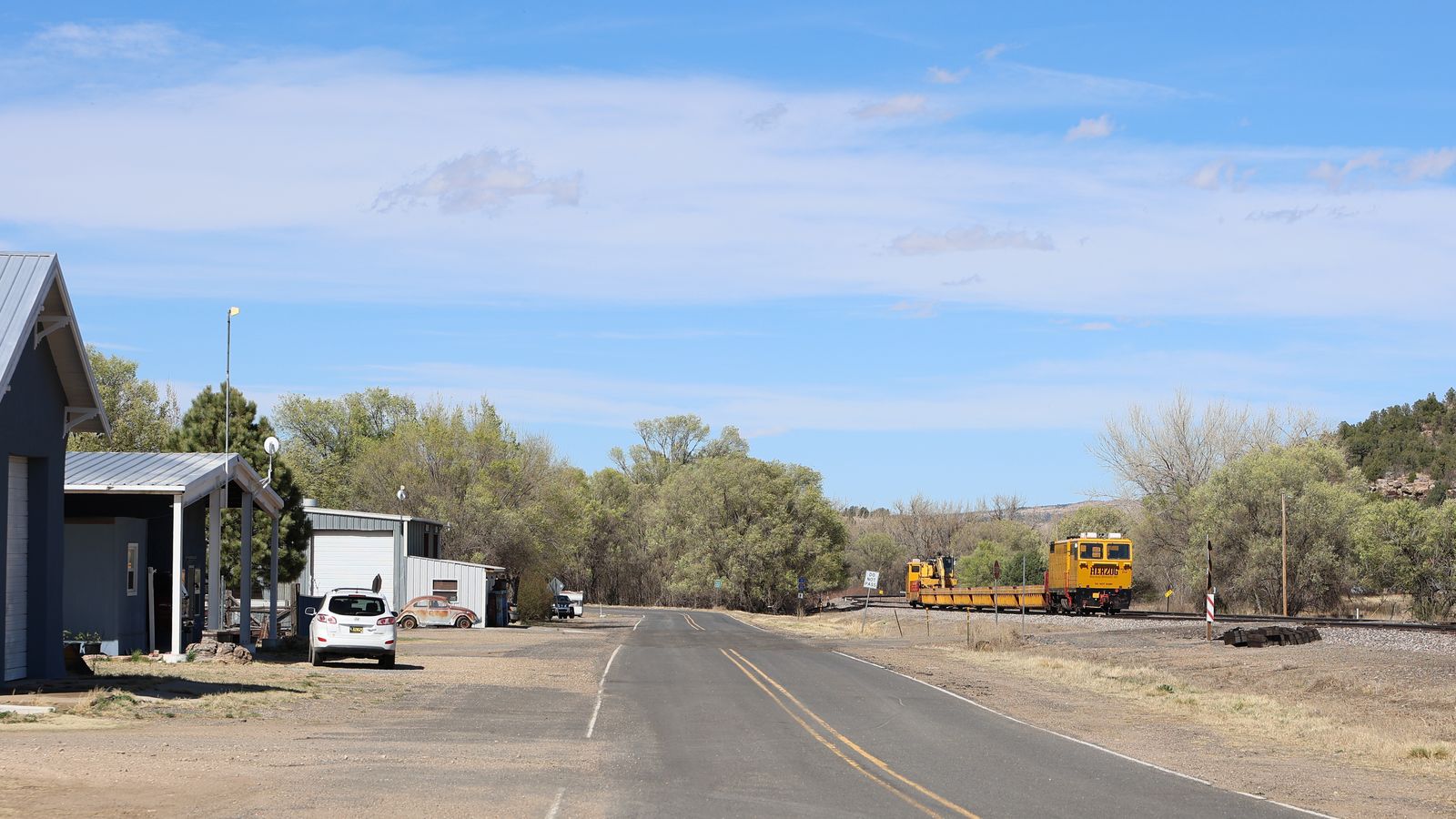
The closest community to the Brazel ranch was a small town called Corona, but nobody there could help him. So the rancher collected bits and pieces from the unidentified object, packed them in his truck, and on July 7, drove 80 miles southeast to the city of Roswell, New Mexico, where he offloaded all that stuff onto Sheriff George Wilcox.
The sheriff was just as befuddled as the rancher as to what exactly he was looking at or what to do with it, so he put in a call to the nearby Roswell Army Air Field (RAAF) to see if they were interested.
The Army Gets Involved
As it turned out, they were interested, and they sent two men to return with Brazel to his ranch and collect all the remaining debris, which the rancher and his family had gathered and stuffed into feed sacks. All in all, the debris consisted of “tinfoil, paper, tape and sticks [that] made a bundle about three feet long and 7 or 8 inches thick, while the rubber made a bundle about 18 or 20 inches long and about 8 inches thick.” The “entire lot would have weighed maybe five pounds.” The sacks were sent to the Roswell airforce base, and from there they were flown to headquarters at the Fort Worth Army Air Field, which was under the command of General Roger Ramey.
The men who went out to the wreckage were Major Jesse Marcel and Captain Sheridan Cavitt. Remember Marcel’s name since he was the whistleblower who made waves decades later. Without his juicy remarks, it is safe to say that the Roswell incident would be a forgotten footnote in the annals of UFO lore.
Captain Cavitt wasn’t particularly blown away by their findings. He thought it looked like a normal wreckage from some kind of unmanned flying object. Major Marcel, however, was the senior man on the scene, and he thought that he was looking at something highly unusual, perhaps even otherworldly. Apparently, Marcel got the pieces out and tried to assemble them together, but closest he could get to was a kite.
But his suspicions aside, it was actually the RAAF PR man, Walter Haut, who caused the initial brouhaha when he got a little too overzealous with their public statement and referred to the wreckage as a “flying disc.” On July 8, 1947, he sent a newswire that said:
The many rumors regarding the flying disc became a reality yesterday when the intelligence office of the 509th Bomb Group of the Eighth Air Force, Roswell Army Air Field, was fortunate enough to gain possession of a disc through the cooperation of one of the local ranchers and the sheriff’s office of Chaves County… .
The flying object landed on a ranch near Roswell sometime last week. Not having phone facilities, the rancher stored the disc until such time as he was able to contact the sheriff’s office, who in turn notified Major Jesse A Marcel of the 509th Bomb Group Intelligence Office… .
Action was immediately taken and the disc was picked up at the rancher’s home. It was inspected at the Roswell Army Air Field and subsequently loaned by Major Marcel to higher headquarters.
More information about the so-called “flying disc” comes to us courtesy of an FBI teletype from July 8 which wrote that the object was “hexagonal in shape and was suspended from a balloon by cable, which balloon was approximately twenty feet in diameter… The object found resembles a high altitude weather balloon with a radar reflector…”
The story was quickly picked up by news outlets, both local and national. Most memorably, the Roswell Daily Record ran their July 9 issue with the massive headline “RAAF Captures Flying Saucer On Ranch in Roswell Region.” Their story was even more sensationalistic than the PR statement, at one point stating unequivocally that “the intelligence office of the 509th Bombardment Group at Roswell Army Air Field announced at noon today, that the field has come into the possession of a Flying Saucer.” Goes to show just how quickly a story about some bits of rubber, tinfoil, and sticks can transform into one involving a full-blown spaceship.
The military wasn’t too happy about this, though. They quickly realized that their PR man done goofed, and just 24 hours after their initial statement, they released a new one, this one coming straight from Fort Worth head honcho General Ramey. He made it clear that the debris was the remnants of a weather balloon carrying a radar reflector and that there was no flying saucer involved. He even invited the local press to come see for themselves, and they took pictures of the general and Major Marcel presenting them the mysterious debris.
Media interest in the story quickly died down. The Carlsbad Current-Angus ran the headline “‘Flying Disc’ Turns Out To Be Weather Balloon,” while the Roswell Daily Record went with the jokier headline “Gen. Ramey Empties Roswell Saucer.”
Nowadays, the Army pulling such a quick U-turn on a story involving flying saucers would immediately raise skeptical eyebrows and birth a dozen new conspiracy stories, but back in the 40s, people believed it. Newspapers stopped reporting on the Roswell incident and the public quickly put it out of their minds, and that’s where it stayed for decades.
Marcel Speaks
As previously mentioned, the Roswell story became a non-entity as soon as it was dismissed as a crashed weather balloon and it stayed that way for 30 years. As English journalist and Fortean expert Dr. David Clarke pointed out, there are dozens of books, magazines, and articles about UFOs and flying saucers from the 1950s and 1960s, and Roswell isn’t even mentioned in them, let alone featured as some major event.
But then the late 1970s came along. Jesse Marcel, the airforce man who first investigated the wreckage on the Brazel ranch, had retired as a Lieutenant Colonel and was feeling chatty. In 1978, the tabloid The National Enquirer ran the original story about Roswell again and reminded everyone about what happened. This brought Marcel to the attention of Stanton Friedman, a former nuclear physicist who had taken up the investigation of UFOs. In 1979, Friedman and ufologist William Moore interviewed Marcel. Moore later used the interview in the book he wrote on Roswell with Charles Berlitz. The interview is several pages long so I’ll only include a few juicy bits, but it is worth mentioning that Marcel’s account is full of highly specific details about an event that had occurred over 30 years earlier. He remembered what cars he and Captain Cavitt drove to the ranch (a ‘42 Buick and a Jeep Carry-All), as well as what they had to eat that afternoon (cold pork and beans with crackers).
Anyway, Marcel’s account started off straightforward. He described how the airbase got a call from the Roswell sheriff’s office, and how he and Cavitt had been sent to investigate what seemed to be a crashed aircraft of “some unusual sort.” When Marcel was asked if the object he saw was a weather balloon, he replied:
It was not. I was pretty well acquainted with most everything that was in the air at that time, both ours and foreign. I was also acquainted with virtually every type of weather observation or radar tracking device being used by either the civilians or the military. It was definitely not a weather or tracking device, nor was it any sort of plane or missile.
What it was we didn’t know. We just picked up the fragments. It was something I had never seen before, or since, for that matter. I didn’t know what it was, but it certainly wasn’t anything built by us and it most certainly wasn’t any weather balloon.
When asked to describe the materials found in the debris, Marcel listed the stuff we already talked about: wood, tinfoil, and paper. However, in his opinion, they were not what they appeared to be. The sticks might have looked like balsa wood, but they weren’t wood at all. They were made from something very hard and flexible, that would not burn. And the tinfoil? Well, here is what he said:
”…The pieces of metal that we brought back were so thin, just like the tinfoil in a pack of cigarettes… It was so light it weighed practically nothing, that was true of all the material that was brought up… So I tried to bend the stuff. We did all we could to bend it. It would not bend and you could not tear it or cut it either. We even tried making a dent in it with a sixteen-pound sledgehammer, and there was still no dent in it… It’s still a mystery to me what the whole thing was.
Now by bend, I mean crease. It was possible to flex this stuff back and forth, even to wrinkle it, but you could not put a crease in it that would stay, nor could you dent it at all. I would almost have to describe it as a metal with plastic properties.
As for the paper, Marcel described it as parchment that was covered in strange symbols, pink and purple in color, that didn’t look the same but were the same general pattern. Like the wood, Marcel tried to burn the parchment with his lighter without success. Lastly, he said there was also a lightweight, metallic-looking black box several inches square which, so far, hasn’t been mentioned anywhere else. Since there was no apparent way to open it, he didn’t attempt to force it and simply chucked it in the bag with the rest.
By the time Marcel and Cavitt made it back to Roswell, the story of the flying saucer was all over town thanks to the “eager-beaver” public information officer who took it upon himself to call the Associated Press and put out a statement. Marcel received several calls that night and one nosy reporter even showed up at his front door, but he didn’t comment on the matter. The following day, once he reached Fort Worth, General Ramey took command of the situation and Marcel was instructed not to talk to the newspapers under any circumstances.
As for the press event that Ramey scheduled with the local media where they took photos of the debris, Marcel clarified that it wasn’t staged. The bits and pieces in the pictures were actual debris recovered from the Brazel ranch. However, he pointed out that the material put on display was selected carefully to not show any of the indecipherable markings, and that none of the newsmen were allowed to touch it.
After the press event was over, Marcel was once again instructed to keep his mouth shut and return to his duties at the Roswell Air Force Base. His role in this matter was over. Three months later, he was transferred to Washington, D.C., promoted to Lieutenant Colonel and assigned to the Special Weapons Program.
His new job was to analyze air samples from around the world for traces of a nuclear explosion, to find out if the Soviets had detonated their first nuclear bomb. He proudly boasted that when President Harry Truman announced on air that the Russians had detonated a nuclear device, he was reading from Marcel’s report.
Roswell Reborn
Marcel’s new information gave renewed life to a story that had been dormant for decades, and multiple people were eager to turn Roswell into the biggest UFO event in history. One of them was Marcel himself, who kept doing the interview circuit. He was featured in tabloids such as the National Enquirer, who ran several follow-up stories on Roswell now that it was a hot topic, but also TV shows such as Unsolved Mysteries and In Search Of…
Another man eager to bring Roswell into the spotlight was William Moore, the ufologist who interviewed Marcel. He teamed up with Charles Berlitz and, in 1980, wrote and published The Roswell Incident, the most popular account of Roswell, at least from the pro-E.T. camp. Berlitz was an experienced writer on paranormal topics, even though his favorite subject seemed to be Atlantis, not little green men. However, he already had one best-seller about the Bermuda Triangle, and he could see the potential for another one with Roswell.
He was right. As they suspected and as we know today, the ground was far more fertile for a story such as Roswell to grow in 1980 than it was in 1947. The public was ready to listen and, just like Agent Mulder, it wanted to believe. It wasn’t just about the new revelations from Jesse Marcel.
After all, while he mentioned that the recovered debris was unlike anything he had ever seen and that it definitely did not come from a weather balloon, he stopped short of saying that it was aliens. At least in his original interview. He may have become more “open-minded,” shall we say, with subsequent retellings.
But it wasn’t just about him. It was a change in the zeitgeist. People in the 80s knew all about UFOs. Sci-fi had taught them everything they needed to know. Star Wars was probably the biggest thing in the world at the time. TV shows like the original Star Trek turned out to be hugely influential. Authors such as Isaac Asimov, Arthur C. Clarke, and Robert Heinlein sold tens of millions of copies.
And it wasn’t all fiction. The Space Race between the United States and the Soviet Union brought about huge leaps in technology and put a man on the Moon. Humanity had entered the Space Age, so an encounter with extraterrestrial life did not seem like such a far-fetched idea, anymore.
It wasn’t just positives, though. People of the 80s were more cynical and more paranoid than they were in 1947. They lived through the Cold War, the rebellious and psychedelic 60s, the Vietnam War, the JFK assassination. It left them distrustful of authority, so a story about a government conspiracy to cover up an alien crash was far more likely to take root and grow. That was the background against which Berlitz and Moore published their book and told the world what really happened at Roswell.
More Witnesses Come Forward
Since we are still in the 1980s, narratively speaking, we will first examine the story of Roswell from the pro-E.T. camp. Berlitz and Moore sought out as many people as possible with some kind of connection to Roswell, the Brazel ranch, or the airbase, who were willing to put in their two cents on the matter, but there is an inevitable difficulty when researching a story three decades after it originally occurred - a lot of the people involved were no longer alive.
The rancher, Mac Brazel, would have been an obvious choice to interview, but he had passed away in 1963 without ever making any further statements on the matter. Fortunately, one of his sons, Bill Brazel, was still around and willing to talk. Unfortunately, his father had been sworn to secrecy and it seems that he was the kind of person to take such an oath seriously. In the decade-and-a-half that he lived following the Roswell incident, Mac Brazel hardly ever brought it up and never told anyone the full story, not even to his own family.
So Bill Brazel’s account was pieced together from the scraps of information he received over the years. Again, this is a rather lengthy interview so we’ll stick only to pertinent and new details.
Watch Now
Open Video
Video Briefing
The Roswell Incident
For starters, Brazel mentioned that the night before the event, there was a terrible lightning storm, one of the worst that his father had ever seen. That was what prompted Brazel Sr. to go out the next day and inspect his property, to check for damage. This is the first time we’re hearing about the lightning storm and it is important to mention it since, in most versions, this is what brought down the strange aircraft. According to Bill, his father even heard an unusual boom in the middle of the storm, one that sounded more like an explosion than thunder, which he believes was when lightning struck the mysterious device and caused it to plummet to the ground.
Brazel Jr. also pointed out that the area of the wreckage was much larger than you would expect. The craft didn’t just plop down over a ten by ten foot square. Bill estimated that the debris spread out over a patch of land about a quarter mile long and a few hundred feet wide. With that big of a search area, it’s not really surprising that the military men didn’t recover all the bits and pieces.
And so, in the years following the event, as he rode through that stretch of land, Bill occasionally found more parts. After about two years or so, he had amassed a decent collection, although it was made up only of tiny fragments.
Bill Brazel’s description of the materials he recovered backed up Jesse Marcel’s account. He said the wood-like stuff was lightweight and looked like balsa wood, but was extremely hard and couldn’t be broken. He said the metal-like stuff looked like tinfoil but, again, it was durable and you couldn’t crease it or wrinkle it. And then there was also some thread-like material that Brazel likened to silk, except that it wasn’t silk, but something even stronger.
Unfortunately, Brazel no longer had his collection by the time of his interview. It seems that he bragged about it to one too many people and someone dobbed him in to the airforce. One night, a car arrived at the ranch and four people - a captain and three enlisted men - paid him a visit. The captain, supposedly named Armstrong, inquired about Bill Brazel’s collection and insisted that he take it with him in the name of national security.
More interviews followed from people close to Mac Brazel, including his sister, his daughter, and his neighbor at the time, Floyd Proctor. All three of them confirmed that the debris had unusual writing on it that nobody could decipher. At least that’s what they heard. The neighbor and the sister never actually saw any of the debris, but Mac had described it to them as similar to the symbols you found on the wrappers of Chinese firecrackers.
Other than that, they said that Mac was very reluctant to talk about the incident and would change the subject whenever it was brought up. The military told him to keep quiet and he listened.
What Really Happened V1
Okay, so far we have a story about a rancher being somewhat inconvenienced by the military and some talk about unusual materials with weird writing on them. It is a decent starting point, but if you want to write a bestseller about a government UFO coverup, you need to get some aliens in there. So without further ado, let’s get to the aliens.
First off, we have the tale of Grady Barnett, a civil engineer who was out in the New Mexico desert studying soil conservation for the government. Actually, it’s not really his tale since he was long dead by 1980, but we have his version of events as he relayed it to a couple of friends, Vern and Jean Maltais, back in 1950, and then swore them to secrecy. Here is his account told by them:
I was out on assignment, working near Magdalena, New Mexico, one morning when light reflecting off some sort of large metallic object caught my eye. Thinking that a plane may have crashed during the night, I went over to where it was - about a mile, perhaps a mile and a quarter away on flat desert land. By the time I got there, I realized it wasn’t a plane at all, but some sort of metallic, disc-shaped object about 25 or 30 feet across.
While I was looking at it and trying to decide what it was, some other people came up from the other direction and began looking around it too. They told me later that they were a part of an archaeological research team from some eastern university and that they, too, had first thought a plane had crashed… .
I noticed that they were standing around looking at some dead bodies that had fallen to the ground. I think there were others in the machine, which was a kind of metallic instrument of some sort - a kind of disc. It was not all that big. It seemed to be made of a metal that looked like dirty stainless steel. The machine had been split open by explosion or impact.
I tried to get close to see what the bodies were like. They were all dead as far as I could see and there were bodies inside and outside the vehicle. The ones outside had been tossed out by the impact. They were like humans but they were not humans.
The heads were round, the eyes were small, and they had no hair. The eyes were oddly spaced. They were quite small by our standards and their heads were larger in proportion to their bodies than ours. Their clothing seemed to be one-piece and gray in color.
You couldn’t see any zippers, belts, or buttons… I was close enough to touch them but I didn’t - I was escorted away before I could look at them anymore.
While we were looking at them a military officer drove up in a truck with a driver and took control. He told everybody that the Army was taking over and to get out of the way. Other military personnel came up and cordoned off the area. We were told to leave the area and not to talk to anyone whatever about what we had seen… that it was our patriotic duty to remain silent…
In case you are a bit confused about the chronology, in Barnett’s version of events, he came upon the crash site first. He and the archaeology team saw the flying saucer and the dead aliens, then the army came and took away all the important stuff (the bodies and the spaceship), leaving behind just the debris that Mac Brazel stumbled upon. From that point on, it becomes the story that we’ve already heard.
Alien Autopsy
This is the account that Berlitz and Moore put forward in their book. It has been referred to as Version 1 of the Roswell Incident. But, of course, the US Army getting its hands on the extraterrestrials and their ship was just part one of the cover-up. Part two meant researching their new finds: studying the ship and performing alien autopsies.
This involved a lot of military men, scientists, doctors, and miscellaneous staff members. Fortunately for the UFO community, by 1980, some of them were ready to talk and blow the lid on the alien conspiracy they took part in decades earlier.
To tell you the truth, establishing the credibility of any of the statements and descriptions that will follow is almost impossible. Some of them, like with Grady Barnett, didn’t come from the people themselves, because they were already dead. Instead, they came from third parties who claim to have spoken to those people. In other cases, the sources are introduced using pseudonyms, and sometimes simply as secret informants.
Among the sources that we can name there is a Dr. Weisberg, a physics professor who took part in the examination of the flying saucer and the alien bodies; Meade Layne, the former director of Borderland Sciences Research Foundation in Vista, California, who wrote memos on reports he received regarding those examinations; Nicholas von Poppen, an Estonian immigrant who worked as an industrial photographer and was hired to take pictures of the craft, and someone known only as J.K., who worked as a military intelligence officer at the Wright-Patterson Air Force Base in Ohio during the 1960s, and claimed to have seen the bodies of nine aliens preserved under deep-freeze conditions.
Putting together all the available testimonies, Berlitz and Moore were able to assemble a fairly comprehensive physical description of the aliens:
- Height between three-and-a-half and four-and-a-half feet;
- Head was oversized in relation to body and limbs by human standards;
- Head and body were mostly hairless, with some reporting a slight fuzz on the crown of the head;
- Eyes were large and sunken, far apart, and slightly slanted;
- Ears had no lobes, noses were formless with nostrils indicated only by a slight protuberance;
- Mouth was a small slit with no mention of teeth. It is unclear if it could be used for food ingestion;
- Neck was relatively thin. Arms and legs were extremely thin, with the arms almost reaching down to the knees;
- Hands had four fingers and no thumbs, with small webbing between them. Two fingers were double the size of the others, and they all had elongated fingernails;
- Skin was grayish with a tough texture. Some bodies had dark brown skin as a result of charring;
- Blood was liquid but not similar to human blood in color or blood type;
- Conflicting reports regarding reproductive organs, with some saying that the bodies had no visible sex characteristics, while others claimed the bodies were distinctive male and female.
The authors point out that the aliens looked very similar to the ones in Close Encounters of the Third Kind, so if you want to get a good impression of their appearance, go watch that movie. This was not by accident, by the way. Dr. J. Allen Hynek, astronomer and director of the Center for UFO Studies, likely heard the same descriptions as Berlitz and Moore, and he served as a consultant on the film. No mention if the aliens liked synth music, though.
New Versions Appear
The narrative presented by Berlitz and Moore was the definitive version of the conspiracy surrounding Roswell for years. However, when a story got this popular and stayed that way for a long time, it simply could not remain stagnant. More people came forward, more evidence was uncovered. The story had to evolve, if for no other reason than to sell more books.
A new wrinkle was added to the story in the late 80s, when ufologists began circulating documents allegedly belonging to a secret organization known as Majestic 12. It contained all the top brass from the military, the government, and various scientific fields. It had been formed by none other than U.S. President Harry S. Truman in 1947 following the Roswell Incident, in order to facilitate the recovery of alien technology and to communicate with extraterrestrial life.
Although nowadays Majestic 12 is regularly dismissed as a hoax, it has its own long and intricate history that we won’t get into here.
The existence of the Majestic 12 documents actually caused somewhat of a schism in the UFO community since they were divided over their authenticity. Or, you know, maybe it was just a convenient excuse for other ufologists to write their own books on Roswell. Since guys like Friedman and Moore believed Majestic 12 was the real deal, they now tried to work its formation into the story of Roswell, so other authors put forward versions without it.
In 1991, ufologists Kevin D. Randle and Donald K. Schmitt presented their take on the matter. Truth be told, it was very similar to the original scenario presented by Moore and Berlitz, with the notable addition of a second crash site.
In this case, the spaceship suffered a malfunction which caused it to land a glancing strike on the ground on Mac Brazel’s ranch, before taking off into the air again and flying for a few more miles before crashing a second time, permanently. That was why the rancher only found bits and pieces on his property and nothing more substantial, like parts of an engine, for example.
The next version came in 1992, when Stanton Friedman published his own book on Roswell, which, to be honest, was surprising that it took this long since he was the first ufologist to bring it into the spotlight. Anyway, now there were three crash sites. First, the glancing strike on the Brazel ranch, which left behind a lot of debris. Then, a couple of miles away, there were several alien bodies in escape pods.
Finally, about 150 miles away, there was the final crash site, which contained the flying saucer and the bodies of the remaining aliens. And that third one was the site discovered by Grady Barnett and the archaeology team.
The big addition came in the form of the testimony of Gerald Anderson, a man who came forward in 1990 claiming to have been a witness way back in 1947. He was just a little kid back then, and he and his family drove to the Plains of San Agustin west of Socorro, New Mexico, when they came upon the wreckage of the flying saucer alongside the archaeology team and, presumably, Grady Barnett. But here is the juicy part, because of the four aliens aboard the craft, only two were dead.
The third one appeared seriously incapacitated, but still alive, and the fourth showed no obvious signs of injury and was just sitting there next to his buddy. Here is Anderson’s recollection of the event:
They were sitting back under the edge… And I’m assuming that this one creature that was all right had laid this material on the ground but it looked like unrolled tinfoil that these other three creatures were laying on. Like it was trying — like you do a person in shock, you know, put him on a blanket, that kind of thing. And apparently it had some boxes there around it and had apparently been trying to give first aid or help these other creatures when we first got there.
As we approached, the creature drew back like this like it was in fear, like we were going to hurt it. And it wasn’t very long, you know, we were trying to communicate with it, the adults were. It seemed to calm down and just sat there and kind of looked back and forth, watching them, apparently trying to figure out what was going on…
Anderson then proceeded to give a physical description of the aliens, which was almost identical to the one in the book by Berlitz and Moore. He added that their heads were larger on top and tapered down, their eyes were very large and almond-shaped, and their skin was very shiny with a bluish tint. Afterward, Anderson described the spaceship:
It was shaped just like a discus except for a round dome up on top and there was this big gaping gash in there. We could see inside and it looked like a double hull… .
And there were lights that flashed on and off. Some of them were steady and some of them were flashing. There was a lot of debris and stuff hanging out of the hole. There was evidence that there apparently had been a fire… .
The odd part was that the closer you got to it, the cooler it was. And standing under it in the shade there next to these creatures’ bodies, it was like refrigerated air conditioning… .
And I remember reaching up and putting my hand on the side of it… .
It had a very smooth texture to it. It was obviously made of metal. It was very solid and it was very cold, ice cold. And there was a smell in the area. It smelled volatile, acrid, like acetone.
The most dramatic part of Anderson’s account came when he admitted that he reached down and touched one of the aliens, thinking it was dead, only to have it turn around and look straight at him. He remembered immediately feeling a burst of fear, sadness, and depression that made him run away from the site, but as a grown-up, he believed this was the alien trying to communicate with him.
Lastly, Anderson’s testimony concerned the arrival of the army. Several military cars and trucks pulled up to the scene, soldiers with rifles got out and one mean, red-headed officer started barking orders and making threats. Captain Armstrong was his name, apparently, the second time that name makes an appearance, and Anderson described him as a “real butt hole.” As the civilians were led away from the crash site, the officer threatened everyone with life in prison, even shooting them, if they didn’t keep quiet about what they saw.
So Anderson and his family got into their car and drove away.
The account of Gerald Anderson is controversial, to put it politely. Even among the community of people who believe in this stuff, many of them don’t believe in his stuff. If nothing else, it contradicts Grady Barnett’s account since he probably would have noticed if the aliens were still alive.
The Government Tells Its Side
New theories, ideas, and developments surrounding Roswell kept emerging throughout the 90s and continue to this day. Too many to enumerate, but one amusing example happened in 2015, when a couple of ufologists released a photograph which supposedly depicted the body of one of the Roswell aliens. They proudly boasted at a UFO conference in Washington, D.C., that they had the smoking gun. Except that once people got a good look at it, they realized that it was the mummified body of a small boy.
Not only that, but the mummy was on display at the Chapin Mesa Archeological Museum in Mesa Verde, Colorado.
Not all notions regarding Roswell were this easily debunked, though. Many of them have been around for almost half a century at this point, despite the government’s best efforts to put such ideas to rest. During the mid-90s, the General Accounting Office (GAO), the investigative branch of Congress, announced an official audit to ascertain the facts regarding the alleged crash of a UFO in Roswell, New Mexico. Any information that was still classified would be declassified and any persons sworn to a secret oath would be free from it.
Multiple agencies were involved, but mainly the U.S. Air Force since they were the ones commonly presented as the boogeyman in most Roswell conspiracies. In the end, all the documents were assembled into a report by Col. Richard L.
Weaver and 1st Lt. James McAndrew in 1994, with McAndrew releasing a follow-up report in 1997.
Of course, Colonel Weaver identified the main problem with their report right in the introduction:
The Air Force efforts did not identify any indication that the ‘Roswell Incident’ was any type of extraterrestrial event or that the Air Force has engaged in a 47 year conspiracy or ‘cover-up’ of information relating to it. Therefore, it is assumed that pro-UFO groups will strongly object to the attached report and denounce it as either shortsighted or a continuation of the ‘cover-up’ conspiracy. Nevertheless, the attached report is a good faith effort and the first time any agency of the government has positively responded officially to the ever-escalating claims surrounding the Roswell matter.
In other words, the people who believed that a UFO landed at Roswell implicitly believed that the government covered it up, so they would never trust any information coming from the same source. In their defence, when they said that the military made up the weather balloon story to get everyone to stop investigating, they were 100 percent correct. The weather balloon was grade-A baloney. Something else crashed and landed on Mac Brazel’s ranch. And it definitely was top secret. It just wasn’t a UFO.
Its name was Project MOGUL, a joint effort between the military and several civilian institutions such as New York University (NYU) and Columbia University. It was a long range nuclear explosion detection system and its goal was to monitor the state of the Soviet nuclear weapons program. Physically, it looked like dozens of giant balloons connected together with a bunch of sensors attached to them, described by the airforce as “balloon trains.” This was a problem because it wasn’t exactly the most inconspicuous device in the world.
Not to mention that it was unsteerable and had to be deployed during daylight.
Even without Roswell, Project MOGUL caused the airforce a bunch of headaches. The New York Times reported one occasion when one of these supposedly secret balloon trains “floated blithely over the rooftops of Flatbush…before it came to rest on top of a [Brooklyn] tavern.” Another time, a B-17 bomber was deployed to buzz and scare off a nosy oil rig crew that had stumbled upon one of these balloon trains in the wild. The recovery teams for these troublesome devices even gained a special nickname: the “balloonatics.”
The Roswell balloon train was launched from the Alamogordo Army Air Field on June 4. Its tracking equipment failed, which is why nobody knew that it ended up on Mac Brazel’s ranch, and no balloonatics came to retrieve it.
So was it worth it? Scientifically speaking, Project MOGUL was considered a success. It worked but it just wasn’t practical. There were too many kinks to iron out. It was expensive, unreliable, and caused a lot of logistical problems. Plus, it was eventually replaced by newer systems that used seismic detectors or air quality control, which were better and cheaper.
Where Are the Aliens?
Unsurprisingly, the UFO community rejected the Project MOGUL explanation, arguing that the report from the Air Force ignored all the evidence that conflicted with its viewpoint. Walter Haut, the President of the UFO Museum and Research Center in Roswell said:
It’s a bunch of pap. All they’ve done is given us a different kind of balloon. Then it was weather, and now it’s Mogul. Basically I don’t think anything has changed. Excuse my cynicism, but let’s quit playing games.
Indeed, the report mentioned that no specific attempts would be made to refute, point by point, the numerous claims made in all the books written about Roswell. That was because “many of these claims appear to be hearsay, undocumented, taken out of context, self-serving, or otherwise dubious.” As an example, the report mentions that one of those writers supposedly interviewed someone in 1990 who had died in 1951. So there was some shade being thrown on both sides.
The pro-E.T. camp’s biggest problem with the report was the complete dismissal of the alien bodies, which are kind of a big deal for the Roswell story, as a whole. This is all the report had to say about them:
It should also be noted here that there was little mentioned in this report about the recovery of the so-called ‘alien bodies.’ This is for several reasons: First, the recovered wreckage was from a Project MOGUL balloon. There were no ‘alien’ passengers therein.
Secondly, the pro-UFO groups who espouse the alien bodies theories cannot even agree among themselves as to what, how many, and where such bodies were supposedly recovered. Additionally, some of these claims have been shown to be hoaxes, even by other UFO researchers. Thirdly, when such claims are made, they are often attributed to people using pseudonyms or who otherwise do not want to be publicly identified… Fourth, many of the persons making the biggest claims of ‘alien bodies’ make their living from the ‘Roswell Incident.’
While having a commercial interest in something does not automatically make it suspect, it does raise interesting questions related to authenticity.
This was the issue that got tackled in the second report from 1997. What happened to the bodies? Of course, the official position was still that no such bodies ever existed, but it went to greater lengths to explain why the other side was mistaken, or, dare we say, being deliberately disingenuous.
First off, it pointed out that a lot of the anecdotal accounts were gathered through newspaper advertisements, a common tactic used by UFO researchers. But this created a bias since it ensured that only people with stories about aliens came forward, whereas those who might have something different to say got ignored. One concrete example: in 1992, when Stanton Friedman and Don Berliner were writing their book, Crash at Corona, they advertised in the Socorro Defensor Chieftain. Two scientists who actually worked on Project MOGUL, Charles Moore and Bernard Gildenberg, came forward to talk about their involvement, but were summarily dismissed when it became clear that they had no intention of pointing the finger at aliens. They were even accused of being part of the cover-up to conceal the truth about Roswell.
Another problem pointed out in the report was the ever-changing crash sites. For decades, there wasn’t a single mention of any site apart from Mac Brazel’s ranch. However, it was a little tricky for alien bodies to show up there, plus their spaceship, plus the military who removed them, so other sites kept “appearing” in the newer versions of the Roswell story, ones which were more conveniently located in the middle of nowhere.
The report took the generous view that not everyone who claimed to have seen aliens at Roswell was simply lying. Instead, it proposed that some of them might have been slightly confused about the exact date or perhaps misremembering exactly what they saw. After all, 40 years had passed, and some of them, like Gerald Anderson, were little kids when it happened.
Countless military tests and recovery missions were carried out in the New Mexico desert during the 40s and 50s. Some of them, not Project MOGUL, but others used anthropomorphic dummies that were dropped from high distances. Operations High Dive and Excelsior were two examples.
So maybe, just maybe, these witnesses saw a recovery mission that happened in 1949, or 1951, or 1955, and, decades later, associated it with the famous incident at Roswell, since that is the only one that most people have heard about.
Lastly, there is also talk of alien bodies being seen inside military facilities. In most versions of the story, it is the Roswell Army Air Field Hospital. And that’s because they almost entirely rely on the testimony of one man, Glenn Dennis. He told his tale in 1989, asserting that, 42 years earlier, he had been a young mortician employed by the Ballard Funeral Home in Roswell who also worked as an ambulance driver.
On July 7, 1947, following a minor traffic accident in town involving a military vehicle, Dennis was called upon to drive an injured airman to the RAAF hospital. As he arrived, he noticed three other military ambulances that contained what appeared to be some kind of wreckage. It was bluish in color and had odd markings. Parts of it looked like the bottom of a canoe.
Other parts looked like broken glass. An escape pod, perhaps?
While on the base, Dennis ran into a nurse that he knew but whose name he could not remember and she looked like she had seen a ghost. The young mortician was warned by the military to keep quiet and forget everything he saw, but he couldn’t help himself and, the following day, he met up with the nurse to ask her what the hell was going on. The visibly shaken woman revealed to him that she took part in three autopsies, describing the bodies as little, black, and very mangled, with large heads and concave eyes and noses. And that was the last time Dennis ever saw that nurse again.
The army report points out that the only reason why such an account would be connected to aliens is the date July 7, 1947. If any other date was involved, then we would be talking about a gruesome and disturbing, but entirely earthly autopsy. Human bodies can end up looking like that when they were involved in a giant, fiery crash. And that’s exactly what the Air Force believes has happened.
Glenn Dennis walked in on the aftermath of an aerial accident, misremembered the date, heard about the Roswell Incident almost half a century later, and tricked his mind into thinking that that must be the date when he was there. The report even tentatively identified the accident involved. It happened in the area in June 1956, when a propeller punctured the fuel tank of a KC-97G tanker aircraft, causing all 11 crewmen aboard to perish in an intense cabin fire.
Obviously, the pro-E.T. camp isn’t buying any of these explanations, but that was to be expected. At the end of the day, many people believe the thing they find most compelling rather than the thing that is most plausible. For them, no military report or incontrovertible evidence would ever do the trick. The legend of Roswell has become too great to ever be killed off.
Simon Whistler
Simon Whistler is one of YouTube's most prolific educational creators. Decoding the Unknown is his methodical investigation into the world's strangest phenomena — examined with rigour, curiosity, and a healthy dose of scepticism.
Frequently Asked Questions
What did the rancher Mac Brazel find on his property in 1947?
Mac Brazel found debris consisting of rubber strips, tinfoil, tough paper, and sticks on his property in 1947.
What was the initial explanation given by the military for the debris found at Roswell?
The military initially referred to the debris as a ‘flying disc’ but later claimed it was a weather balloon carrying a radar reflector.
Who was Major Jesse Marcel, and what was his role in the Roswell incident?
Major Jesse Marcel was one of the airforce men who investigated the debris on the Brazel ranch. He later became a whistleblower, claiming the debris was not a weather balloon.
What was Project MOGUL, and how was it connected to the Roswell incident?
Project MOGUL was a top-secret military project aimed at detecting nuclear explosions using high-altitude balloons. The debris found at Roswell was later identified as part of this project.
What did the US Government report in the mid-90s about the Roswell incident?
In the mid-90s, the US Government published reports identifying the debris as part of Project MOGUL and denying any extraterrestrial involvement.
What was the significance of the book ‘The Roswell Incident’ by Charles Berlitz and William Moore?
The book ‘The Roswell Incident’ framed the event as a government cover-up of a UFO crash, sparking widespread interest and numerous conspiracy theories.
What was the role of the FBI in the Roswell incident?
The FBI was involved in the Roswell incident through a teletype on July 8, 1947, which described the object as a high-altitude weather balloon with a radar reflector.
What was the reaction of the public and media to the initial military statement about the Roswell incident?
The public and media were initially excited by the possibility of a ‘flying saucer,’ but interest quickly died down after the military claimed it was a weather balloon.
What was the significance of the testimony of Gerald Anderson in the Roswell incident?
Gerald Anderson claimed to have witnessed live aliens at the crash site, contradicting other accounts and adding a controversial element to the Roswell story.
What was the role of the Roswell Army Air Field Hospital in the Roswell incident?
The Roswell Army Air Field Hospital was allegedly involved in performing autopsies on alien bodies, according to some witnesses, although the military denies this.
Sources
- Original Decoding the Unknown video: The Roswell Incident
- https://www.britannica.com/event/Roswell-incident
- https://www.skyatnightmagazine.com/space-science/roswell-ufo-incident
- https://media.defense.gov/2010/Oct/27/2001330219/-1/-1/0/AFD-101027-030.pdf
- https://ia601607.us.archive.org/20/items/DTIC_ADA326148/DTIC_ADA326148.pdf
- https://vault.fbi.gov/Roswell%20UFO/Roswell%20UFO%20Part%2001%20%28Final%29/view
- https://www.popsci.com/science/article/2013-07/your-burning-roswell-ufo-questions-answered/
- https://skepticalinquirer.org/2017/12/the-roswell-incident-at-70-facts-not-myths/
- https://www.smithsonianmag.com/smithsonian-institution/in-1947-high-altitude-balloon-crash-landed-roswell-aliens-never-left-180963917/
- https://www.historyextra.com/period/20th-century/roswell-incident-ufo-alien-crash-conspiracy/
- https://archive.org/details/roswellincident00berl/page/n11/mode/2up
- https://archive.org/details/ufoinvasionroswe0000unse/page/4/mode/2up
- https://archive.org/details/roswellincidente0000care/page/30/mode/2up
- https://archive.org/details/ufocrashatroswel00sale/page/15/mode/2up
- Hero image source by Jeffrey Beall / openverse, by.