Born from the chaos of blood and dust that was the battle for the Holy Land, the enigmatic Order of the Knights Templar has been at the centre of conspiracies almost since the day of the order’s violent end. From Medieval tales to The Da Vinci Code, the secrets of the Knights Templar have been entertaining us for centuries.
Many secret societies have claimed to be a continuation of the Templar Order – the Freemasons among them. With each generation, with each new secret society, the mysteries surrounding the Knights Templar became more elaborate. Were they pious and humble monks protecting the faithful or were they arrogant and greedy thugs hiding behind the Pope? Were they the guardians of the Holy Grail, did they hoard piles of treasure in secret vaults, or was there ever any treasure at all?
To pick through the tangle that is the myth and truth of the Order of the Knights Templar will keep us busy for days, and since Simon needs to go home to his kids at some point, we’ll only be attempting to unravel one small part of the tapestry of secrets: What happened to the treasure of the Templars?
Key Takeaways
- The Knights Templar were a wealthy and powerful order, but their wealth was primarily in land and debts.
- The Templar treasure is often speculated to include sacred relics, knowledge, or physical riches like gold and jewels.
- Theories suggest the treasure was moved from Paris before the French king’s arrest of the Templars in 1307.
- Rosslyn Chapel in Scotland is a popular site for Templar treasure theories, but lacks documented connections.
- The Templar treasure is likely a myth, as extensive plundering over centuries would have uncovered it.
Meet the Knights Templar
In the days after the First Crusade, visiting the Holy Land was at the top of every devout pilgrim’s bucket list. This was great for the tourism industry, and bandits on the road from the port of Jaffa to the city of Jerusalem made a killing – literally and figuratively. The pilgrims needed protection and around 1118 or 1119, nine Knights under the leadership of French Nobleman Hugues de Payens stepped up and took it upon themselves to do just that.
They approached King Baldwin II of Jerusalem with their proposal and the King, eager to get more Christians in his city, gave the fledgling order the Al-Aqsa Mosque on the south-eastern side of the Temple Mount, the location of the Temple of Solomon in the Old Testament, to set up their base of operations. Thus The Poor Fellow-Soldiers of Christ and the Temple of Solomon was founded.
The Knights Templar was a Monastic order taking vows of obedience, chastity and poverty. Initially, the idea of monks carrying swords and killing people didn’t sit well with everyone. However, in 1129, the Order was officially sanctioned by the Catholic Church, and the Order’s mission was presented as a ‘just war’ defending the church and the innocent from those wishing to do them harm.
The Templars, as we know them today, were respected warriors who could turn the tide of a battle. Unlike many peasants who ended up volunteering for the crusades with nothing more than a blunt pitchfork, religious fervour, and threats of violence should they refuse, the Knights were well-trained and well-armed mounted cavalry. They never retreated; they would fight until the battle was won or the last Templar fell to the sword. The Templars arriving on a battlefield was sometimes enough incentive for the opposing side to surrender or retreat.
The Order quickly grew in wealth and power. Noblemen and kings donated money and land to get a head start on getting into heaven. Members swore an oath of poverty, renouncing all worldly possessions, which conveniently became the worldly possessions of the Templar Order.
The Order was also exempt from taxes and laws; the only authority they answered to was the Pope. The holy brethren invented a form of banking which no doubt played a part in the image of vaults filled with riches. Leaving valuables in holy places in times of trouble wasn’t an uncommon medieval practice due to the sanctity of hallowed ground, and the Templar holy places were built by engineers and protected by soldiers armed with actual swords instead of the word of God.
Pilgrims would leave their money with the closest Templar HQ and receive a note of credit that they could exchange for money at other Templar posts along the way to the Holy Land.
In 1291, the Templar stronghold at Acre, the last in the Holy Land, fell. This was the beginning of the end. Many people blamed the Templars for the loss of the Holy land, and the Order’s reason for existing was gone. All that remained was an incredibly wealthy and powerful multi-national knightly order with more power than most kings. This was a problem for the King of France.
King Phillip IV, also known as Phillip the Fair, named for his looks rather than his temperament, was having a financial crisis. Like many monarchs, his debt to the Templars was sizable. The king needed a cash injection stat! His attempt to tax the Church failed, no surprise there, so his attention turned to the Templars.
He concocted a number of charges against the Knights accusing them of heresy, corruption, sodomy, and whatever else he could come up with. Brothers were tortured until they confessed. Finally, on Friday, October 13, 1307, all the Templars across France were arrested. The Order wasn’t as rigorously persecuted outside of France, and some countries like Portugal, Spain, and Germany became a safe haven for Templars.
Pope Clement, considered a weak-willed Pope in the pocket of the King of France, disbanded the order in 1312.
That’s the official story anyway. According to legend, the real mission of the Templars was to find and protect the treasures hidden underneath the Temple Mount in Jerusalem. Archaeological excavations have uncovered tunnels; however, it seems that we’re not entirely clear on who built them and why. Templar tunnels were found under some of their other strongholds, like Acre, so it’s entirely possible that they were building tunnels under the Temple Mount as well.
Were the tunnels an escape route, or were they looking for something? More importantly, did they find anything? Many believe they did and consider this treasure the reason for the Order’s meteoric rise in wealth and power.
What is the Templar Treasure?
When the Templar Order was disbanded, their lands and wealth were seized and, in theory, bestowed on the Hospitallers, another Monastic order. In practice, much of the land reverted to the families that donated it and the money probably made its way into many a king’s coffers. However, there’s a firm belief that not all the treasure was seized – some of it was hidden before the Templar Order met its doom. So, what exactly did the Templars hide?
One theory suggests that the Templar treasure is a collection of sacred relics that was either excavated at the Temple Mount in Jerusalem or collected in the 200 years the order was active. Their reach and influence covered all of Europe and the near East, so they certainly had the time, man-power and wealth necessary to procure the most expensive and hard-to-come by relics at the time. The Ark of the Covenant, the Holy Grail, and the Spear of Destiny are some of the relics that often come up in Templar-related conversation.
It’s also theorized that the treasure contains scrolls and documents like the lost teachings of Jesus, ancient scrolls from the Library of Alexandria, records from a time before the Great Flood recorded on the pillars of the First Temple, and the Copper Scroll, one of the Dead Sea Scrolls. Some of the more macabre relics include the head of St. John the Baptist and even the mummified head of Christ.
According to some conspiracy theories, the treasure of the Templars wasn’t physical but rather knowledge – perhaps even heretical knowledge that could turn the Church upside down, like the theory that Jesus married, or the idea that Christ was never resurrected from the grave. Perhaps some of the scrolls uncovered under the Temple Mount contained secrets from ancient Egypt dating back to the time of Moses. Other theories suggest that the Templars discovered the secrets of geometry, proportion, balance and harmony that were used by the ancient builders of the pyramids and, armed with this knowledge, built churches across their domain, many based on the Church of the Holy Sepulchre in Jerusalem.
More practical knowledge includes maps of the New World and sailing techniques that would’ve made crossing the Atlantic possible. Atlit, a Templar stronghold in Israel during the Crusades, is close to one of the oldest stone circles in the world. Did the Templars acquire Bronze Age knowledge allowing them to measure the heavens with megalithic structures, and did they use that knowledge to navigate?
Of course, to some the Templar treasure is less esoteric and more physical: gold and silver bullion, crown jewels, possibly the jewels of Marie-Antoinette herself, precious metals and stones, and the idol of Baphomet which the Templars were accused of worshipping. However, most people believe that the treasure is a combination of all of the above. This brings us to the most important question of all:
Where is the treasure?
Based on a combination of minimal fact and a healthy dose speculation, we do have a sort-off time-line for the treasure’s movements.
In 1291, during the battle for Acre, a great many Templars died. This much is fact. However, according to rumour, the night before the final battle, the Templar Commander, Tibald Gaudin, in the company of some other non-combatants, smuggled the Templar treasure from the fortress at Acre onto ships and set sail for Cyprus. However, when the Templars were forced to retreat back to Europe, the treasure was moved to Paris.
According to other theories, the treasure went straight to Paris from Jerusalem without any detours; but, regardless of how it got there, the final destination was Paris.
This brings us to the horror show that is October 1307. According one version of events, when the King of France finally got into the Templar treasury in Paris to get his grubby royal paws on the Templar wealth, the treasury of the Templars was empty. I can image he must’ve been a little put out. Historical records show that the French royal treasury did get a bit of a windfall at this time, so there must’ve been something left, but the bulk of the treasure was gone.
During the Templar trails, one Jean de Chalon, a brother of the order, testified that Gerard de Villiers, preceptor and regional commander of the French Templars, had been tipped off about the royal shit-storm that was about to descend on the Templar Order and led over 50 horses out of Paris, loaded with gold, silver and religious relics. In some versions of the tale, the treasure was hidden in hay carts, and 2000 Knights waited on the outskirts of Paris to protect those fleeing the city. From there, the treasure was loaded onto 18 galleys and set out to sea from the port of La Rochelle.
Jean de Chalon claimed that he actually met De Villiers on his way out of the city leading 50 horses carrying cargo, but he only heard the story of the fleet from someone else. The original story also doesn’t mention the port of La Rochelle. The Templars had a presence at La Rochelle, but others theorize that the ships actually escaped France via the Seine.
As for where the ships were headed, no-one knows, although Scotland is a strong possibility. Once there, the Templars received aid and were provided refuge by some prominent Scottish families, among them the Sinclairs, a name we’ll hear again. There’s also some speculation that Templar Knights assisted Robert the Bruce in his fight with the English at the Battle of Bannockburn in 1314, turning the tide of battle and giving victory to the Scottish, but there doesn’t seem to be much to back up this theory.
Since all of this happened over 700 years ago, how much of the story is true is up for debate. However, we do know that Gerard de Villiers disappeared. Considering his position, he would’ve been quite high on the list of Templars meeting their maker via burning pyre. If he was executed, his name would’ve been recorded.
However, the mass arrests probably caused major upheaval in the city, so it’s possible that De Villiers was killed in the chaos or that he was warned and he, along with other knights who had the opportunity, fled Paris and went into hiding.
In the 18th and 19th century, tales of pirates and treasure became popular and the story of the missing Templar fleet somehow became a story of Templars, betrayed by the Church, setting out to sea with their fleet and becoming pirates. This theory is a bit of a stretch but not completely impossible. Most Templars were absolved by the church, but many died horribly, so the idea of a small band of Templars taking a ship and choosing the pirate life seems somewhat plausible to me.
Considering the Templar wealth and power, the treasure could be anywhere. My personal favourite is Switzerland – the tradition of secretive banking practices had to start somewhere, right? Others are of the opinion that the treasure never left the Holy Land and is hidden in tunnels beneath the last Templar Stronghold in Acre. However, we don’t want to be here until next week, so we’ll only look at the most popular theories.
Rosslyn Chapel
Situated in the village of Roslin, Scotland, Rosslyn Chapel has long been associated with the Knights Templar, the Holy Grail, and the Freemasons. Of course, most people today are familiar with Rosslyn chapel thanks to The Da Vinci Code published in 2003.
The link between the Sinclair family and the Templars goes back to the Holy Land when one of the early Sinclairs joined the Crusades. At the time, anyone who could swing a sword went on the Crusades, so this seems like a tenuous connection at best. On top of that, there’s evidence that the Sinclair family testified against the Templars – not exactly what you’d expect from a family sympathetic to the Templar’s plight.
However, the first Grand Master of the Grand Lodge of Scotland, that’s the Freemasons not the Templars, was William Sinclair of Rosslyn in 1736. This might be where theories of a connection between the Sinclair family and the Templars originated.
Construction of Rosslyn Chapel started in 1446 under Sir William Sinclair, the third and last Prince of Orkney, and took 40 years to complete. However, this already creates a problem. The Templars fled France in 1307 and the order disbanded in 1312 which is more than 100 years before construction on the chapel began. The detailed carvings make this chapel unique – there are hundreds if not thousands of them covering the interior from top to bottom.
And this is where we’ll find clues to the Templar connection and the location of the treasure.
Firstly, we have a horse with two riders. This was the seal of the Templars symbolizing their vow of poverty. To me it’s fairly obvious that it’s one man on a horse with someone standing next to the horse. I’m no historian, but I think that would be a Knight and his squire.
Then there’s the carving of a priest holding a consecration cup. This proves that the Grail is, or at least was at some stage, hidden in the chapel; because a carving of a priest holding a cup is completely out of character for a church (sarcasm).
The Green Man carving is another favourite – there are at least 103 images of the Green man inside the chapel alone. The figure is usually just a head with foliage growing from the mouth most likely representing fertility. In a Christian context, it also symbolizes death and resurrection.
It’s often associated with Celtic Mythology, but the motif pops up everywhere from ancient eastern temples to Roman buildings and, eventually, Templar Churches, which for some reason makes it Templar. It’s more likely that Sir William decided to acknowledge the Celtic traditions that came before when chose that location for the family chapel.
The apprentice pillar is also very important and, possibly, the hiding place of the Grail itself. It’s the third of three pillars probably representing the concepts of Wisdom, Strength, and Beauty. According to Grail Lore, there’s a Grail hidden inside the pillar – some claim it might be a silver platter. Scans have been done on the pillar but no metal was detected.
Of course, this only means that the Grail is not made of metal. Rather, it’s the mummified head of Christ or a simple wooden chalice. If it’s not in the pillar though, the treasure must be in the crypt, the oldest part of the chapel. However, so far the only thing buried beneath the church appears to be the Sinclairs of generations past.
Watch Now
Open Video
Video Briefing
The Lost Treasure of the Knights Templar
Finally, we have the corn and trillium flower carvings – these plants weren’t known in Scotland at the time, but they were rather abundant in the Americas. Apparently, these carvings were included to commemorate a journey to the New World undertaken by Henry Sinclair and a couple of Templars – but we’ll get to that madness in a bit.
To wrap this up, there’s no documented connection between the Order of the Knights Templar and Rosslyn Chapel. The closest we can come is the Templar headquarters in the nearby village of Temple, originally known as Balantradoch, which, in my humble opinion, is a far more likely location for the Templar treasure if it ever existed.
Somewhere in North America
While some believe the Templar treasure is still hidden inside Rosslyn chapel, a more recent theory states that the Templars considered their treasure too valuable and far too important to risk it falling into the wrong hands. The only solution was to hide this amazing treasure as far away as possible from pretty much anyone interested in such things.
This brings us back to the Sinclair family. According to this version of events, the Sinclair family became the Grand Masters of the Templar order. Sir William Sinclair, one of many Williams, is considered to have possibly been the last Templar Grand Master before his death in 1330. One of his descendants, Sir Henry Sinclair, Earl of Orkney, along with a group of refugee Knights Templar left Scotland to bring the treasure across the big blue ocean with the help of Italian navigators, the Zeno brothers.
Henry Sinclair returned to England at some point which explains the detailed carvings of corn in Rosslyn Chapel. It’s really not that detailed, but if you want to see corn, that’s what you’ll see.
The New World is a big place, so where to start digging for treasure. One possible location is everyone’s favourite: Oak Island, a small island off the coast of Nova Scotia and the location of the Oak Island Money Pit. We already have a great video on this, so I’m going to skip the details.
According to Templar researcher Gerard Leduc, the Templar treasure is marked on an Oak Island map from the 1500s by an Italian explorer Giovanni de Verrazzano. The inscription on the map reads ‘Cavo di Brettoni CLMERI’ which roughly translates to ‘the well of Brittons in the year 1150’. In Leduc’s opinion, the reference to the Brittons is actually a reference to the Templars since they owned property in Brittany.
In the 1960s, Fred Nolan discovered Nolan’s Cross. He came across a group of boulders in the shape of a Christian cross spanning around 300 feet. The cross was overgrown with vegetation, but in the centre of the cross was a stone shaped very vaguely like a human head.
There are a few theories that explain how this cross points towards treasure, including a reference to the palace of Versailles, but it doesn’t make a whole lot of sense, so we’re moving on.
Is it possible that the Templars reached North America 100 years before Columbus? There’s some disagreement on this. Vikings explored Vinland, which many now consider to have been Newfoundland off the coast of North America, well before Columbus arrived. However, some experts feel the Vinland map is a forgery.
Personally, I think there’s more proof in favour of Vikings in North America, but as we’ve established, I’m not an historian. The Templars were well-versed in logistics, and they had the resources. If they also had access to Viking maps as some suggest, it becomes plausible that Europeans, possibly Templars, arrived in Canada well before Columbus.
However, not everyone believes that the Templars stayed in Canada. Apparently, they moved south towards what is today New York and Washington. Trinity Church, on the corner of Broadway and Wall Street in New York City was built in the 1600s, and isn’t just the final resting place of Alexander Hamilton. Dig deep enough, and you’ll find Templar treasure!
If you find yourself in Washington DC, visit the neighbourhood of Rosslyn named after Rosslyn Chapel. Now, for this theory to work, you need to accept the Freemasons has its roots in the Templar Order, it doesn’t by the way, and you need to get excited about mysticism and the magical sacred geometry that Templar fans are so fond off. Some people shouldn’t be allowed near a map with a pencil.
Starting at the White house, draw a line up to 16th Street Rock Creek Park. This 16th Street meridian apparently has some mystical and spiritual origins. In the 1860s, there were plans to move the Presidential mansion to Rock Creek Park. This never happened, but it does mean that the two locations chosen for the White House sits at either end of the magical 16th Street meridian. Coincidence? Probably.
Now, if you draw a line from the White House straight west to the Rosslyn Metro Stop and another line from Rock Creek Park to the same Metro stop, you have a right-angle triangle connecting the two potential spots for the Presidential residence with the neighbourhood named after Rosslyn Chapel in Scotland. Across the road from the Metro is none other than Rosslyn Chapel, DC, where the Templar Treasure is hidden to this very day. Of course, it does beg the question: if this convoluted construction is supposed to point to the Templar treasure, why does the triangle connect to the Rosslyn Metro station and not the Rosslyn chapel?
There’s no proof that the Templars had anything to do with the Oak Island Money Pit, and while the Freemason connection is quite clear in New York and, especially, Washington, they had nothing to do with the Templars. If the Templar Treasure exists, I’m fairly sure it’s not in North America.
Rennes-le-Chateau, France
In 1885, a Catholic priest, Berenger Sauniere, found himself assigned to Rennes-le-Chateau, a small town not far from Carcassonne. Upon arrival, Sauniere took it upon himself to restore the town’s church, basically in ruins, dedicated to Magdalene in 1059, sitting on a sacred site dating all the way back to the sixth century Visigoths and their king, Dagobert. And then things get interesting.
Originally, Sauniere was so poor he had to rely on the generosity of the parishioners in the village just to survive upon his arrival. However, he suddenly received large amounts of money to restore the church and add some extras, like the Tower of the Magdalene. He also built himself a house. He spent a small fortune refurbishing the town and developed somewhat extravagant tastes for a priest: rare china, antiques, and expensive artefacts. But, where did the money come from?
There are many possible sources for the treasure. Some believe the priest found buried Visigoth gold, he received payment from the Hapsburgs for services rendered, or he discovered the secrets of alchemy. However, we’re interested in the Templars.
According to legend, Sauniere discovered a series of parchments under the altar stone, inside a hollow pillar, when he started his renovations. The documents contained two genealogies dating from 1244 and 1644, and a more recent document created by a former priest, Antoine Bigou, in 1781. This more recent record contained a series of complex ciphers and codes.
Sauniere took the documents to the bishop in Carcassone who sent him on to Paris with his documents so that clerical scholars could take a crack at the ciphers. They managed to translate the codes to get: To Dagobert II King and to Sion belongs this treasure and he is there dead. I’m guessing the “he” refers to the king.
A second cypher had an even stranger message; however, that’ll just send us down the Priory of Sion rabbit-hole which is a different mystery altogether, so let’s get back to the priest. Did Sauniere find information leading him to the treasure of the Cathars, believed to be the original guardians of the treasure from Solomon’s Temple, or perhaps the treasure of the Templars themselves? Alternatively, did he come across a secret so great, the Church paid him to keep it to himself?
Sauniere passed away in 1917, finally telling the secret of where his wealth came from to his housekeeper, Marie Dernaud. He also left Dernaud the property which she then sold to a local entrepreneur. She promised to reveal the secret on her deathbed, but she had a stroke which left her paralyzed and unable to speak so, when she passed on in 1953, the secret died with her.
Of course, there are always people looking to spoil our fun with facts, and the truth is far less romantic. Sauniere was probably a holy con man. At the time, asking payment for saying mass wasn’t uncommon. Sauniere placed ads in newspapers, offering his services to say a mass on receipt of the cash. He got a whole lot of money, but it’s not clear if he ever kept his part of the bargain. Sauniere then invented the story of finding treasure to explain his sudden wealth.
As for the entrepreneur who bought Sauniere’s house from Dernaud – he opened a restaurant and used the story of the treasure to put Rennes-le-Chateau on the map. Visitors came from all over France to look for treasure while eating at his restaurant and staying in his hotel.
There are some rumours that the treasure, or what remains of it after all the spending, is still hidden in the church or somewhere in the countryside. Historians refute these claims, and excavations have been carried out at the church but nothing of value has been found. Of course, this is what the guardians of the Templar treasure would want us to believe.
Sinai House
Perched on a hilltop, overlooking the town of Burton-upon-Trent, England, is a moat. It’s all that remains of the original house built by the De Scobenhal family in the 13th century. The moat surrounds the new Sinai House, built around 1546 by Sir William Paget, a man who managed to survive Henry VIII, Edward VI, and Mary Tudor while serving all of them, so a smooth operator if ever there was one. According to anthropologist, David Adkins, the house hides another secret: the lost treasure of the Templars.
Adkins claims the link between Sinai House and the Templars is solid. William Paget was possibly a descendant of Hugh de Payens, the founder of the Order. If the story of Templar treasure hidden on the grounds of Burton Abbey Estate was passed from one generation to the next, it would explain why Paget went to great lengths to secure the estate after the Dissolution of the monasteries. And then promptly tore down the abbey.
However, De Payens was a celibate monk with no children as far as we know. But let’s not get caught up in fact. Burton Abbey was founded towards the end of the 7th century, possibly around 670 CE, but only took possession of Sinai House round about the same time the Templars left Jerusalem; so why the sudden interest after 700 years?
According to Adkins, the answer to that is location, location, location. The house sits on a labyrinth of natural tunnels and caves easily as big as Westminster Abbey in the heart of England, making it somewhat safe from an invading army. The house wasn’t of any political interest, and the abbey was known to be non-conformist with little allegiance to the Pope which probably made the Templars feel safe. The house was flanked on three sides by the ancient Needwood Forest, dark and feared, and a steep descent to the River Trent on the fourth side.
I’m puzzled by the significance of the forest – it wasn’t exactly Fangorn Forest. It was essentially a hunting reserve where I’m sure many a hobbit frolicked quite happily, so let’s move on.
The name of the house is another vital clue. Before 1307, the house was known as Lodge or Great Lodge. However, not long after the Templar persecutions in France, the name changed to Seyney House and from there it became known as Sinai House, a good Old Testament name suggesting a link to the remote monastery of St Catharine in the Sinai Desert.
In the 1800s, researchers discovered a bricked-up secret passageway beneath the house; however, when they tried to force entry, they were met with toxic fumes and the expedition into what lies beneath Sinai house ended before it began. To this day, the entrance in the cellar remains bricked-up.
It’s a great story, but how much of it is fact?
The De Scobenhal family donated the house to the monks of Burton Abbey to score some heavenly points which wasn’t uncommon. The monks then turned the house into a convalescence retreat for patients recovering from excessive bloodletting, fairly standard medical practice at the time. By 1410 it was known as the ‘manor of Seyne’ and by 1442 it became a ‘sinodum’. Both names have their roots in the Latin ‘Sanguis’ meaning blood.
No surprise there. The Templars also had no connection to the monastery of St Catharine; the monastery was protected by the militant order of St Catherine. There doesn’t seem to be any evidence that Burton abbey was particularly anti-establishment either.
So why did Paget tear down the Abbey? During the Protestant reformation, it wasn’t uncommon for nobles to buy abbeys and monasteries, remodel them, and let them out to generate income. Demolishing sections of the buildings provided valuable stone for rebuilding. Paget wasn’t looking for anything; he was saving on construction costs.
After some searching, I also couldn’t find anything to support the story of a bricked up cellar or caverns the size of Westminster abbey. To the contrary, the geology of the area doesn’t seem ideal for excessive tunnelling, but I’m not a geologist.
The Monks taking over Sinai House just as the Templars were leaving Jerusalem seems like a coincidence to me. I also find it unlikely that a medieval monastery suddenly in possession of Holy Relics would keep that to themselves. A Holy relic will bring pilgrims and pilgrims bring donations. If the Templar treasure was on the Burton Abbey Estate, I’m sure we’d know about it!
Is the treasure even real?
Now that I have a whole new list of places to visit armed with a shovel, we probably need to answer the most pressing question: was the Templar treasure ever real to begin with?
The Templar Order was wealthy, but the majority of their wealth was in the form of land and debts; they were the money-lenders of medieval Europe. In the early days, when pilgrims left their valuables with the Order as they travelled to the Holy land, the Templar treasuries probably contained considerable amounts of coin. However, after the loss of Jerusalem and finally Acre, pilgrims no longer had a reason to travel to Jerusalem, so it’s unlikely that the Order still had, or needed to have, a whole lot of coin on hand.
The Order also had to feed, clothe, and house every brother as well as build, maintain, and provision churches and fortified castles across Europe all the way to Jerusalem during the Crusades. They had to equip and transport fighting knights and supplies to the Holy land to fight and back home once the fighting was done. That meant they either had to maintain a small fleet, or they had to hire ships as they needed them.
The cost of such an operation had to be astronomical. It’s true that the Order made a lot of money in form of donations, but they spent a lot of money too – I think vaults with piles of gold Scrooge MacDuck style were unlikely.
Templar treasure tale mongers tell that King Philip arrived at the treasury in Paris to find it empty. Considering how much money Philip owed the Templars, he was probably just happy they were gone so he no longer needed to pay them. Whatever valuables there were he transferred to his own treasury and when the word came that all Templar holdings and wealth would be given to the Hospitallers, he just failed to mention how much he carted off himself. Whatever assets or wealth was left in the provincial houses and in other kingdoms were no doubt seized by whoever happened to be there first.
The stories of Templars travelling to the New World or Templars turning pirate to escape persecution is built on the supposition that the Templars had a fleet capable of crossing the Atlantic. The Templars definitely had cargo ships and, according to some records, it appears they also had one or two warships. There are some theories that the Templars engaged in privateering when not transporting people and supplies; however, I couldn’t find anything to back this up.
The Templars may have had a few experienced sailors in their ranks, but it’s far more likely that they simply hired ships and crew as and when they needed them. If there was a Templar fleet capable of crossing the Atlantic, no record of it remains.
The end for the Templars in France was sudden and swift, but it certainly gave Knights in other countries some warning to get the hell out of Dodge. I don’t think the idea of a few Knights filling up their saddlebags with whatever treasures they could get their hands on and galloping off into the night is impossible; that’s most certainly what I would’ve done.
Conclusion
The lost Templar treasure is a favourite among the many unsolved mysteries out there, but why do so many people believe so strongly that the treasure is real? A hunt for lost treasure awakens a yearning for adventure that’s hard to satisfy with the daily grind of paying bills and deciding which type of pasta you’ll have for dinner, but it’s more than that. We humans like a show.
The idea that an organization as powerful as the Knights Templar could come to such a quick and somewhat anticlimactic end doesn’t quite fit our desire for an end worthy of such a formidable force. Surely, there must be a conspiracy afoot. Since the last days of the Templar Order, the Knights have been cast as everything from victims to villains.
The narrative of the Templars working against the church and being disbanded by the Pope is particularly popular because believers don’t like the idea of their highest moral authority being under the thumb of a petty and jealous king.
The tales of lost treasure and defiant knights disappearing into the mists of the Scottish Highlands or braving the Atlantic in search of refuge and safety for their valuable collection of holy relics only took off years after the dissolution of the Order. If, by some unlikely chance, there was any treasure, I doubt it got across the channel to England in the chaos that was the end of the Templar Order. Over the last 700 years, every single Templar castle had been sacked and plundered, multiple times, by anyone in the mood to sack and plunder some castles on their day off work. If such a treasure ever existed, it would’ve been found by now.
Simon Whistler
Simon Whistler is one of YouTube's most prolific educational creators. Decoding the Unknown is his methodical investigation into the world's strangest phenomena — examined with rigour, curiosity, and a healthy dose of scepticism.
Frequently Asked Questions
What were the Knights Templar originally founded to do?
The Knights Templar were originally founded to protect pilgrims traveling to the Holy Land after the First Crusade.
What was the official reason for the dissolution of the Knights Templar?
The official reason for the dissolution of the Knights Templar was a series of charges brought against them by King Philip IV of France, including heresy, corruption, and sodomy.
What is the significance of October 13, 1307, in the history of the Knights Templar?
On October 13, 1307, all the Templars across France were arrested on the orders of King Philip IV, marking the beginning of the end for the Order.
What is the alleged connection between the Knights Templar and Rosslyn Chapel?
Rosslyn Chapel is often associated with the Knights Templar due to various carvings and symbols within the chapel that some believe are linked to the Templars, although there is no documented connection.
What is the theory about the Knights Templar and the New World?
Some theories suggest that the Knights Templar may have reached North America before Columbus, possibly bringing their treasure with them, and that this treasure could be hidden in locations like Oak Island or in the United States.
What is the story behind Rennes-le-Chateau and the Knights Templar?
Rennes-le-Chateau is associated with the Knights Templar through the story of Abbe Berenger Sauniere, who allegedly found hidden documents and became wealthy, leading to speculation about a Templar treasure.
What is the theory about Sinai House and the Knights Templar?
Sinai House in England is theorized to be a hiding place for the Templar treasure due to its location, history, and the discovery of a bricked-up passageway, although there is limited evidence to support this claim.
What is the general consensus on the existence of the Templar treasure?
The existence of the Templar treasure is a subject of debate. While the Templars were wealthy, much of their wealth was in land and debts, and it is unlikely that they had vast amounts of coin or gold. The stories of a hidden treasure are more likely to be myths and legends.
Sources
- Original Decoding the Unknown video: The Lost Treasure of the Knights Templar
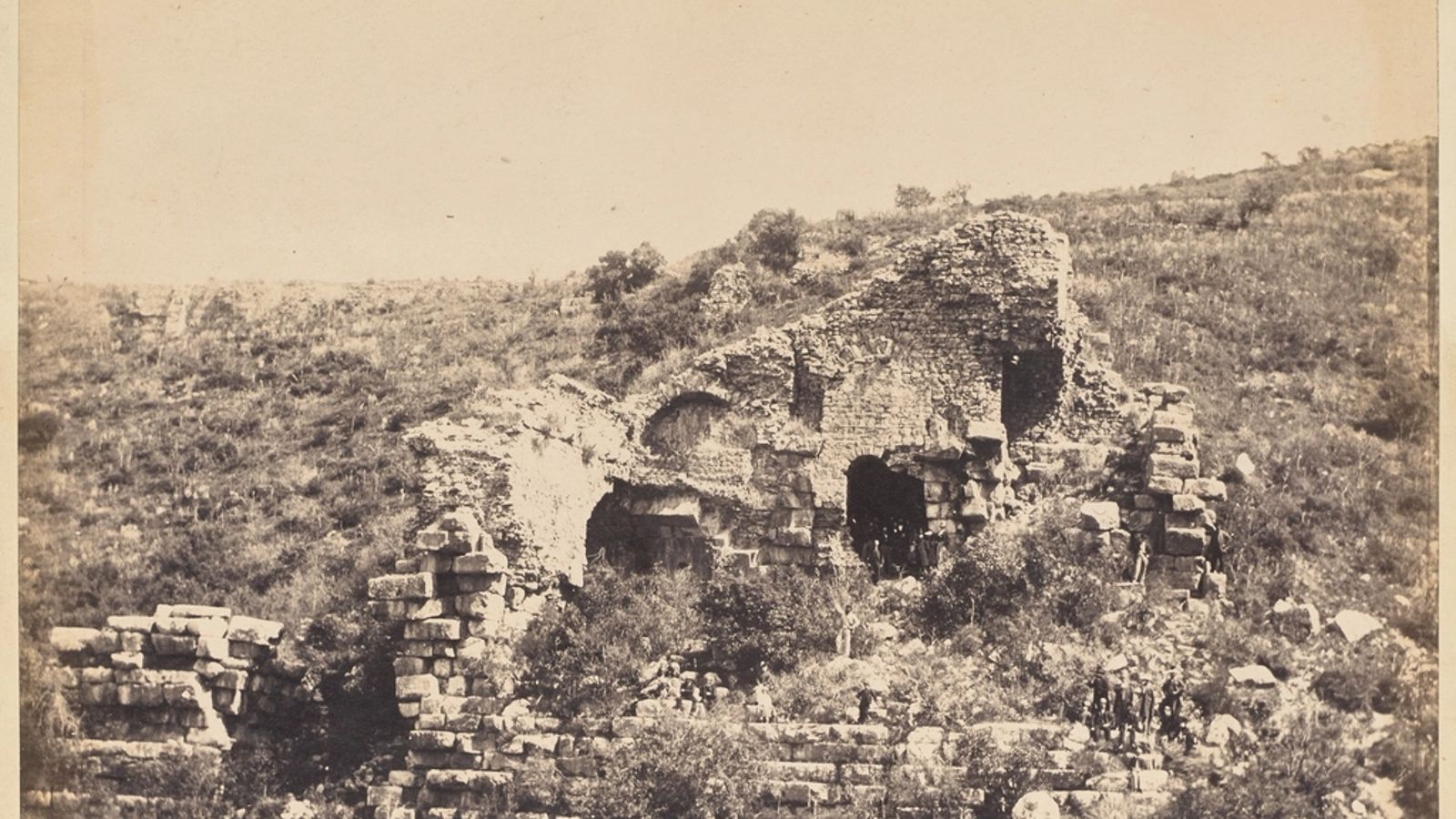
- Hero image source by thegetty / openverse, cc0.