Deep in the green and humid heart of the Mato Grosso – that’s in Brazil – in a valley around ten miles wide surrounded by lofty mountains lies the ruins of a city. Ancient, more ancient than the oldest discoveries in Egypt, you approach the monolithic ruins on a stone paved road. The houses are low and windowless and, in the centre, is a pyramid-shaped temple. Inscriptions reveal writing based on an alphabet similar to ancient European and Asian scripts – a sure sign of a great civilization.
The native peoples avoid it and tell tales of strange lights within the buildings that fill them with terror. If you are brave enough to face the dangers of the jungles, you may just find it: the lost city of Z.
Well, not entirely lost – there are still people living in the city. They have domesticated animals and mines in the surrounding hills. Not far away is another town and further to the south another large city, destroyed and buried in the jungles.
Key Takeaways
- Percy Fawcett was an experienced explorer who ventured into the Amazon jungle seeking a lost city, Z.
- Fawcett’s expeditions were driven by his belief in an advanced civilization hidden in the Amazon.
- Fawcett’s final expedition in 1925 resulted in his disappearance, along with his son and a friend.
- Various theories exist about Fawcett’s fate, including hostile natives, disease, and fantastical scenarios.
- Despite his obsession, Fawcett was a respected cartographer who showed more respect for native cultures than was typical for his time.
It sounds a bit far-fetched to us today. But, if this was 1925 and your name was Sir Percy Fawcett, not only do you believe in this tale with every fiber of your being, you’re about to embark on a journey into the green hell that is the unmapped Amazon to find this city and prove, once and for all, that an advanced civilization once lived, or still lives, in the Amazon jungle. Unfortunately for you, but fortunately for unsolved mystery enthusiasts of the future, you will not return leaving us with a double mystery to solve: what happened to Sir Percy Fawcett after he disappeared into the jungle?
Did he find his lost city and prove all his beliefs true? Or is the lost city of Z, much like El Dorado, nothing more than a fever dream that will end up costing a lot of people their lives?
Who was Percy Fawcett?
Percival Harrison Fawcett was born in 1867 in Torquay, county of Devon, England. While he’s mostly remembered for disappearing into the Amazon jungle, Fawcett had a rather interesting life.
In 1886, at the age of 19, he joined the royal artillery corps and was sent to Trincomalee in Ceylon, today Sri Lanka, where he met his future wife Nina. After some shenanigans and drama that would be right at home in Downton Abbey, the two finally got married and had three children: Jack, Brian, and a daughter, Joan. According to one source, Fawcett spent what little free time a military man stationed in Ceylon had exploring the island, looking for ancient ruins and recording mysterious inscriptions. I’m not sure how true this is, but Fawcett had a desire for adventure, so this wouldn’t surprise me in the least.
In 1901, Fawcett joined the Royal Geographical Society with the intention of studying surveying and cartography, and this is where his life starts getting interesting. At the time, it was common practice for the Secret Service to recruit members from the Royal Geographical Society. The Society was keen to map the entire world, so surveyors and cartographers travelled all over the place.
It was the perfect cover, and in 1901, Fawcett found himself working for the British Secret Service in Morocco. However, it wasn’t the deserts of Morocco that would steal the explorer’s heart – that honor belonged to the jungles of South America.
In 1906, Fawcett finally got the chance to indulge in his fantasies of exploration when he was sent to Brazil in order to map the jungle region on the border of Bolivia and Brazil. The Society had been hired as an independent third party to map the area and settle some border disputes. Fawcett fell in love with the jungle and between 1906 and 1924, he would go on seven expeditions.
In the movie, The Lost City of Z, Fawcett is depicted as a bit of champion for the native peoples of the Amazon. He goes in front of the Royal Geographical Society, trying to convince them that an advanced civilization once thrived in the Amazon jungle. Fawcett certainly had more respect for the native people of the Amazon – he was even once accused of ‘going native’ for painting his face with bright colors using berries like the Native warriors. However, he didn’t consider the Native people as equals. He was ahead of his time, the time being the early 1900s, but he still believed in the superiority of the white race. According to John Hemming, in his books on the history of the Amazon, Fawcett’s theories are nothing more than ‘eugenic gibberish’. In my opinion, this is a bit harsh. I doubt Fawcett would’ve survived seven expeditions into the jungle if he completely disrespected the local people. Unfortunately, he does make some claims about white Indians that border on the master-race theories Blavatsky style, but we’ll get to that in a bit.
In 1914, Fawcett returned to England to serve his country in WWI. He served with distinction, spending three years in the hell of the trenches, including the Somme, and was awarded the Distinguished Order for Valour. In 1919, he returned to Devon, and, like most men who served, he probably came back traumatized.
Apparently, when asked about cannibalism, he replied that ‘at least [it] provides a reasonable motive for killing a man, which is more than you can say for civilized warfare.’ I’m no psychologist, but that sounds like trauma to me. Spiritualism as a movement had been around since the 1850s and depending on the source, Fawcett was either only mildly interested in his younger years or he was already attending séances, but most seem to agree that his interest in spiritualism increased after the war because trauma will do that.
Despite what you might think of his beliefs, Fawcett was one of the last old-school adventurers. David Grann sums it up nicely in his book when he says that Fawcett ‘ventured into the blank spots on the map with little more than a machete, a compass, and an almost divine sense of purpose.’ He seemed impervious to disease and colleagues and fellow explorers considered him an imposing figure and the model of physical efficiency – he was willing to travel lighter and fare harder than most people would consider possible. In his time, he became a bit of a celebrity and counted Sir Arthur Conan Doyle and H.R. Haggard, the writer of King Solomon’s Mines, among his friends. He was awarded the Royal Geographical Society’s Founder’s Gold Medal in 1916 and his article, Bolivian Exploration, was published in the March 1915 edition of its Geographical Journal. If it wasn’t for his obsession with finding the lost city of Z, he probably could’ve lived to an old age, enjoying his fame and celebrity surrounded by friends and family.
Fawcett’s lost city
In May of 1906, Fawcett set sail for the great Americas and by June found himself in La Paz, Bolivia. It was the first of many expeditions into uncharted and unexplored rainforests. Other than the dangers of the jungle, such as hungry animals, creepy crawlies, more insects than you could possibly imagine, and poisoned darts from unfriendly natives, Fawcett often encountered dangerous working towns fuelled by the booming rubber industry with poor working conditions and desperate men – a volatile combination. Initially, his mission was making maps, but it soon evolved into something more.
Early on, Fawcett already had some ideas about a lost city hidden in the jungles of Brazil. While El Dorado had been relegated to the realms of myth for the learned folk, the dream of lost cities in the jungles of South America never really died. The discovery of Machu Picchu in Peru in 1911 further bolstered Fawcett’s dreams of finding a lost city in Brazil. By 1914, Fawcett had formed a fairly detailed picture of what he supposed his lost city was like and where to find it – he simply called it Z.
Fawcett believed that a complex civilization once thrived somewhere in the Mato Grosso region of Brazil, and the isolated ruins of a large city possibly still survived. Initially, Fawcett’s search for the city was based on scientific observation and deduction. While exploring the jungles, he noticed straight lines in the topography he was mapping which he deduced were the remains of roads. Many years later, it turned out that these deductions were, in fact, correct. He also found pottery shards in earthen mounds on the flood plain. In the movie, Fawcett uses these shards to argue that the Amazon jungle was hiding the ruins of an ancient civilization. However, in Exploration Fawcett, published by his son, Brian, in 1953, and based on Fawcett’s memoirs, he wasn’t all that impressed with the pottery. Archaeologists today are far more excited about these pottery shards than Fawcett was. In Fawcett’s defense, he was a military man and a cartographer, not an archaeologist. Fawcett was also very impressed with how well the native tribes have adapted to life in the jungles and how organized their societies were. Some sources claim that he also found petroglyphs and the remains of ancient engineering, whatever that means, but I couldn’t find any specific examples; however, I reckon pottery and roads were enough of an indication that he was on the right track. If only he stuck with the science.
As it turns out, Fawcett might’ve been a bit of a creative writer in his spare time. In some of his reports to the Royal Geographical Society, as well as in his memoirs as they appear in Exploration Fawcett, Fawcett tells wonderful tales of his adventures and all the amazing things he saw while exploring the jungles. These marvels include: anacondas measuring up to 60 feet, birds able to peck through stones after plucking a special leaf, the tracks of an enormous beast living in the Madidi Swamps of the Beni in Bolivia – he believed these tracks to be a living Diplodocus – and human-like hairy beasts. This doesn’t do much to boost his credibility, but at least he didn’t lack an imagination. Of course, if this is true, I apologize to all the 60 feet Anacondas and human-like hairy beasts possibly reading this. In all fairness, it should be noted that some of the creatures he described have since been confirmed by science, such as the Double Nosed Andean Tiger Hound – a dog with two noses. But, I digress – while he was a very good cartographer, some of his adventures read a bit too much like fiction and that called some of his more scientific observations into question as well. And, to make things worse, the rumours.
One of Fawcett’s reports to the Royal Geographical Society in 1910 stated that he had met half a dozen men who swore to have seen white Indians with red hair and blue eyes. This further bolstered Fawcett’s belief that, hidden in the jungle, were the ruins of a lost city, formerly the home of what he called a ‘robust and fair people’, a proto-Indian race which ‘must have a civilized origin’. He describes them as a ‘superior race’, his words not mine, and when a native Amazonian told Fawcett that his ancestors built the cities, Fawcett wrote, ‘this I am inclined to doubt for he, like the Mehinaku Indians, is of the brown or Polynesian type, and it is the fair or red type I associate with the cities.’ And there’s our early 1900s racism.
Fawcett also tells of a meeting with a man selling six metal figures, reminiscent of Ancient Egypt. Unfortunately, the man refused to tell Fawcett where the objects came from. Then, Fawcett received a most marvellous gift from H.R. Haggard himself: a mysterious black basalt idol in the shape of a human male with a strange inscription.
Haggard claimed that the idol came from Brazil, most likely from one of the oh so many lost cities. Fawcett took the idol to the British Museum, but no-one there could decipher the inscription or tell him anything about this mysterious idol or where it came from. Fawcett, a believer in Spiritualism, took the only scientific option left to him. He visited a psychic.
The psychic apparently had more archaeological knowledge than all those trained experts at the museum. After holding the idol in a dark room, the psychic claimed to see a large continent between Africa and South America long before the rise of Egypt. There were elaborate temples, carved columns and a procession of what could have been priests.
Then disaster struck – violent volcanic eruptions, flaming lava and mighty earthquakes. The sea levels rose, and parts of the continent sank into the sea. I’m guessing the idol was saved by a very dedicated priest who happened to be one hell of a swimmer.
And if you’re now thinking Atlantis, you’re not the only one. Fawcett now believed that his lost city of Z was related to Atlantis. Now, before we continue down this rabbit hole, I should point out that the idol that started all this is today considered to have been a fake.
Whether Haggard was playing a practical joke on his friend that got out of hand, or whether someone had taken Haggard for a ride is unclear.
And all this brings us back to Madam Blavatsky, the Theosophical Society, and their nonsense about a superior master-race that lived in Atlantis. Fawcett was now convinced that the city of Z was more ancient than he initially thought; it was older than Egypt itself. He also believed there was a connection between Atlantis and parts of Brazil.
While serving in World War I, the lost city became more of an undiscovered utopia hidden in the jungles. The civilized world that Fawcett had served in the military was falling to pieces; Fawcett, like so many others, started searching for a civilized world that made more sense than the one he was living in. Unlike those searching for El Dorado, whose only interest was wealth, Fawcett wanted to find the stores of knowledge that he believed was hidden in the city of Z.
The Theosophical Society believed that the teachings of Atlantis were stored in record houses called White Lodges. Fawcett believed that Z, far from just being another lost city, was the last outpost of the refugees from Atlantis and one such White Lodge. Like many Spiritualists, Fawcett shows a level of frustration with science and academic experts who didn’t share his belief in the existence of Z and all the knowledge stored there, just waiting to be found.
Fawcett’s claim of an ancient civilization was further bolstered by his discovery of what is today known as Manuscript 512. Believed to have been written by João da Silva Guimarães, a Portuguese fortune hunter, around 1753, the document can be found at the National Library of Rio de Janeiro. João da Silva Guimarães claimed to have discovered the ruins of an ancient city back in 1753.
The writer describes arches of a great height, a square plaza with an extraordinarily large pillar and spires in the Roman style in each corner. They came upon a statue of a young man, carved in stone, naked from the waist up with a crown of laurel on his head and possibly carrying a shield – the English translation is a bit vague on this and I don’t read Portuguese. On the left side of this plaza is a temple with crosses in various styles.
The ruins described by these early explorers are massive. They discovered something that resembled a manor house a cannon-shot distance from the city, and it appears that they were seeing signs of civilization for three days as they walked. Of course, we have no idea how fast they were walking, but suffice to say, if these guys are to be believed, they found themselves a little Greece in the jungles of Brazil.
I’m a little sceptical about this and since our early explorers conveniently forgot to say where they found this amazing little Greece, we can’t go and look for ourselves. Fawcett didn’t believe this city to be his lost Z, but decided to find it once he found Z.
Fawcett’s belief in a lost civilization in the Amazon didn’t sit well with his peers and he faced a lot of ridicule for his beliefs. At the time, Europe was on a civilizing mission in South America. If it was true that a thriving advanced civilization once existed, it would prove European involvement and colonization unnecessary and the powers that be, who were very interested in the natural resources such as rubber and gold, didn’t like that idea one bit. So, in 1925, Fawcett set off on his final quest to find his beloved city of Z and prove himself right once and for all.
Into the jungle never to be seen again
In 1925, with funding from a London-based group of financiers, known as the Glove, Fawcett and his party, consisting of his son, Jack, and his son’s best friend, Raleigh Rimmel, set off on the final ill-fated expedition to find Z. In the early 1920s, Fawcett had made two attempts, but both expeditions ran afoul of disease and exhaustion and returned empty-handed, so he was determined not to fail again.
Watch Now
Open Video
Video Briefing
The Lost City of Z: Solving the Mystery of a Vanished Civilization
Fawcett had scouted the area he was heading to in 1920, but the region was still unmapped. The party of three arrived in the Brazilian frontier town of Cuiaba, the capital of Mato Grosso, on around the 3rd March, 1925. Here they collected provisions, animals and two Brazilian porters.
On 20 April, 1925, the expedition, now including two Brazilian labourers, two horses, eight mules, and a pair of dogs, Pastor and Chulim, departed from Cuiaba. Fawcett considered dogs ideal travelling companions – especially the hunting and retrieving kind. Around four weeks later, they arrived at the last European settlement on the route, Bakairi Post, a trading depot.
They rested and sent some letters home. Jack’s letters were optimistic and perhaps naïve. He was on a big adventure with his dad, and it appears that the young man didn’t quite realize the dangers they would be facing.
While at the trading post, Fawcett also talked with a local chief who corroborated tales of ‘old cities’ in the region. They left Bakairi on May 20th. The expedition sent their last letters from Dead Horse Camp on 29th May, 1925.
In his letter, perhaps a bit ominously, Fawcett refers to the white bones of his horse – the one he had to shoot on this very spot in 1920 and the origin for the name of the camp. I suppose we can be thankful he was never requested to name anything else. He mentions that it gets very cold at night and the insects and heat only struck at mid-day.
The letter ends with: ‘You need have no fear of any failure.’ It would be the last time anyone heard of the Fawcett party. The letter was carried back to the Bakairi outpost by the native porters who refused to continue into another tribe’s territory.
Fawcett included the coordinates of Dead Horse Camp in his letter; however, these coordinates didn’t match previously recorded coordinates for the location of this camp. It’s unlikely that Fawcett, a cartographer and experienced explorer, would make this kind of mistake. Some believe he did it to discourage rescue efforts should he not return.
This would be Fawcett’s eighth trip into the jungles, so he came prepared. The party carried canned foods, powdered milk, guns, flares, a sextant, and a chronometer. Fawcett also chose his travel companions with care – both his son and Rimmel were young, healthy, and, most importantly, loyal.
Fawcett decided to travel light and with a smaller group partly because of his concern about a rival claiming his city and partly to move faster and be less noticeable to the native tribes. Many of the local tribes were still, understandably, hostile to Europeans. Fawcett described his two companions as ‘strong as horses and keen as mustard’.
While they might have had the necessary enthusiasm and youth for the journey ahead, they were inexperienced in the ways of the jungle which, according to some sources, might’ve been fatal. As for Fawcett, he was fit and healthy, but he was already 57 when he left on his final expedition, and while his last letter was optimistic, there are some suggestions that Fawcett himself realized that he might not be in the best possible condition for such a grueling expedition.
Fawcett left very clear instructions stating that he didn’t want anyone to come looking for them. He figured if something happened to him, others who have even less experience in the jungle would have no chance and, most likely, would get themselves in trouble. However, human beings are incapable of following good advice, so a great many people had gone looking for the Fawcett party over the years. Many of those people died or disappeared into the jungles themselves never to be seen again; current estimates are about 100 people in total.
Fawcett expected the expedition to take a couple of months at the minimum but up to a year or even more. However, when there was still no word by 1927, people started to get worried and searches for the lost trio commenced.
The first of many set off in either late 1927 or 1928, sources can’t seem to quite agree on this, under the leadership of Commander George M. Dyott. The search party followed Fawcett’s trail to a village of the Nahukwa tribe where they discovered a small brass plate marked “W.
S. Silver and Company” – a London firm that supplied Fawcett with some airtight metal cases. While this initially was cause for celebration, it later turned out that the cases had belonged to an earlier expedition and was most likely a gift to the local tribes.
According to Dyott’s report, the Fawcett party travelled to the upper Kuluene River, the territory of the Kalapalo tribe. They were going slowly because one of the younger men, possibly Rimmel, was lame and exhausted. The Kalapalo claimed that the party left, and they saw smoke from the party’s campfires for five days, but there was no smoke on the sixth day, so they assumed the party had been killed.
Dyott believed the Nahukwa to be the killers, but the Kalapalo claimed it was a fierce group known as the Suya. Dyott also stated that he met with Aloike, the chief of the Anuhukua and, in his opinion, the person most likely responsible for the deaths of the Fawcett expedition.
In 1931, the Penn Museum sent their own expedition into the Mato Grosso region. This expedition had no interest in finding the Fawcett party, they just wanted to make a documentary. However, it was impossible to go to the Mato Grosso and not run into the Fawcett mystery. Vincenzo Petrullo, the ethnologist of the expedition, also met Aloike while exploring further north towards the Xingu River. As it turned out, these folks had seen Fawcett and his companions six years prior.
According to Petrullo, he inadvertently followed the same trail that Fawcett himself had taken and thus met the same Native people who Fawcett ran into. Like the Dyott expedition before him, he reached the Kalapalo village on the Kuluene River. Two of the villagers told him the story of three white men visiting their village a couple of years before.
Since it was only their second meeting with outsiders, the visit was memorable for the villagers. The white men arrived at the Kalapalo village in the company of some Anuhukua tribesmen who had acted as guides from their own village on the Kuluseu, about four days away. The white men had packs and arms, but no gifts.
The Kalapalo provided the party with food and tried to convince the men not to continue. The younger men were both ill and reluctant, but their leader, presumably Fawcett, insisted, so they ferried the men across the Kuluene River. From there, the story is the same as the version of events reported by Dyott.
For five days after their departure, the Kalapalo saw the smoke as the small group lit campfires. However, on the sixth day, there was nothing. The tribe assumed that the travellers had reached the forest to the east.
Later traces of their camps were found, but the white men themselves were never seen again. Petrullo believed that Fawcett and his party most likely died of hunger, dehydration or disease, or perhaps all of the above, somewhere in the dense jungles to the east of the Kuluene River. Petrullo pointed out, quite logically, that white men were not exactly a common sight in the Amazon jungle so if they had still been alive, someone would’ve most likely known about it.
However, in the 1950s, another version of events surfaced. According to Orlando Villas-Boas, a Brazilian indigenous rights activist who worked among the native tribes in the Amazon jungles of Brazil, he got the truth, in 1951, straight from one of Fawcett’s killers – a member of the Kalapalo tribe. According to Villas-Boas, three things happened: Firstly, Jack urinated in the river upstream from the village.
Since this is where the tribe’s drinking water came from, it was considered an affront to the tribe. Secondly, one of the party members shot an animal and brought it to the village. Among the Kalapalo, food is shared but when one villager approached to cut some meat, he was pushed away.
However, the biggest insult was when one of the party members struck a child playing with their gear. The tribe allowed the party to leave the next morning and killed them after they travelled some distance away from the village.
In the 1960s, Danish explorer Arne Falk-Rønne travelled to the Mato Grosso region looking for the explorer and, in 1991, he wrote a book about what he learned from Orlando Villas-Boas. In his book, Villas-Boas said that Fawcett and his companions had a mishap on the river and lost most of the gifts they brought along for the native tribes they would meet along the way. Arriving without gifts would’ve been a breach of protocol and, by this time, most members of the expedition, so two out of three, were seriously ill which made them a danger to the tribe.
Once again, the story ends with the death of the three men. Jack Fawcett and Raleigh Rimmel were thrown into the river, but Colonel Fawcett was given a proper burial since he was an old man and, therefore, distinguished.
In yet another version of events, also from Villas-Boas, the men were killed after Jack Fawcett either raped or seduced one of the chieftain’s wives. Percy Fawcett then demanded porters and crews and slapped the chieftain when he refused. However, based on what we know about Fawcett, and his son for that matter, this is completely out of character. If Fawcett had behaved this way on earlier expeditions, he would’ve been killed very early on.
Orlando Villas-Boas also claimed to have found Fawcett’s remains after the tribe told him where to dig. Apparently, he had asked what the tribe had done with the bodies but the person he talked to couldn’t remember, only that the bodies had been buried. Eventually, another tribe member told Villas-Boas where to dig and that’s when he found the remains of one person.
He claimed that the remains he found were wearing European clothes, but I’ve been unable to verify that. He wasn’t sure whether the bones were Fawcett specifically, but he was confident that the bones belonged to at least one member of the Fawcett party. Of course, this was well before DNA testing became a thing.
He sent some of the bones to England for examination but was informed that they couldn’t have been Fawcett due to the length of the tibia not corresponding to Fawcett’s height and the bones were returned to him. Apparently, the remains are currently at the Forensic Medicine Institute of the University of Sao Paulo. Villas-Boas wasn’t convinced by the findings of the forensic anthropologist in the UK because he believed the British had a bit of a hero-worship for Fawcett, and let’s be honest, he wasn’t wrong.
Villas-Boas felt that the British public wouldn’t like to admit that their hero was killed for disrespecting the locals. As for the bones, according to anthropologist Benedict Allen, who undertook a one-man expedition to find out what had happened to Fawcett in 1998, the skeleton found by Villas-Boas had in fact been that of the chief’s grandfather.
Now, before we start blaming Villas-Boas for spreading false rumours, it’s important to note that he was genuinely concerned about the Amazon natives’ rights and worked his entire life to protect those rights. He also received several awards and was even nominated for the Nobel Peace prize. However, Villas-Boas was most likely biased in favour of the tribe and his friends within the tribe and, if they had indeed killed Fawcett, he would’ve been more likely to believe a story where Fawcett is painted as a typical colonial abuser.
Of course, it’s equally possible that the story Villas-Boas was told was partially or wholly fabricated by whoever told it to him. The fact that there are so many different stories coming from this one tribe makes me wonder if perhaps even the tribe themselves aren’t quite sure what happened. Villas-Boas was probably also more invested in painting European encounters with natives in a negative and destructive light while painting the native tribes as unaggressive and innocent, simply protecting themselves, which probably isn’t entirely accurate either.
It does make him a somewhat unreliable narrator, but could there be some truth in the tale?
Fawcett was an experienced explorer, and he would’ve known that being that disrespectful could get you killed. While every tribe certainly had their own little customs, Fawcett had survived his encounters with native tribes for seven prior expeditions, so he was probably adept at quickly picking up what was completely unacceptable. His travel companions, however, were not as experienced.
Fawcett most certainly gave them a good run-down of what to expect in the jungle and how to behave, but the younger men were sick, so probably not thinking clearly, and Fawcett was perhaps either sick himself or simply not able to supervise the younger men 24/7. He was looking for a lost city, so he was most likely talking to chiefs and scouts and hunters trying to plot his next move. However, even if you take all these factors into consideration, I find it unlikely that any member of the party would’ve made a blunder big enough to get them all killed.
There is simply no physical proof of what happened either way, so we’ll never know.
There have been many sightings of Fawcett over the years. In March 1932, a Swiss trapper, Stephen Rattin, claimed to have seen Fawcett wearing animal skins and being held captive by local natives. According to Rattin, he had met a white man with a long beard held captive while travelling along the Rio Arinos River.
According to some versions of events, the man gave Rattin his signet ring and Fawcett’s wife, Nina, recognized the description of the signet ring. However, the sighting took place hundreds of miles away from where the party disappeared. One of the many explorers of the jungle also pointed out that the natives don’t wear animal skins – it is simply too hot.
For the most part, the native people go mostly naked. In the 1950s, a tale of Fawcett’s shrunken head spotted in a village in the Upper Xingu did the rounds. However, it’s generally accepted that the shrunken head is just a piece of deeply disturbing fiction.
In 1979, a gold signet ring belonging to Fawcett was discovered in the backroom of a shop in Cuiaba. It was engraved with the family motto: Nec aspera terrent – hardships hold no fear. One theory suggests that the party had been mugged and then killed by soldiers who were hiding in the jungles after a revolution. Latin America had several revolutions in the 1900s, but the only one I’m aware of in 1925 was a revolution in Ecuador which is on the other side of the continent. In 1910 there was revolution in Mexico, but that is even further away. A far more likely explanation, in my humble opinion, is that Fawcett used the ring as a gift or to barter for supplies. The ring eventually made its way to Cuiaba, possibly in the possession of hobbits, because, as we all know, rings tend to travel.
Then we have the more fantastical theories. One theory states that Fawcett remained in the jungle voluntarily to become the chief of a tribe of cannibals. Another theory claims that Fawcett had hoped to set up a community in the jungle that would be based on tenets of Theosophy and worship of his son, Jack.
In fact, quite a few of Fawcett’s associates had planned to go and join Fawcett, presumably after he established this commune of his, to live in a new, free life. Apparently, much of the mystery surrounding the disappearance of Fawcett is his family trying to protect their father’s reputation. One psychic claimed to have had contact with Fawcett until 1948 when he reported his own death.
Fawcett’s wife, Nina, apparently also claimed to have been on the receiving end of telepathic messages. A medium asked to analyse the Colonel’s scarf had a slightly more gruesome tale – in a trance, the medium saw Fawcett and his companions murdered and dumped in a lake.
Fanciful tales aside, we’ll never know what happened to the Fawcett party. It’s unlikely that the jungle is going to give up those secrets any time soon. Who knows, perhaps Fawcett found his beloved Z and decided to remain there for the rest of his life.
Did we decode the mysteries?
I believe Percy Fawcett and his young companions died in the jungles of the Mato Grosso region in 1925. What exactly killed them will remain a mystery. One of the party was getting older, two were inexperienced and already sick and exhausted, and they were going into unexplored territory. They could’ve been killed by hostile natives, or they could’ve died of malnutrition, disease or dehydration.
Personally, I don’t believe the Kalapalo tribe killed them. If they died at the hands of Kalapalo natives, it was most likely individuals acting alone and not the decision of the tribe.
As for the lost city of Z that Fawcett went looking for – that might not be a myth. The ruins described in Manuscript 512 and Fawcett’s vision of Z most definitely never existed. However, several sites theorized to be the ruins of great settlements have been discovered in the Amazon jungle suggesting that ancient civilizations in the jungles are not that far-fetched. One of these, Kuhikugu, might be the very settlement Fawcett went looking for.
In fact, he might even have found it. Unfortunately, he probably walked right through it without recognizing the site for what it was. After all, Fawcett was looking for the stone ruins of an Atlantean type civilization.
Conclusion
Today Fawcett is probably best known for the obsession that eventually cost him his life, but before all that, he was a cartographer, a good one, who showed more respect for the local native people and cultures than was common for the era. Some theorize that Arthur Conan Doyle’s The Lost World, and even the character of Indiana Jones, are based on Percy Fawcett. Was he a British hero or a colonial oppressor? That depends on your perspective. Either way, he was an interesting figure. As for his beloved city of Z – it’s unlikely that he ever found it in life but the writer in me hopes he found it in death.
Simon Whistler
Simon Whistler is one of YouTube's most prolific educational creators. Decoding the Unknown is his methodical investigation into the world's strangest phenomena — examined with rigour, curiosity, and a healthy dose of scepticism.
Frequently Asked Questions
Who was Percy Fawcett?
Percival Harrison Fawcett was a British explorer born in 1867 in Torquay, England. He is best known for his expeditions into the Amazon jungle in search of a lost city, which he referred to as ‘Z’.
What was the lost city of Z?
The lost city of Z was a mythical city that Percy Fawcett believed existed deep in the Amazon jungle. He described it as an ancient city with monolithic ruins, a pyramid-shaped temple, and inscriptions similar to ancient European and Asian scripts.
What was Fawcett’s background before his expeditions?
Fawcett joined the Royal Artillery Corps in 1886 and later became a member of the Royal Geographical Society. He served in the British Secret Service in Morocco and was awarded the Distinguished Order for Valour during World War I.
What evidence did Fawcett find that supported the existence of a lost civilization?
Fawcett found straight lines in the topography that he deduced were ancient roads, pottery shards, and evidence of organized native societies. He also discovered Manuscript 512, which described the ruins of an ancient city.
What happened during Fawcett’s final expedition in 1925?
Fawcett, along with his son Jack and Jack’s friend Raleigh Rimmel, set off on an expedition to find the lost city of Z. They disappeared in the Mato Grosso region of Brazil, and their fate remains a mystery.
What are some of the theories about Fawcett’s disappearance?
Various theories suggest that Fawcett and his party were killed by hostile natives, died of disease or starvation, or were captured and held by local tribes. Some more fantastical theories propose that Fawcett chose to stay in the jungle voluntarily.
What is the significance of Manuscript 512?
Manuscript 512 is a document believed to have been written by João da Silva Guimarães around 1753. It describes the ruins of an ancient city in the Amazon jungle, which Fawcett used as evidence to support his belief in the lost city of Z.
What was Fawcett’s relationship with the native peoples of the Amazon?
Fawcett had more respect for the native peoples of the Amazon than was common for his time. He was accused of ‘going native’ for adopting some of their customs, but he still held beliefs in racial superiority.
What was the reaction of Fawcett’s peers to his belief in a lost civilization?
Fawcett faced ridicule and skepticism from his peers, who did not believe in the existence of an advanced civilization in the Amazon. His beliefs were seen as a threat to European colonial interests in the region.
What is the current status of the search for the lost city of Z?
While Fawcett’s lost city of Z remains unproven, several sites theorized to be ancient settlements have been discovered in the Amazon jungle. One such site, Kuhikugu, might be the settlement Fawcett was searching for.
Sources
- Original Decoding the Unknown video: The Lost City of Z: Solving the Mystery of a Vanished Civilization
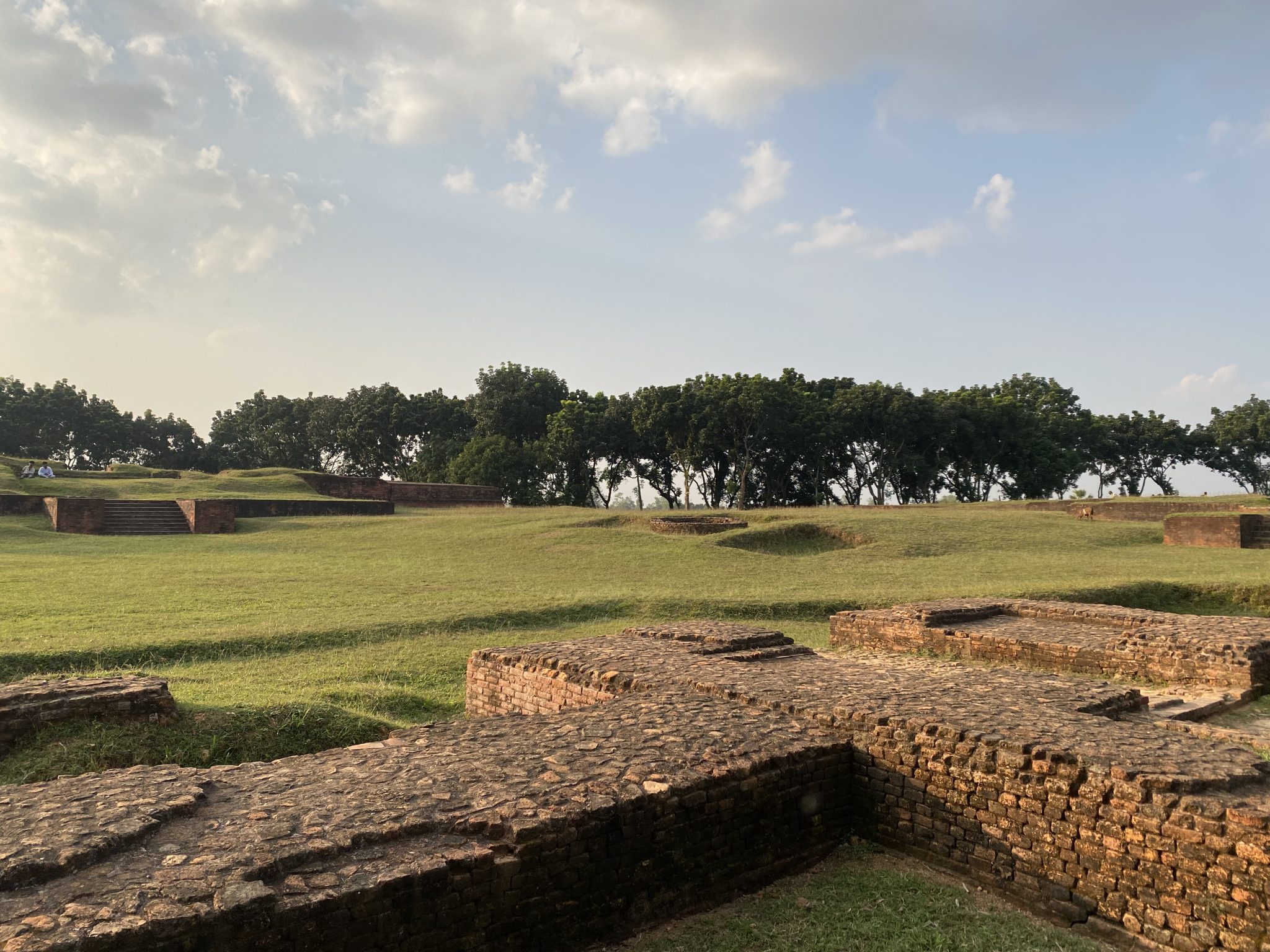
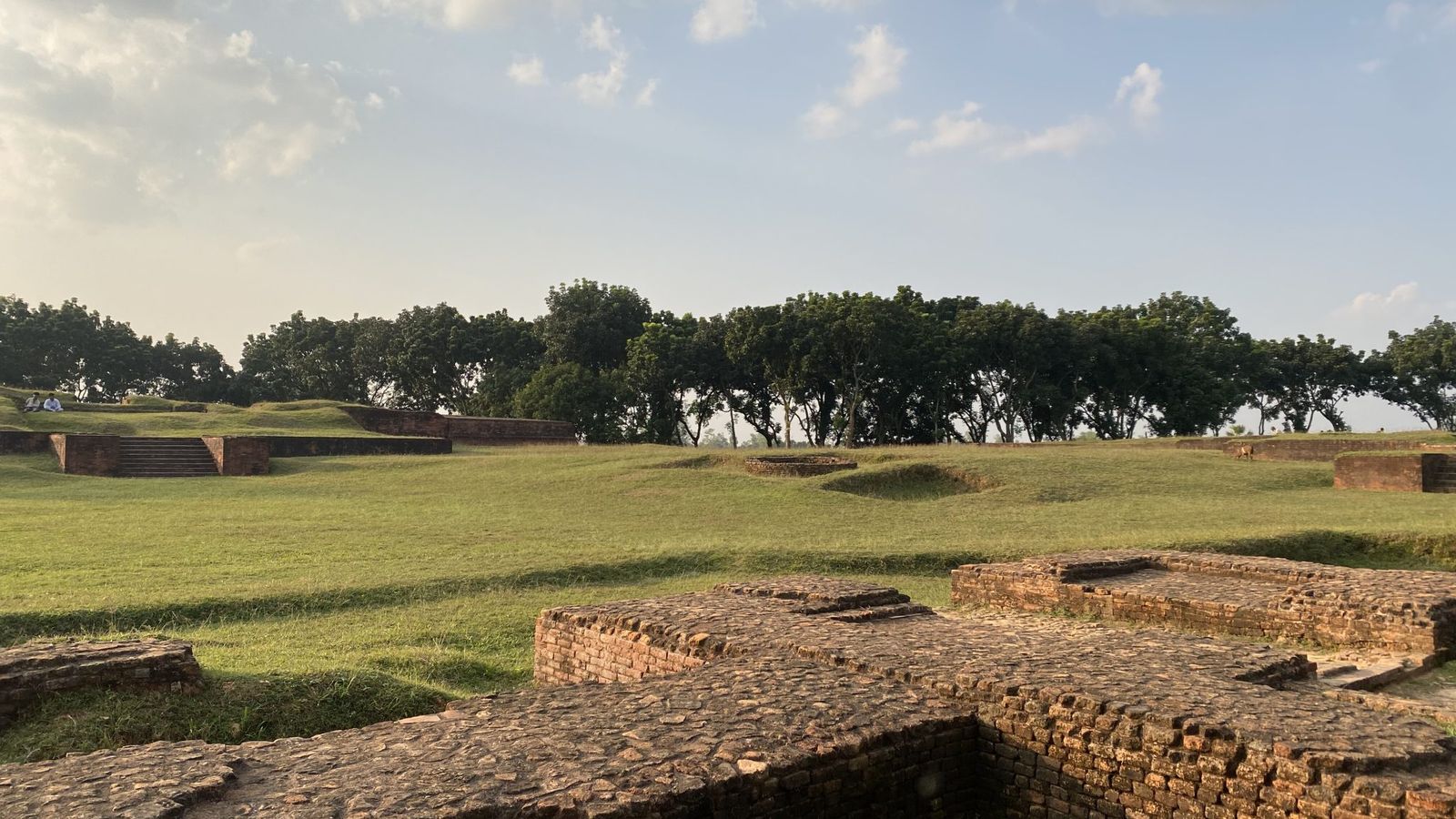
- Hero image source by Tawhid Sadman / openverse, cc0.