Imagine, if you will, a map of the world. Locate the United Kingdom, then Scotland at the top, and look to the west. You’ll see islands including the large archipelago known as the Outer Hebrides or the Western Isles. Keep zooming in and smaller islands become visible.
Go west from about the middle of Lewis and Harris, about 20 miles (32 km), and you’ll spot a small cluster of tiny, rocky islands. These are the Flannan Isles, also known as the Seven Hunters, and it’s on this remote and windswept part of the planet that an enduring mystery took place at the turn of the twentieth century.
The Mystery
In early December 1900, Principal Lighthouse Keeper James Ducat (pronounced “Duckett”), Second Assistant Thomas Marshall and Occasional Lighthouse Keeper Donald McArthur started their rotation at the recently built lighthouse on the largest piece of land to make up the Flannan Isles, Eilean Mór (pronounced “Ellen Mor”). The lighthouse had only been built a year before and was located in the Outer Hebrides where fierce winds, fog and huge storms were putting many ships in danger.
Key Takeaways
- The Flannan Isles mystery involves the disappearance of three lighthouse keepers in December 1900.
- The keepers vanished from Eilean Mór, the largest island in the Flannan Isles, under mysterious circumstances.
- The official investigation suggested a freak wave swept the keepers away, but many details remain unexplained.
- Various theories include abduction, murder, rescue gone wrong, and severe weather conditions.
- The lighthouse was automated in 1971, ending the need for keepers to stay on the remote island.
For the first couple of weeks, all seemed well on the island. The light was reported as being visible by ships that had passed it and gone on to dock at harbours on the larger islands of Lewis and Harris. One day, however, the light went out. After delays due to bad weather, a boat was eventually dispatched on Boxing Day 1900 to Eilean Mor and instead of three lighthouse keepers, they found no-one. Ducat, Marshall and MacArthur had completely vanished.
What had happened to these three experienced lighthouse keepers? Over the years, many theories have been touted as to what fate might have befallen these unlucky fellows. Let’s find out the backstory to the mystery and see what the most likely explanation might be.
The History
The inhospitable conditions of the north Atlantic have bred myths and legends aplenty in the area of the Outer and Inner Hebrides. It’s a wild and sparsely populated place so it’s not surprising that fairy tales and mysterious legends have popped up, even if they just started as things to keep the locals from getting too bored. Strange practices have apparently been mainstays over the decades and because of the remoteness of the islands, it’s not hard to believe that anything might be happening. The original Wicker Man film was set, although not filmed, on a Hebridean Island. The ocean also provided stories, with sea monsters, water spirits and mermaids a common feature in folk tales around the islands.
The islet of Eilean Mór itself was surrounded in superstition and otherworldly beliefs, a lot of it centering on fairies or being haunted, and there had long been a feeling of general weirdness around the place. It was rumoured to be a place where bodies were cremated on pyres many centuries ago. The standing stones of Callanish on the nearby isle of Lewis which predate Stonehenge also cast a somewhat mystical haze over the area.
The Flannan Isles have never been permanently inhabited, with shepherds coming over to graze their sheep but never staying overnight. The remains of a chapel to St. Flannan can still be found there and there have been tales of it being abandoned shortly after it was built due to supernatural forces tormenting the monks that tried to worship there. When the new lighthouse was started in 1895, it was in opposition to locals who warned of the wrath of St.
Flannan for disturbing his sanctuary. Indeed, one of the chief inspectors of the construction project died suddenly just before it was finished — perhaps not the greatest omen for the new lighthouse.
Nevertheless, the Flannan Isles Lighthouse was finished in 1899 and stood 23 metres (75 feet) tall. Counting the sheer cliff it was standing on, the lighthouse’s 140,000 candlepower lamp was about 84 metres or 275 feet above sea level, with a range of about 17 nautical miles — just under 20 normal miles or about 32 km.
There were two areas for construction and supply boats to leave provisions or transport personnel to and from the island: the West Landing and East Landing. These were located basically as far from the lighthouse as you can get on the small island, right on the other side. That was because the lighthouse was placed at the highest point for the best visibility and the landing areas were closer to sea level and somewhat sheltered.
Steep concrete steps came up from these landing platforms to the lighthouse, and because of how steep it was, railway or tram tracks as well as cranes were also built to haul up supplies by cable. There was a steam engine next to the lighthouse that powered the stuff going up and down these cable railways.
As this was 1899, there were no telephones or even telegraphs to connect the lighthouse to the mainland. The only way the lighthouse keepers had to contact the outside world should an emergency happen was by hoisting a flag and putting some discs on poles sticking out of the lighthouse balcony. By putting whatever number of discs on whatever poles, they could send status updates to someone on the mainland who was supposed to be keeping an eye on the lighthouse as a failsafe safety measure.
This someone was Roderick MacKenzie, a gamekeeper living almost at the closest point to the Flannan Isles on the larger island of Lewis. He had been given a telescope by the Northern Lighthouse Board and was charged with checking to make sure the light was visible and if the lighthouse keepers had hung out any alerts on their poles. Because of the fog and bad weather in the area, it was not unusual for MacKenzie to not even see the light, let alone the actual lighthouse, for a few consecutive days so it wasn’t particularly alarming if he couldn’t see it from one day to the next.
The lighthouse was to be manned by a team of 4 men with three at the lighthouse and the fourth as a relief man living on the mainland to be rotated in every three weeks or so. The first year of the Eilean Mor lighthouse’s operation went smoothly and without incident, apart from one lighthouse keeper, William Ross, having an accident with the cable railway. He was fortunate in that the supply boat was still at the landing meaning he could be taken ashore for treatment straight away rather than being stuck on a godforsaken rock in the middle of nowhere, relying on a gamekeeper with a telescope to spot some discs hanging on a pole some 20 miles away.
Ross recovered but by the time December 1900 rolled around, he was once again forced to leave the islands due to illness. That meant that the party working at the lighthouse when the mystery event happened were Principal Lightkeeper James Ducat, Second Assistant Thomas Marshall and Donald McArthur, who was Ross’s replacement and what was known as an Occasional Keeper — basically a part-timer, drafted in as and when needed. The fourth member of the team who was on the mainland for this leg was Assistant Keeper Joseph Moore.
A photograph of Ducat, Marshall and McArthur standing next to Robert Muirhead, who was the Superintendent of Lighthouses, was taken on the 7th or 8th of December 1900. This would be the last time anyone saw them alive.
Life as a Lighthouse Keeper
Living as a lighthouse keeper is one of those romanticised jobs that people say they wish they could do. They probably envision spending some quality time with books and cups of tea and occasionally climbing a flight of stairs to see if the massive light at the top is working. The vast majority of the world’s lighthouses are automated now anyway so there are barely any opportunities for eager hermits to get a foot in the door.
In the Outer Hebrides in the year 1900, however, it was a bit of a different story. With no contact with the outside world, stuck on a storm-battered rock with two other men you had to keep the peace with, and the sheer physical labour of keeping the landings clear and general daily maintenance, it was not for the faint of heart.
James Ducat was a married man with four children. Donald McArthur was also married with two children but Thomas Marshall was a single man. All were experienced men with decades of lighthouse keeping between them so this rotation was just standard procedure as far as they were concerned.
We know that all was well at the beginning. Ships passing the Flannan Isles had confirmed that the light was visible on the 7th of December but bad weather obscured it from being observed by the man with the telescope for another few days. All was still well on the 12th of December as reported by ships coming into Lewis but again, there came bad weather and fog and the light was not visible from the larger islands.
On December the 15th 1900, the cargo ship Archtor noted that the lighthouse was not working but due to also having managed to hit some rocks and cause itself considerable damage, reporting the light being out wasn’t at the forefront of the Captain’s mind when they eventually limped into port. There are contradicting reports about whether the Archtor did actually report the light being out and the report was lost, or they never actually reported it at all. Whatever the case, no alarm was raised at that time and Joseph Moore was set to start his rotation on the 20th of December anyway.
Due to extremely bad weather, Moore and the crew of the Hesperus, the boat that supplied the Flannan Isles lighthouse, didn’t actually leave until the 26th of December 1900. At this point, the light had not been officially seen since the 12th.
The Discovery
When they eventually made it to the small islands, a sense of foreboding came over the party. There was no flag flying, which was usual when the relief boat came. There were no empty supply boxes ready to be restocked. There were no men waiting to greet them. Obviously worried, the captain of the Hesperus blew the horn and fired some rockets into the air but received no reply.
Joseph Moore headed for the lighthouse, noting that the main entrance gate and two doors leading into the lighthouse were closed. Inside, he found a cold fire and neatly-made beds. Checking the light room itself, he noted in a letter to the Northern Lighthouse Board dated the 28th of December: “everything was in proper order. The lamp was cleaned.
The fountain full. Blinds on the windows etc.” So there didn’t appear to be anything wrong with the light — indeed it was left in good condition with all procedures having been followed. It just wasn’t on.
Moore lit the lamp and the next day he and the crew of the Hesperus continued searching the island. Moore wrote: “The following day we traversed the Island from end to end but still nothing to be seen to convince us how it happened.” He noted that the East landing seemed all in order with no indication that anything untoward had happened there. The West landing, however, was a mess with a box for holding ropes and tackle missing and some of the iron railings broken.
He also mentioned that Marshall and Ducat’s sea boots and waterproofs were missing from the lighthouse, meaning that they had been wearing them. MacArthur didn’t have such good kit, being just an Occasional Lightkeeper, but his “wearing coat” as it was called, was still in the lighthouse. Moore wrote: “Donald McArthur has his wearing coat left behind him which shows, as far as I know, that he went out in shirt sleeves. He never used any other coat on previous occasions, only the one I am referring to.”
A telegram was sent to the Northern Lighthouse Board by the Captain of the Hesperus on the day they reached the island:
A dreadful accident has happened at Flannans. The three Keepers, Ducat, Marshall and the occasional have disappeared from the island. On our arrival there this afternoon no sign of life was to be seen on the Island. Fired a rocket but, as no response was made, managed to land Moore, who went up to the Station but found no Keepers there.
The clocks were stopped and other signs indicated that the accident must have happened about a week ago. Poor fellows they must been blown over the cliffs or drowned trying to secure a crane or something like that. Night coming on, we could not wait to make something as to their fate. I have left Moore, MacDonald, Buoymaster and two Seamen on the island to keep the light burning until you make other arrangements.
As you can see, everyone assumed the keepers were killed due to bad weather, either by being blown off the cliff or drowning. As we’ll discuss later, however, it’s not really as clear cut as that.
The Official Investigation
Robert Muirhead, the NLB Superintendent who had his picture taken with the vanished men at the beginning of their rotation, arrived on the Flannans on the 29th of December to make an official report.
Muirhead saw that there were entries on the lighthouse slate dated the 15th of December. Keepers would make notes on the slate and then transfer them to the official logbook a little while later. These noted that the normal maintenance work had been carried out for the 15th. Coupled with the fact that the kitchen was tidied up, Muirhead concluded that the accident had happened on the afternoon of the 15th of December.
Checking out the landing platforms, he also noted that nothing seemed amiss at the East Landing but that at the West Landing there was evidence of something powerful having hit it, including that a box used to hold ropes that was housed 110 feet or 33.5 meters above sea level had been washed away. He also noted that a large stone, weighing over 2200 pounds or over a ton “had been dislodged from its position higher up and carried down to and left on the concrete path leading from the terminus of the tramway to the top of the steps.” He also saw that an emergency life buoy was missing but because the ropes used to fasten it hadn’t actually been untied, it seemed that the buoy had just been ripped off the railings by the sea.
Watch Now
Open Video
Video Briefing
The Flannan Isles Mystery
Muirhead’s conclusion of the events was thus: “After a careful examination of the place, the railings, ropes etc and weighing all the evidence which I could secure, I am of opinion that the most likely explanation of the disappearance of the men is that they had all gone down on the afternoon of Saturday, 15 December to the proximity of the West landing, to secure the box with the mooring ropes, etc and that an unexpectedly large roller had come up on the Island, and a large body of water going up higher than where they were and coming down upon them had swept them away with resistless force.
“I have considered and discussed the possibility of the men being blown away by the wind, but, as the wind was westerly, I am of the opinion, notwithstanding its great force, that the more probably explanation is that they have been washed away as, had the wind caught them, it would, from its direction, have blown then up the Island and I feel certain that they would have managed to throw themselves down before they had reached the summit or brow of the Island.”
So on the face of it, there doesn’t seem to be much of a mystery at all. The keepers went down to the West landing to tidy some stuff up, got hit by a wave and unfortunately were all washed away. But there are enough questions about the weather, the procedures and the men themselves that have cast the disappearance of the three lightkeepers firmly into the realms of the unknown.
Theories and Sticking Points
First, let’s revisit that gamekeeper with the telescope, Roderick MacKenzie. If the lighthouse had been dark since at least the 15th of December, why hadn’t he let anyone know? As previously mentioned, it wasn’t uncommon for the lighthouse and the light itself to be hidden from the mainland for a day or sometimes several days at a time.
According to MacKenzie, he had seen the light on the 7th of December but then not again until the 12th, so he wouldn’t have been worried straight away. Also, the new rotation of keepers was due to go out on the 20th of December anyway so even if he had raised concerns, everyone would have assumed that there was something technically wrong with the light which they’d sort out on the 20th, not that every man on the island was gone.
Unfortunately, due to the poor weather conditions, the relief ship did not set sail until 6 days later, on the 26th of December. By this time it was too late to help the keepers, but it seems that even if they had known they were in trouble, they still wouldn’t have been able to safely mount a rescue much earlier. MacKenzie was getting antsy, though, and had asked other people to see if they could have better luck at spotting the light from the Flannan Isles. In his report, Muirhead admits that even if a trained lightkeeper had been the lookout and might have reported the light being out much earlier, it still wouldn’t have prevented the occurrence that led to the men vanishing and presumably dying.
The Not-Very-Likely Theories
Let’s get into some of the theories surrounding the disappearance. The area of the Flannan Isles was home to many a superstitious and ghostly tale. There were rumours that when Joseph Moore stepped onto the Flannan Isles from the Hesperus, three very large black birds took flight from the rocks and disappeared. Spooky as that sounds, there is no evidence that this happened. Moore didn’t mention it in his report and it seems to be one of those retroactively added sprinkles of intrigue that in reality did not occur.
Other supposed “facts” about the case added later and mixed into the history was that the lighthouse log book contained entries mentioning storms and conditions so bad that the men were crying and praying to God. Again, these were not real. Muirhead looked at the logbook and daily slate entries and made no mention of any of the men crying or having misgivings about the weather in his report. All that was noted, according to him, was the routine stuff they’d do day to day.
These men were seasoned lightkeepers, well used to being holed up while bad storms crashed all around them. There would be no reason for them to suddenly start cracking.
Sea monsters and giant birds have also been given as the perpetrators in the disappearance of the three men. As per usual, the thought of a huge sea serpent grabbing the men off a platform is exciting, but as no reliable or truly credible sightings of said monster have been seen before or since, we can leave that one on the “no” pile.
There is also one very large sticking point that seems to put a hole in most of these theories. It was an iron-clad regulation that at least one person had to be in the lighthouse at all times. So how come all three men disappeared? Did they do it all at once or maybe over a series of hours or even days? Sure, you can maybe imagine a scenario where two men are outside and get into difficulty so the third rushes out to help, but as we’ll discover, it’s not quite so obvious as all that.
Abduction
A weird but slightly plausible idea is that of abduction — not the alien kind, but spies or pirates. Maybe a shipload of swashbuckling scurvy dogs or a stealthy boat of sinister agents rocked up one night and forced the keepers to leave the island against their will.
It’s within the realms of possibility, however, remember that they were on an island in the Atlantic specifically to prevent ships from getting wrecked so “rocking up” would be risky — there was a high probability of hitting something. There’s not much chance that a boat would be able to get near enough the island without knowing the area, and if the light was working, as it should have been before the 15th, the keepers would have spotted them hours before. If it did seem like there were ne’er-do-wells approaching, they could have barricaded themselves in the lighthouse.
Also, while they might know a bit about weather conditions around the Hebridean coasts, your average lightkeeper probably wasn’t going to be the key to helping you with any invasion or make much of a hostage. As we’d already established, it took 11 days from the men disappearing to anyone realising they’d gone. In the times before quick communication, they’d be pretty useless as hostages.
If this is reminding you of that other famous maritime disappearance of the people on the Mary Celeste, you are correct. Both cases were reintroduced into the public consciousness years after when people wrote fictionalised accounts of the events. With the Mary Celeste, it was Sir Arthur Conan Doyle writing a first-hand account of a survivor of the very similarly named “Marie Celeste.” Elements from this made-up story entered the collective memory to the extent that people still refer to the real ship as the “Marie Celeste” instead of the “Mary Celeste” to this day.
The same thing happened with the missing lightkeepers on the Flannans. In 1912, a poem written by Wilfrid Wilson Gibson, called “Flannan Isle,” described the event from the point of view of the men on the relief vessel getting to the island on the 26th of December. He describes the three large black birds and also that there was an untouched meal on the table. He also mentions how all previous lightkeepers there had met a sticky end or gone mad.
None of these things were true but the detail about the meal being on the table especially stuck in the public’s mind.
Another eerie but explainable fact to the story is that when the men from the Hesperus entered the lighthouse, it was noted that all the clocks had stopped. This is not a chilling pointer to the time of their deaths, however, just a sad indicator that they’d been gone for a while as the clocks needed regular winding to work. If they’d all wound down, it meant that the men had been gone for at least a week.
Murder
So what other things could have happened to cause three men to vanish? Gibson wrote:
And how the rock had been the death Of many a likely lad: How six had come to a sudden end, And three had gone stark mad.
This is a working theory in some quarters — that one or more of the men had basically cracked from the pressure of living so far from their real homes in such claustrophobic and demanding conditions and had either killed the other two men or had tried to kill himself, had been restrained, but unfortunately everyone had ended up falling to their deaths.
Is this credible? Being a lightkeeper isn’t for everyone. Yes, there were two other people living with you but petty issues can become major flashpoints when you’re living in close proximity for extended periods of time. And it’s not like people were being psychologically vetted for roles like this.
Donald MacArthur, the Occasional lightkeeper who was there as a replacement, was an ex-soldier and had a reputation as being somewhat of a hot-head. Add to that that he had come almost directly from another shift somewhere else and you’ve got someone who’d been working without a break in bleak conditions for a couple of months straight. Add in the rumour that he was a drinker and that drink was not allowed on the premises of the lighthouse, and you’ve got an individual who would be irritable to say the very least.
So did he just snap and kill one or both of the other two? And then in a fit of remorse throw himself over the cliffs? Or maybe they were all arguing or struggling way too near the edge and just all fell to their dooms.
It could also be possible that one or more of the keepers was affected by mercury. Keith McCloskey, who researched this mystery thoroughly and wrote a book called The Lighthouse, also posits that the mercury that the lenses floated in could have adversely affected one or more of the keepers and led them to behave in a strange way. This could then have escalated into a situation outside where strong winds could have blown them all over. There are instances even in the more recent past where people isolated in lighthouses have committed murders so it’s not something we can strike off completely. It also seems to be the general consensus that if anyone was going to go on a killing rampage, it would have been MacArthur. As no bodies were ever found, though, any evidence of foul play has long since vanished too.
Rescue Gone Wrong
According to Archie MacEachern who later worked on the Eilean Mor Lighthouse, the men disappeared in the line of duty, trying to save a ship in trouble. He suggested that a ship was spotted from the lighthouse and all three keepers rushed out and, in the process of throwing out ropes to aid the stricken vessel, were themselves washed away. The wreck of a Norwegian ship was apparently found not long after the disappearance but it does beg the question as to why all three men left the lighthouse when protocol dictated that one should remain inside at all times, especially when the light would be crucial in a situation such as this.
And how long does it take to put a coat on? Surely MacArthur would have had time to throw it over his shoulders knowing they were heading down to the landing in bad conditions. If they did perish in the line of duty, it was all for naught as if they did manage to save a ship, it would have reported the incident once it made port.
The Weather
By far the most popular theory in the disappearance of Ducat, Marshall and MacArthur is that two men were working on the West Landing when a freak wave knocked one or both of them into the sea. The third man in the lighthouse, generally agreed to be MacArthur as his coat was left on the peg inside, rushed out to help and ended up meeting the same fate. This is what Superintendent Robert Muirhead deduced must have happened in his report to the Northern Lighthouse Board, but there are some very big questions around this version of events.
The first issue is the report itself. It’s the only one there is so that’s all the information anyone had to work with. The matter was also considered closed shortly after with no fatal accident report having been carried out which would normally have been done in such circumstances. The log books were never taken into evidence or just disappeared along the way, leaving very little official documentation about anything relating to the disappearances.
Some people have suspected that this was a cover-up of some kind.
Let’s talk about that wave. The box that held some ropes on the West Landing was, according to Muirhead, around 110 feet or 30 metres above sea level. If a wave had reached that high up the island it would have been one of the largest ever, anywhere in the world. It could have been lower and the spray was scattered higher up making the concrete steps fatally slippery, but 100 foot waves do not come along every day.
And if we are to believe that, say, one man got swept away, the other man had to hot-foot it back up at least 160 slippery concrete steps and then run all the way across the island in his boots and heavy coat to alert the third lightkeeper. This would have taken a considerable amount of time. The third man apparently dropped everything and just sprinted out with his colleague back down to the landing where — what?
Another freak wave occurred at exactly the time they got there? One monster wave hitting the island is conceivable, but the chances of two enormous waves hitting the island twice in a short period of time are tiny.
The logbook did not mention that there was a huge storm in the area either, and while there was a storm potentially large enough to have caused the damage at the West landing, it did not happen until two days later, on the 17th of December. Also, none of the bodies ever washed up, although given the long time it was between them disappearing and the relief boat coming, they may have floated out to sea.
There are other things that come across as weird about the whole situation, assuming it went down on the West Landing as Muirhead reported:
- Why was anybody on the West Landing at all? According to the notes they’d made that day, all the usual lamp preparations etc. had been done so nothing urgent needed doing. It was December in Scotland. The sun sets by 4pm at that time of year so lightkeepers do all their chores during the day and rest up and do indoor stuff in the evenings. There is no way that a seasoned lightkeeper like James Ducat would start some big maintenance project on some slippery concrete steps at 2 or 3 pm knowing that he only had an hour or so of decent daylight left. Basically, there was no reason for anyone to be outside in bad weather at that time.
- Why the West Landing? Muirhead stated in the report that the prevailing winds were westerly. If that was the case, why were they on the exposed West Landing? There were two landings available on the island and the other was on the more sheltered east side which had no reported damage. If they were expecting the relief boat on the 20th, it could have just used the East Landing. Therefore, again, there was no need to clear anything from the West Landing, especially 5 days before the relief boat was due.
- The distance problem. MacArthur would not have been able to see what was going on down at the landing so it’s unlikely he would have bolted outside without putting a coat on. Also, he had to stay in the lighthouse as per procedure so he probably wouldn’t have left unless notified by one of the other keepers. And again, it’s such a long way from the landing to the lighthouse that he might as well have put on a coat seeing as how much time would have already passed. The outer and inner doors being closed when the relief boat finally made it may not mean anything as it’s possible they could have been banged shut by the wind at some later point.
- The fine theory. It’s been mentioned that one of the keepers had previously been fined for losing supplies in a storm and that maybe they were securing some ropes on the West Landing to avoid being fined again. But no-one was coming for at least 5 more days. There’d be enough time left during another day to do that rather than suddenly deciding to do it in the middle of bad weather with the light fading. If that is the reason the men were outside, it’s a terribly sad outcome for a seemingly unplanned, reckless bit of behaviour. The ropes were still there, after all, with just the storage box being smashed to pieces.
- The actual storm timing. Keith McCloskey has done research into recreating the weather at the time of the disappearances and the conclusions were that the weather was getting increasingly bad as the day of the 15th of December wore on, making it even less likely that the men had thought nipping down to the West Landing would be a good idea. Also, from what we know of the log book and the reconstructed weather patterns, there was a big storm that could have caused the damage to the west landing but it happened on the 17th of December, two days after the keepers vanished. So what might have washed them away two days before?
There seems to be another culprit where weather is concerned, and that’s the wind. Maybe Ducat and Marshall were outside doing something by the lighthouse and just got blown over the cliff. MacArthur maybe did see them and rushed out to help, falling victim to the same treacherous gusts.
It is a fact that winds around the Flannan Isles and the lighthouse itself can easily be strong enough to knock people down and even lift them off their feet, so this seems to be the most likely explanation for how the three disappeared even if Muirhead thought it unlikely. Sad though it is, it’s probable that the force of nature just caught them out.
Aftermath
Joseph Moore, who was due to relieve one of the keepers and was the first man on the island after their disappearance, was badly affected by the whole affair. Muirhead said in his report: “If this nervousness does not leave Moore, he will require to be transferred, but I am reluctant to recommend this, as I would desire to have one man at least who knows the work of the Station.” So poor Joseph Moore had to keep working in the place where three of his friends and colleagues had just vanished and presumably died. He was plagued by the tragedy and felt a huge psychological burden for the rest of his life.
Also, remember the Archtor, the ship that may or may not have reported the light being out? It disappeared in the North Atlantic in 1912, presumably sinking with all hands.
In 1904, a new lightkeeper on Eilean Mor called John McLachlan fell from the lighthouse tower while cleaning the glass, making a total of 4 keeper deaths in 4 years.
William Ross, who was supposed to be on rotation at the time but was replaced by Donald MacArthur, dropped dead the year following the disappearances in another Hebridean lighthouse.
The fact that the bodies of Ducat, Marshall and MacArthur were never found adds to the mystery and general spooky feeling around the islands, and nowadays we can only speculate as to what really happened. As for the lighthouse at Eilean Mor itself, it was automated in 1971, meaning that nobody has to stay on the island ever again.
Simon Whistler
Simon Whistler is one of YouTube's most prolific educational creators. Decoding the Unknown is his methodical investigation into the world's strangest phenomena — examined with rigour, curiosity, and a healthy dose of scepticism.
Frequently Asked Questions
Where are the Flannan Isles located?
The Flannan Isles are located about 20 miles (32 km) west of the larger landmass of Lewis and Harris in the Outer Hebrides of Scotland.
What happened to the lighthouse keepers on the Flannan Isles in December 1900?
The lighthouse keepers James Ducat, Thomas Marshall, and Donald McArthur vanished from the Flannan Isles on December 15, 1900. Their bodies were never found, and the circumstances surrounding their disappearance remain a mystery.
What was the official explanation for the disappearance of the lighthouse keepers?
The official explanation, provided by Superintendent Robert Muirhead, suggested that the keepers were likely washed away by a large wave while working on the West Landing.
What were some of the theories about the disappearance of the lighthouse keepers?
Theories included abduction by spies or pirates, murder due to psychological stress, rescue gone wrong, and being blown over the cliffs by strong winds. The most popular theory is that they were washed away by a freak wave.
What was the role of Roderick MacKenzie in the mystery?
Roderick MacKenzie was a gamekeeper on the larger island of Lewis who was tasked with monitoring the Flannan Isles lighthouse using a telescope. He did not report the light being out until after the keepers had vanished.
What was the condition of the lighthouse when the relief team arrived?
The lighthouse was found in good condition with the lamp cleaned and the fountain full. The clocks had stopped, indicating that the keepers had been gone for at least a week. The main entrance gate and two doors were closed, and the kitchen was tidied up.
What was the significance of the West Landing in the mystery?
The West Landing showed signs of damage, including a missing box for holding ropes and broken iron railings. This led to the theory that the keepers were working there when they were washed away by a large wave.
What happened to Joseph Moore, the relief lighthouse keeper?
Joseph Moore was badly affected by the disappearance of his colleagues. He continued to work at the lighthouse but was plagued by the tragedy for the rest of his life.
What was the fate of the cargo ship ‘Archtor’?
The ‘Archtor’ reported that the lighthouse was not working on December 15, 1900, but it also suffered damage and did not report the light being out until it reached port. The ship disappeared in the North Atlantic in 1912.
What is the current status of the Flannan Isles lighthouse?
The Flannan Isles lighthouse was automated in 1971, meaning that no one has to stay on the island to operate it anymore.
Sources
- Original Decoding the Unknown video: The Flannan Isles Mystery
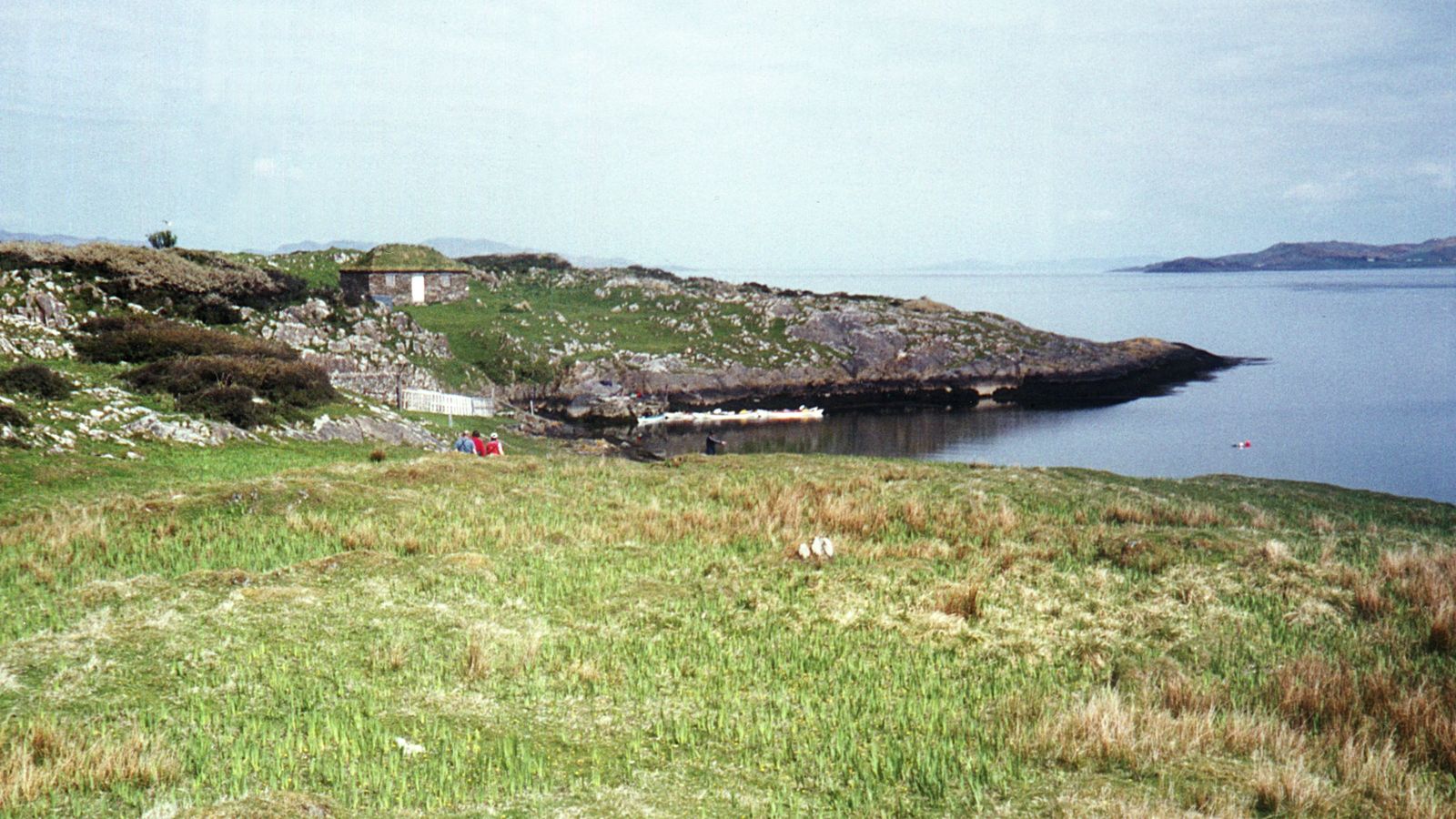
- Hero image source by Andy Waddington / openverse, by-sa.