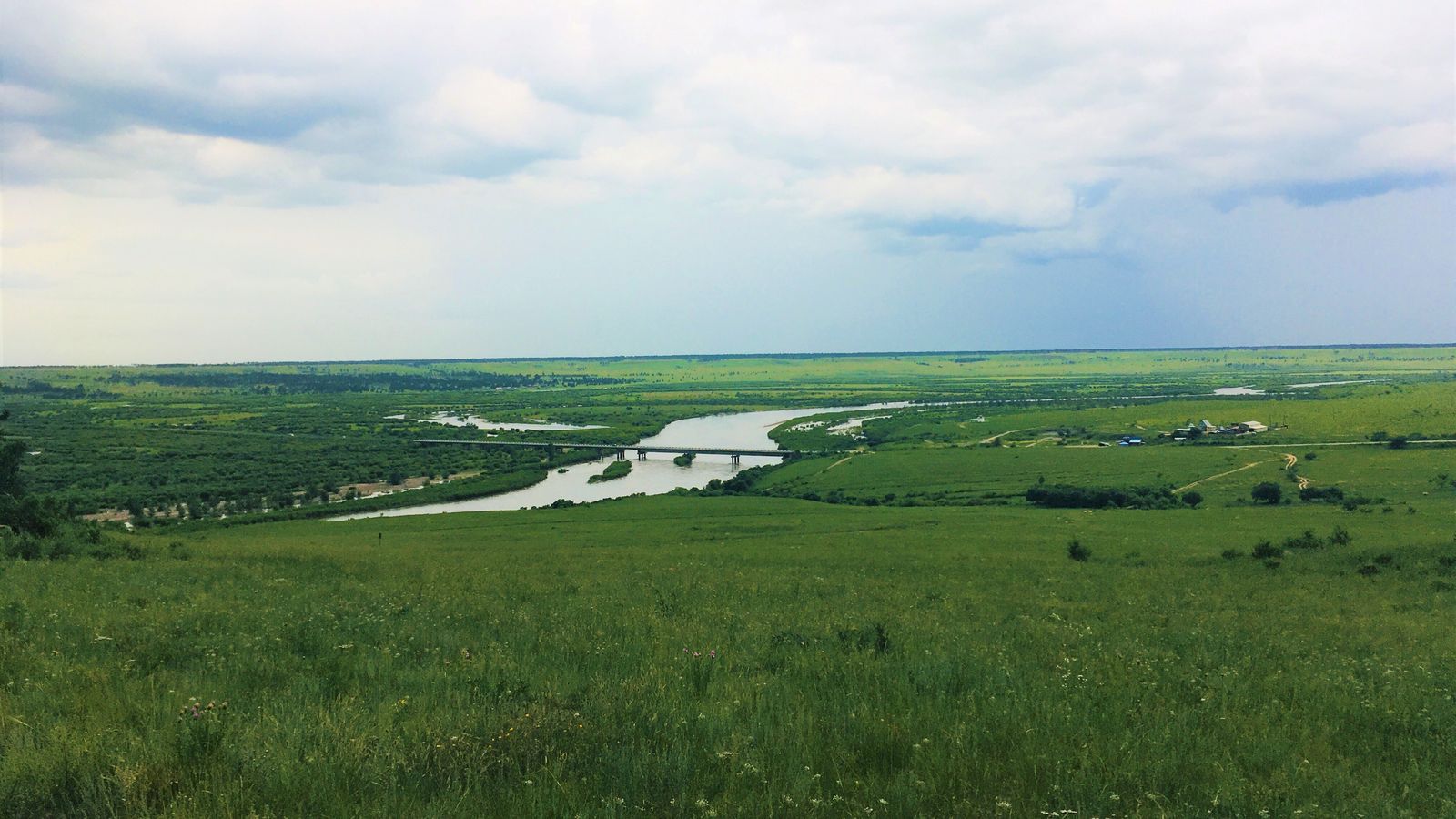
Over a vast open plain, the tall grass waving gently in the wind, a Golden Eagle soars through the open skies, its cry echoing over the peaceful landscape that time seems to have forgotten. It wasn’t always this peaceful though. In a time long past, a young man marched his army across the plains, trampling the grasslands into mud and filling the lonely skies with the clash of steel and the screams of the dying. An unstoppable force, he conquered tribe after tribe to build an empire the size of which had never been seen before.
To some he was a villain, a monster stalking their lands and subjugating their people. To others, he was a hero, building a glorious empire that led to prosperity for all. Whether you love him or hate him, there’s no denying the fact that Genghis Khan made an impact that history will never forget.
Every year around 600,000 people visit the grave of Elvis Presley. The grave of Oscar Wilde is covered in lipstick kisses from all those die-hard fans. So, considering that his legacy is still going strong even today, just imagine how many visitors old Genghis sees every year. The answer to that would be none.
Key Takeaways
- Genghis Khan’s tomb remains undiscovered, with no historical records or maps to guide searches.
- The Great Khan’s burial is shrouded in mystery, with legends of secret burial and curses.
- Burkhan Khaldun mountain in Mongolia is a leading candidate for Genghis Khan’s burial site.
- Mongolian traditions and geopolitical tensions complicate efforts to locate Genghis Khan’s tomb.
- The search for Genghis Khan’s tomb involves extensive archaeological efforts and technological innovations.
For, much like he appeared, a young boy exploring the expansive Steppes of his beloved Mongolia, he vanished into the same vast wilderness without a trace. There is no tomb to visit, only statues honouring the Great Khan all over Mongolia. Perhaps the Golden Eagle soaring over that plain reaching over the horizon into eternity knows the greatest secret of Genghis Khan – where is his tomb? In my experience though, eagles are much like wizards – good at keeping their secrets, so we might have to figure this one out ourselves.
The Great Khan
Unlike other great rulers who left behind a written legacy, Genghis Khan was illiterate having never received any formal education. Much was written about him after his death but the Great Khan himself never put pen to paper. What we know about how he lived and how he died is based on the impressions of those around him and those that came after him.
We think Temujin, as he only took the name Genghis Khan much later, was born around 1162 not far from the Onon River and the mountain of Burkhan Khaldun in the Khentii province, but the exact date and place have been lost to history. No-one knew how important he would be one day so no-one bothered to write down the details of his early life.
Genghis Khan started his rise to power by uniting many of the warring Mongolian tribes until he was declared their leader by 1206. From there he went on to build the Mongol Empire – the largest contiguous land empire in history and second only to the British Empire in overall size. Conquering land is not that hard, but keeping control of an empire that would eventually span around 12.5 million square miles without the advantages of near instant communication and the ability to reach the outskirts of your empire to put down revolts in a matter of days would’ve taken considerable skill and an iron will, both of which Genghis Khan had in spades.
However, Genghis Khan didn’t just go out and conquer the world; he also connected it in a way that it hadn’t been before. Under Genghis Khan, the Silk Road, an ancient trade route linking China to the West, flourished, and he perfected and expanded the postal system across his empire. Using relay stations, a messenger could carry his missive to its destination quickly by getting a new horse at each station. This was probably a more reliable postal service than what many countries have now – Genghis Khan himself couldn’t save the South African postal service if he rose from the dead.
Unlike many conquerors before and after him, Khan was quite the people-person. He allowed his subjects religious freedom and rewarded loyalty. At a time when social advancement was only possible to the lucky few born into the right families, he allowed his men to rise in social standing based on merit. Women had the right to divorce and even own property. They weren’t quite the equals of men but considering the status of most women at that point in history, Genghis Khan was a stand-up feminist.
In less than 20 years, Khan conquered lands stretching from the Pacific Ocean to the Caspian Sea ensuring that he went down in history as a ruthless yet brilliant conqueror. However, as interesting as his life was, we’re more interested in his death which occurred around August 1227. This is where one of the biggest mysteries surrounding Genghis Khan begins.
The Death of the Great Khan
As little as we know about the Khan’s early life, we know even less about his death. We know he died in August of 1227, but the exact day he died and what killed him is a little mystery all by itself.
According to Marco Polo, the Venetian explorer who spent some time with Kublai Khan, a descendant of Genghis Khan, the Great Khan died after suffering an injury – an arrow to the knee. His adventuring days were over. In other versions of the tale, Genghis Khan died after falling off his horse or after sustaining wounds in battle.
A particularly imaginative tale, most likely spread by his enemies after his death, states that he was dispatched in a somewhat gruesome, yet creative, fashion by a wily Xia princess who was taken as part of the war booty. His late night visit to get better acquainted with the damsel was his last. However, a far less interesting version of events is that the Khan died from a disease, possibly typhus or malaria, as he was reported to be unwell between August 18 and August 25 and, soon after, he was dead.
His real cause of death, whether by enemy arrow or unfriendly mosquito, was probably kept a secret to preserve the Khan’s status. The Great Khan died while on campaign, reigning in some ungrateful locals, and dying is definitely a sign of weakness.
Genghis Khan wanted to be buried in secret. Whether this part of his legend is fact or fiction, we don’t really know. We do know that Genghis Khan was not an idiot.
He was beloved by many, but he was a conqueror and probably hated by a hell of a lot more; and he knew what happened to the graves of conquerors buried with piles of treasure. Eventually, someone is going to come and dig up your bones, and if that someone is a grave-robber or someone whose family you killed while conquering, your bones may end up feeding the dogs. From my research, it appears that according to Mongolian belief, graves should not be disturbed and, even today, Mongolian people are not very keen to have archaeologists dig up graves.
So, Genghis decided he didn’t want people to know his final resting place, and, according to legend, those serving him pulled out all the stops to make sure he would never be found.
One part of this story comes from Marco Polo again. However, this is the guy who saw dragons in China so perhaps not the most reliable narrator. According to legend, an army carried the Great Khan’s body back home to Mongolia.
To make sure that no-one knew where they were taking the body, the funeral procession killed every single person it came across. I suppose it’s a good thing Mongolia has always had a low population density. After the funeral, the 2,000 slaves that built the tomb and attended to the body were all killed.
Afterwards, 1,000 horses were ridden over the grave to make sure there was no sign of any disturbed earth that could just possibly hint at a grave. In some stories, even this wasn’t enough. After the horses had their turn, a river was diverted over the tomb to make sure no-one would accidentally discover it.
The soldiers that accompanied the Khan’s body to his future tomb were also killed, and the soldiers who killed them then committed suicide; however, sources are beginning to get a bit vague at this point so whether it was a whole new company of soldiers killing the first lot and then themselves or just one half killing the other half before committing suicide themselves is a little unclear.
However, despite all of this effort to conceal the grave, the family of the Khan still needed to find their way to the tomb. So, instead of just drawing a map, a baby camel still feeding on mother’s milk was killed and buried with the Khan, and his 2,000 slaves and a company of soldiers, in front of the mother. Every spring, the mother camel would be released and she would lead the family to the spot where her baby had been buried.
However, this plan was apparently not thought through very well since camels aren’t immortal so when the mother camel died, she took the location of Genghis Khan’s grave to her grave. Mortal camels weren’t the only guardians though. According to some stories, the Darkhad, an Uriankhai tribe, still guards the tomb of Genghis Khan.
This would be difficult if everyone who knew where he was buried had been killed, but let’s not let logic get in the way of a good story, am I right?
Tales of the slaughter of thousands of people and one baby camel to hide the death of one man aside, according to 17th century Mongolian Chronicles, the Great Khan’s body was returned to Mongolia, and he was buried with 40 girls dressed in their best finery and a sacrificial horse or six. However, the chronicles fail to mention where exactly this burial took place. A less sensational story, and one I find a little more likely, simply states that the Great Khan’s wife prepared his body for burial in the simple way Genghis Khan himself had lived: he was dressed in a white robe, felt boots and a hat. The body was then wrapped up in a white felt blanket filled with fragrant sandalwood and bound with three golden straps before being buried.
Scholars theorize that the Khan was probably buried with a good collection of treasure; most of the treasure looted by the Mongol army has never been found. This would tell us a lot about the man and the time in which he lived. However, before we can find this tomb and learn all its secrets, we have to contend with a curse.
The Curse of Genghis Khan’s Tomb
All writers know that you can’t have a lost tomb tale without a curse. According to believers, should the tomb of the great Genghis Khan ever be opened, the world will end. Or, if you want to be less dramatic, it’ll start the third world war, but I’m not sure humanity would survive that so the end result is the same.
The curse seems to be rooted in the curse of Timur, also known as Tamerlane, a Turkic-Mongol ruler who may have shared a common ancestor with Genghis Khan on his father’s side. Honestly, the familial link is incredibly tenuous, but it’s a good story, so I’m going to tell it anyway.
Timur had not just one, but two curses. A 17th century text states that “…who disturbs Tamerlan’s tomb will release a spirit of war. And such a bloody and terrible slaughter will commence that the world has not seen in all eternity”. A second curse was apparently found inscribed inside the coffin: “Whomsoever opens my tomb shall unleash an invader more terrible than I.”
If I was a Soviet archaeologist coming across this inscription in June 1941, I would’ve paused for a moment. However, Stalin had a bee in his bonnet about this excavation, so the grand disturbance of the cursed tomb proceeded. Three days later, the Nazis launched Operation Barbarossa, invading the Soviet Union.
By now, people were paying a little more attention to the curse and Stalin, apparently a believer, ordered Timur be reburied on the double. Not long after Timur was once again entombed, the Soviets were victorious in the battle of Stalingrad, one of the bloodiest battles of the Second World War. Some stories suggest that, before digging up Timur, Stalin had attempted to find Genghis Khan as well, but since opening his tomb will lead to the end of the world, it’s a good thing the Soviets found old Timur instead.
However, more recent expeditions have faced their fair share of unfortunate events suggesting that there may be some truth to the story of a curse after all. A 2002 American expedition, under the leadership of John Woods and funded by Maury Kravitz, had to be called off when a number of party members were bitten by venomous snakes. On top of the snakes, a car rolled off a hillside for no apparent reason, an anthrax scare killed several animals in the area and, finally, the former Mongolian Prime Minister accused the expedition of desecrating a sacred site which led to the Mongolian National Security Council revoking their permission to excavate. Can all of this truly be mere coincidence?
Where Is the Not So Cursed Tomb?
Genghis Khan was buried in a grave so unmarked and so secret that we still have no idea where this tomb is. Since there’s no historical record with a conveniently marked map, we don’t even know where to start looking. However, we also have no idea what we’re looking for since there’s no description anywhere of what this tomb might look like. On top of that, searching for a tomb in Mongolia is a daunting task.
It’s a huge country that’s still fairly underdeveloped – it’s about 7 times the size of Great Britain but with only 2% of its roads.
Some researchers believe that the Xiongnu people were the ancestors to the Mongolian people and, ultimately, Genghis Khan. This means that excavations at a 2,000 year old Xiongnu burial ground might give us an idea of what Genghis Khan’s tomb looks like if the Mongolian people followed similar burial practices to their Xiongnu ancestors. The Xiongnu kings were buried in log chambers 20m underground.
The sites were then marked with a square of stones. The excavated tombs included a wealth of treasure such as a Chinese chariot, Roman glassware and gold and silver ornaments incorporating leopards and unicorns in their designs – imagery also used by Genghis Khan and his descendants. However, finding a 20m deep, unmarked tomb in a country the size of Mongolia becomes virtually impossible.
If this is what Genghis Khan’s tomb looks like, it doesn’t really help us at all.
Watch Now
Open Video
Video Briefing
The Terrible Secret of Genghis Khan's Tomb
Most scholars agree that Genghis Khan came home since the idea of homeland is very important in Mongol culture. So, if he returned home to Mongolia, where is the most likely place he would’ve chosen to be buried? Many believe the answer to this question is Burkhan Khaldun, a sacred mountain peak in the Khentii Mountains in the Khentii province, around 1,600km (990 miles) north east of Ulaanbaatar, the capital of Mongolia.
The Secret History of the Mongols was written sometime after the death of Genghis Khan by an unknown author. It’s the oldest surviving literary work in the Mongol language and considered to be an incredibly valuable source of information not only about Genghis Khan but also about the Mongol culture before the influence of Buddhism. However, since we don’t know who the author is, and because it was written after the death of Genghis Khan, we can’t know for sure just how accurate it is.
In keeping with the mystery of Genghis Khan, The Secret History mentions that Khan ascended to heaven in 1227 but, once again, there’s no description of his grave or maps to his tomb. For future authors in the audience, I can’t emphasize the value of maps in literature enough.
While the text isn’t particularly useful in finding the tomb, it does state that Genghis Khan had strong feelings towards Burkhan Khaldun. According to one tale, as a young man, Genghis used the mountain to escape from the Merkit, an enemy tribe. He fled to the sacred mountain and found shelter with an old woman.
According to The Secret History, Khan stated that “every morning I will sacrifice to Burkhan Khaldun, every day I will pray to it: the offspring of my offspring shall be mindful of this and do likewise”. Whether the offspring of his offspring honoured this, or even knew about it, we don’t know but scholars claim that this is a fairly good indication that this mountain was important enough to Khan that it could very well be where he wanted to be buried. The text also mentions that this mountain was the site of the first Mongol settlement, so it’s an important place for a number of reasons.
Another story, though I’m not sure of the source, claims that Khan was hunting in the mountains and was so overcome with the beauty of the landscape that he decided that he wanted to be buried there. According to the 13th century historian, Rashid al-Din, Khan specifically declared, “Our burial site and that of our offspring will be here.” For some context, Rashid al-Din was commissioned to write a complete history of the Mongols which he completed between 1307 and 1316 so, once again, a second-hand account of the wishes of Genghis Khan.
To give further credence to the belief that Genghis Khan is buried somewhere on the slopes of Burkhan Khaldun is the fact that according to Mongol belief, being buried at a high altitude is important. Apparently, according to The Secret History, one Jamukha, a former friend but eventual arch enemy of Genghis Khan, because we all need one of those, pleaded for the Khan’s body to be buried high. Considering Khan’s status, it would make sense to bury him in the highest possible spot.
There’s also the tale that, shortly after Khan’s death, his soldiers sealed off an area of more than 240 square miles on Burkhan Khaldun which became known as Ikh Khorig, or the Great Taboo, though other sources call it the Forbidden Precinct. The area was declared sacred and no-one was allowed entry except family members and the Darkhad, an elite group of warriors and their families, who were tasked to ensure that the area remained off-limits to everyone else. Entering this forbidden area, if you weren’t family or Darkhad, meant death.
The Darkhad protected this area long after the Mongol Empire collapsed and, even when foreign armies invaded Mongolia, the Mongols made sure no-one entered the sacred precinct of their esteemed ancestor. The Mongolian People’s Republic became a satellite state of the USSR in 1924 and the Soviets wisely decided to honour this tradition in order to prevent any pesky Mongolian nationalism because you just know how that’s gonna go.
However, Burkhan Khaldun is not exactly a hill; it’s a mountain. To make things even more complicated, it’s not the only mountain with this name. There were at least five other mountains called Burkan Khaldun, though there could’ve been more. We assume that Khan was referring to the mountain close to where he was born, but we don’t actually know for sure.
The Secret History mentions Burkhan Khaldun but it doesn’t state where exactly Burkhan Khaldun is so, for all we know, we’re not even looking at the right mountain. Digging around on the mountain looking for lost Khans is also not an option; the area is a UNESCO World Heritage site. Women still aren’t welcome on the sacred mountain and even though it’s open to more visitors, due to its protected nature, researchers doing anything other than admiring the scenery will get themselves kicked out real quick.
After the Soviets left in the 1980s, but before the area became a UNESCO World Heritage site, a Mongolian-Japanese expedition called Gurvan Gol, meaning Three Rivers, researched a number of archaeological sites, among them the restricted area. The Gurvan Gol project was focused on Genghis Khan’s birthplace in the Khentii Province where the Onon, Kherlen and Tuul rivers flow. Using ultrasonography, the team determined that there were as many as 1,380 possible grave sites in the area. However, public protests brought an end to their search before anything definitive could be found.
In 2001, an American-Mongolian expedition, financed by Maury Kravitz, a retired Chicago commodities trader, and led by professor John Woods of the University of Chicago, tried their luck at finding the tomb of Genghis Khan and searched the area around Burkhan Khaldun, but was forbidden by authorities to access the actual restricted area on the mountain. However, they discovered a walled burial ground called the Almsgiver’s Castle, Chinggis’ Castle and Red Rock by the locals. The site is near the village of Batshireet in the Khentii Province and contained around 20 unopened graves inside a 10-foot-high (3m) wall with a circumference of 2 miles (3.2km).
At the top of the hill, the team came across an open burial pit around 6 feet (1.8m) deep and 10–13 feet (3m–3.6m) long. It looked like a tomb that might never have been finished or, at the very least, was probably never used. The burial ground is a few miles from where we believe Genghis Khan was born as well as close to the spot where he was proclaimed as emperor of all the Mongols in 1206, so the area is certainly significant and many believe that this is Khan’s burial complex.
This is all promising but along with the curse setting vipers on the research team and rolling cars, the evidence also seems to suggest that this is not the final resting place of the Great Khan – there were no royal graves in the area and many of the pottery shards found at the tomb possibly pre-date the era of Genghis Khan. Kravitz passed away in 2012 without ever finding the tomb, but many believe he was on the right track.
In 2009, Dr. Albert Lin led a National Geographic-funded expedition to Ikh Khorig to survey the area and, if possible, find the lost tomb. The team went in looking for man-made objects in the remote area and they came across the foundation of a large structure. Field scientists and archaeologists studied the site using high-tech tools like radar, magnetometers and drones.
The finds were exciting – the team identified hundreds of man-made artifacts such as arrowheads, ceramics, roof tiles and even bricks scattered around the area. Carbon dating was done on some of the finds and the age seemed to fit with the time of Genghis Khan’s life and death. However, due to the strict government control, the team couldn’t go in with spades and start excavating – and so the Valley of the Khans project was born.
The Valley of the Khans Project was a combined effort of the University of California and National Geographic and managed to identify 55 possible locations for the tomb of Genghis Khan – from space. Since excavating is impossible considering the site’s protected status, and parts of it can’t be easily reached anyway, Lin and his team came up with the idea to capture satellite images of the area and search the high resolution images for any clues to the exact location of the tomb. The team collected 84,000 tiles of images that covered roughly 6,000 square kilometers.
A single archaeologist studying an area that size would probably take years, so, instead, the team called in the cavalry. In this instance, the cavalry was volunteers with an interest in archaeology and a good internet connection. A group of 10,000 volunteers were instructed to study an image and tag said image with labels for roads, rivers, modern structures, ancient structure or other.
Volunteers were also shown images tagged by other volunteers and asked if they agreed with the tags. The group of volunteers worked through the images in six months, clocking around 30,000 hours which translate to around 3 years of work and generated 2 million tags which were then culled down to 100 sites accessible to researchers. A field team explored these locations and, out of the 100, identified 55 that could be archaeologically and culturally significant ranging from the Bronze age to the Mongol period, including Bronze age ‘khirigsuur’ burial mounds, ‘deer stone’ megaliths, and ancient city fortifications.
Sadly, no sign of the tomb was found, but this project opened up a new approach to archaeology and somehow finding the tomb of Genghis Khan from space seems kind of fitting.
In 2015, Pierre-Henri Giscard, a French archaeologist, and Raphael Hautefort, an imaging expert, used drones to investigate a suspicious mound, around 300m long and over 20m high, on the slopes of Burkhan Khaldun. This mound, or tumulus, has been noted by prior researchers but, so far, no-one has had the opportunity to really take a good look at it. Some sources claim that according to the Altan Tobchi, or Golden Summary, this great oval ‘tumulus’ is in fact the place Genghis Khan was buried when his body was finally returned to Mongolia.
Their investigation revealed a man-made structure, possibly modeled on Chinese Imperial tombs. Six symbols appear on the sides of the mound. These symbols appear to be tamgas – a symbol representing a specific tribe or a personal seal or stamp of a specific person.
Two of these tamgas have been found on the coinage of the Mongol khans Guyuk and Monke, grandsons of Genghis Khan. Unfortunately, we don’t know what Khan’s tamga looked like. This would suggest that this mound is the grave for at least these two individuals, and, since it’s believed that Genghis Khan’s son and other family members were eventually buried with him, it stands to reason that this mound is the burial place of Genghis Khan and other members of the royal family.
Unfortunately, without permits from the government, it will be impossible to take a closer look. The researchers doing this investigation were also doing it without getting approval from the local authorities. Since the data was technically obtained illegally, it appears that Giscard has not published his research yet, or if he did, it’s in French because I couldn’t find anything in English.
Another popular theory suggests that Genghis Khan was buried near his palace which was rediscovered in 2004. A Japanese and Mongolian team uncovered the palace complex, built around 1200, on a grassy steppe around 150 miles (around 250 km) east of Ulaanbaatar, near the village of Delgerhaan. Researchers discovered porcelain in the ruins dating back to the time of Khan and a description of the scenery around the palace matched the description given by a messenger from China’s Southern Tang Dynasty in 1232 so we’re fairly sure this was Genghis Khan’s Ordos Palace.
A mausoleum was discovered at the site which is significant. According to ancient texts, though I’m not sure which texts exactly, there was a mausoleum close to the Great Khan’s burial site and court officials commuted from the mausoleum to the burial site daily to conduct rituals for the dead. Some of these rituals apparently included sacrificing and burying animals every day for three years and a large amount of burned bones and ash from horses and cattle were found at the site.
Researchers are also of the opinion that the building is consistent with that of a mausoleum built for a great ruler. The team didn’t set out to find the tomb, they just wanted to find the palace and considered the possibility of finding Khan’s tomb to be a bonus. To my knowledge though the tomb still remains very much unfound, but it’s a good theory.
However, not everyone is convinced the Great Khan made it home. In fact, some believe Genghis Khan’s body was never returned to Mongolia. According to the Erdeniin Tobchi and the Altan Tobchi, two very important 17th century Mongolian texts, the coffin was already empty when it reached Mongolia.
However, now we run into a problem because, those paying attention would notice that a mere paragraph ago the Altan Tobchi was used as a source to prove that Genghis Khan is buried at Burkhan Khaldun. The sources are now contradicting each other and I fear the only way to know if these texts actually say anything about the burial place of Genghis Khan would be to read them in their original Mongolian which, alas, I can’t. My 17th century Mongolian is a little rusty.
So, if we ignore the texts and just use common sense, there might be something to the theory that Genghis Khan isn’t buried in Mongolia. At the time of his death, Genghis Khan was off subduing the Tanguts in what is today north-western China. This meant that he was a long way from home – around 311 miles (500 km) to be exact. As far as I can tell, the Mongols weren’t exactly the leaders in the field of embalming so it would’ve been very difficult to get the Great Khan back to Mongolia before he started decomposing.
Genghis Khan also died at a bit of an inconvenient time – August – so they didn’t really have the option of putting him on ice either. This leads some to believe that Genghis Khan was buried in the Ordos region of north-western China. However, there are other contenders for the Khan’s final resting place in China.
According to some tales, when Genghis Khan’s forces were fighting with the Western Xia dynasty, Khan and his army passed by Yijinhuoluo. He was captured by the beautiful grassland with lush grass, flowers and flocks of deer. At that moment, the horsewhip dropped from his hand and, apparently, this was a sign, so he chanted “a place where flowers and deer inhabits, a home where hoopoes give birth to their babies, a terra where the declined dynasty revives, and a garden where gray-haired man enjoys his life.”
He looked at his servants and said, “after I died, bury me here.” I find it amazing that, of all the speeches he probably made in his life, this particular one would be so well remembered. After his death, the hearse carrying his corpse back to Mongolia passed by the place where our ruthless conqueror got so poetic and the cartwheels sank into the mud and no matter how hard the horses pulled, the hearse was going nowhere.
So, remembering his lyrical description, the people built a mausoleum palace for him, calling it Yijinhuoluo meaning “the holy land of the emperor” in Mongol. Another possible location in China is the Qinian Valley where, according to the Yuan Dynasty – the Mongol rulers of China from 1271 to 1368 – all the Mongol emperors were buried. However, once again, no-one thought to draw a map or even describe where this valley is supposed to be.
Needless to say, the theory that Genghis Khan is not buried in Mongolia but in China isn’t very popular at all so if you believe this and visit Mongolia, best keep it to yourself.
Most recently, in August 2022, a team claimed to have found the tomb of Genghis Khan while building a road near the Onon River in the Khentii province of Mongolia when construction workers came across a mass grave. Forensic experts and archaeologists were called in and they concluded it to be a Mongolian royal tomb from the 13th century. One set of remains, found under a stone slab, belonged to a man aged between 60 and 75 who had died between 1215 and 1235.
However, our man in the tomb wasn’t buried alone. 68 skeletons found on the stone structure were probably the slaves who built the tomb and were then killed for their trouble. Inside the tomb were sixteen female skeletons. These were most likely concubines and wives killed to join whoever was buried here in the afterlife.
The remains of twelve horses suggest the animals were sacrificed to accompany the unknown deceased into death because we all need at least twelve horses. Gold and silver artifacts as well as thousands of coins were scattered all across the tomb. Apparently, the tomb had been buried under the Onon River for centuries; however, the river changed course in the 18th century so the contents were badly deteriorated.
This certainly matches the version of events where an entire river was redirected over the Khan’s tomb, but so far there hasn’t been any confirmation about whether or not this find is real or whether it is the actual tomb of Genghis Khan.
If we consider the legends and stories, which often convey truth, Burkhan Khaldun does seem like the most likely spot Genghis Khan would’ve chosen for his final resting place. However, if we lean more towards common sense, it seems unlikely that Genghis Khan ever returned to Mongolia unless he had some crazy fast horses. The search for the lost tomb is very exciting, but until someone gets the necessary permissions to go dig up the Forbidden Precinct in Burkhan Khaldun, I doubt we’ll ever learn the truth.
Conclusion
Digging through the past to learn how people and events in history shaped our present is one of my secret hobbies. Possibly the best part of my job, other than finding obscure pop culture references to confuse Simon with, is reading about all the latest archaeological finds and seeing how they change what we thought we knew about the world. Finding the tomb of Genghis Khan would certainly provide us with a whole new understanding of the life and world of this influential figure. However, finding this tomb is not that straight-forward.
While some of the other mysteries we cover would, once solved, not really have that big of an impact on the world at large, this doesn’t hold true for the tomb of good old Genghis. Many Chinese people believe that Genghis Khan was actually Chinese and that China should claim him as their own. A huge and very popular monument was constructed in China containing what is supposed to be a replica of Khan’s empty coffin.
There are also some in China who believe that Mongolia, like Tibet, should be part of China as it was under the rule of Kublai Khan. However, to the Mongols living on the Mongolian Steppe, Genghis Khan is Mongolian and the dynasty of Genghis Khan belongs to the Mongol people, not China. Even Russia and Kazakhstan have claimed that Genghis Khan is buried in their territory making them the symbolical heirs of the legacy and empire of Genghis Khan.
All in all, this is one mystery that actually has potential geopolitical repercussions should it ever be decoded.
On top of that, many of the Mongolian people simply don’t want Genghis Khan found. According to ancient traditions, burial spots are forbidden and many Mongolians don’t like foreigners digging around the graves of esteemed ancestors, no matter how good their intentions. Many feel that Genghis Khan didn’t want his tomb to be found and he went through a great deal of effort to hide it.
Disturbing it after all this time would violate his wishes. This raises an important question – regardless of what we could learn about history, do we have any right to disturb the graves of fallen heroes? It’s not a question I will try and answer but, in this case, since Genghis Khan started his life as a little boy on the Mongol Steppes, perhaps that is where he should remain, undisturbed in his unmarked grave, according to his wishes.
Perhaps we’ve finally come across a mystery that should remain a mystery.
Simon Whistler
Simon Whistler is one of YouTube's most prolific educational creators. Decoding the Unknown is his methodical investigation into the world's strangest phenomena — examined with rigour, curiosity, and a healthy dose of scepticism.
Frequently Asked Questions
Who was Genghis Khan?
Genghis Khan was a Mongolian leader who conquered tribe after tribe to build an empire the size of which had never been seen before. He was declared the leader of the Mongolian tribes by 1206 and went on to build the Mongol Empire, the largest contiguous land empire in history.
Where was Genghis Khan born?
Genghis Khan was born around 1162 not far from the Onon River and the mountain of Burkhan Khaldun in the Khentii province of Mongolia.
What was Genghis Khan’s real name?
Genghis Khan’s real name was Temujin. He took the name Genghis Khan much later in his life.
How did Genghis Khan die?
Genghis Khan died in August 1227. The exact cause of his death is uncertain, with various accounts suggesting he died from an arrow wound, falling off his horse, battle wounds, or a disease like typhus or malaria.
Where is Genghis Khan’s tomb located?
The location of Genghis Khan’s tomb is unknown. It is believed to be buried in a secret location in Mongolia, possibly near the Burkhan Khaldun mountain, but this has not been confirmed.
What is the curse of Genghis Khan’s tomb?
According to believers, opening the tomb of Genghis Khan will either end the world or start the third world war. The curse is rooted in the curse of Timur, a Turkic-Mongol ruler who may have shared a common ancestor with Genghis Khan.
What is the significance of Burkhan Khaldun mountain?
Burkhan Khaldun mountain is believed to be an important location for Genghis Khan. According to legend, he had strong feelings towards the mountain and may have wanted to be buried there. It is also considered a sacred site by the Mongolian people.
What is the Valley of the Khans Project?
The Valley of the Khans Project was a combined effort of the University of California and National Geographic to identify possible locations for the tomb of Genghis Khan using satellite images and volunteer archaeologists. The project identified 55 possible locations but did not find the tomb.
What is the significance of the Ordos Palace?
The Ordos Palace is believed to have been the palace of Genghis Khan. A mausoleum was discovered at the site, which some researchers believe could be connected to Genghis Khan’s burial site.
Why is finding Genghis Khan’s tomb controversial?
Finding Genghis Khan’s tomb is controversial because it has potential geopolitical repercussions. Different countries, including China, Russia, and Kazakhstan, have claimed that Genghis Khan is buried in their territory, and some Mongolians believe that his tomb should remain undisturbed according to ancient traditions.
Sources
- Original Decoding the Unknown video: The Terrible Secret of Genghis Khan’s Tomb
- Hero image source by Oleg Bor / openverse, by-sa.