The journey had been an arduous one, full of danger, but as the golden sun slowly set over the desert, the majestic pyramids casting their long shadows over the rolling dunes, a young traveller found himself walking down the dusty street of a bustling city. The greatest city in the world, filled with wonders and scholars, our young pilgrim has dreamt of visiting Alexandria ever since he was old enough to dream. Down at the docks, the towering lighthouse started blinking as the fires were lit, warning approaching ships of dangerous waters.
Up ahead, in the waning light, he could see the towers on the hilltop guiding him to his final destination – the Royal Quarter. He has travelled a long way, faced bandits and wild animals, and overcame challenges he never thought possible, but it was all worth it.
There was much to see and do, but the first stop would be the most important. Before organizing a place to spend the night or finding something to eat, our young pilgrim made his way to the temple he came so far to see. Both a temple and a tomb, like so many pilgrims that came before, the young man had but a single goal in mind: to gaze upon his hero, a legend, the general who never lost a battle, the son of Zeus, a man who was more than just a man – a god in human form: Alexander the Great.
Key Takeaways
- Alexander the Great’s tomb is believed to be in Alexandria, but it remains undiscovered.
- Alexander’s body was moved multiple times after his death, complicating the search for his tomb.
- The Nabi Daniel Mosque and Attarine Mosque in Alexandria are potential sites for Alexander’s tomb.
- Some theories suggest Alexander’s remains could be in the Siwa Oasis or Venice.
- Despite extensive excavations, the exact location and condition of Alexander’s tomb remain unknown.
Lying first in a stone sarcophagus and later in a glass coffin, we know Alexander’s remains were visited by pilgrims from all over the Hellenistic world. From the lowliest peasant to the greatest kings, everyone wanted to bask in the glory that followed Alexander everywhere he went; even in death. Alexander didn’t need to trend on Twitter or going viral on TikTok to be the most famous man in the known world for centuries.
Even today, Alexander’s tomb would’ve drawn hundreds of thousands of visitors each year, if only we knew where to find it. Alas, it is not to be for the tomb of Alexander, like so many of the wonders of the ancient world, has vanished.
Meet Alexander the Great
Alexander III of Macedon, better known as Alexander the Great, was born around July 20, 356 BCE, in Pella, the administrative capital of Macedonia, the son of King Philip II and Olympias, one of Philip’s many wives. Philip believed in giving his son a good education, so young Alexander found himself under the tutelage of Aristotle which led to a life-long love of knowledge, logic, philosophy, and music and an appreciation for other cultures, a mind-set that would turn out to be very useful once Alexander became king and celebrated by conquering the known world.
In 336 BCE, Philip was assassinated in a plot that possibly included both Alexander and his mother, and Alexander, now 20 years old, ascended to the throne of Macedon. His first act as king was to suppress any rebellion against his rule in Greece, and when the city of Thebes failed to fall in line, Alexander burned Thebes to the ground. With the Greek cities finally under his control, Alexander set his sights on the Persian Empire and pursued his goal with admirable determination.
Included in this was his conquest of Egypt, an important part of today’s tale, but we’ll get back to those dusty dunes in a bit. After defeating Darius III and conquering his Persian Empire, Alexander entered Persepolis, the capital city, and burned it to the ground as well. Apparently he had a love of bonfires.
Alexander then set his sights on India, fighting some major battles, but after 10 years of constant campaigning and fighting, the men were tired and upon reaching the Hyphasis River, refused to go any further. However, all the conquering paid off. By the time he reached the age of 32, in the short span of around 12 years, Alexander had built the largest empire the ancient world had ever seen, stretching all the way from Greece to India, and, if the historical accounts are to be believed, he did it without ever losing a single battle.
There have been many great tacticians and war generals, but very few of them are known as ‘insert name here’ the Great. There are many factors that play into Alexander’s perceived greatness; flattering biographies and greatly inflated stories from ancient writers mythologizing Alexander is a big part, but to many people, Alexander’s constant success seemed almost divine, and even Alexander believed in his own divinity to an extent. His mother, Olympias, allegedly told Alexander, and anyone who would listen, that his true father was Zeus, not Philip, and it must have made quite an impression on a young boy.
Alexander’s coinage makes frequent references not only to his divine heritage but also links him with other deities and heroes, like Hercules. Alexander’s greatness also rubbed off on the people closest to him, so his generals further amplified the ruler’s greatness in an attempt to make themselves look great-by-association in the eyes of the people they sought to rule after Alexander’s death.
Alexander was a man of contradiction – respectful of the cultures he conquered, even taking up some Persian practices, and able to motivate his men on the one hand while being paranoid and quick to anger on the other. Whether he truly was the great man historians, and his generals, hyped him up to be or not is a moot point; he became a legend, inspiring the likes of Caesar, August, Napoleon and even Hitler, among others. Statues and paintings of Alexander the Great can be found all over the world, and tales of Alexander have permeated popular culture for centuries. This is very impressive considering he was only 32 years old when he died.
The Death of a Legend
Much is known about Alexander’s life, but his death is a bit of a mystery since we have no idea what actually killed him. In fact, we’re not entirely sure he was dead in the first place. The story goes that, after drinking a bowl of wine at a party, Alexander complained of searing back pain and collapsed – it must’ve been a pretty big bowl. 10 days after his collapse, some of his most loyal soldiers insisted on seeing their King.
According to the Greek historian Arrian, by that time, the king couldn’t speak and even struggled to raise his head. Around a fortnight after his grand exit from the party, in 323 BCE, Alexander the Great was Alexander the Dead. A few days after his death, those who looked upon the body noted that the great general didn’t show any signs of decomposition which just solidified the rumours that Alexander was descendent from a god or even a god himself.
There are many theories as to what finally killed Alexander. The most popular theories state that he died of a disease like typhoid or malaria or some other natural cause. Others claim that it was a combination of old battlefield injuries, as he had been wounded severely on more than one occasion, and heavy drinking that finally did him in.
The romantic theory is that he died of grief over the death of his special friend, Hephaestion. The more suspicious among us believe that Alexander was assassinated with poison, whether for political gain or just because someone was tired of all this conquering and wanted to go home.
It’s also possible that Alexander wasn’t actually dead. In 2019, Dr Katherine Hall presented a rather disturbing theory. Hall believes that Alexander suffered from Guillain-Barre Syndrome (GBS), a rare auto-immune disorder.
This disorder could’ve caused the symptoms Alexander experienced – the abdominal pain and progressive paralysis that left him unable to move. However, despite the physical symptoms of this condition, his mental acuity would’ve remained 100% intact. At the time of Alexander’s death, healthcare was rudimentary at best and the line between life and death was a bit fuzzy.
Hall believes that the symptoms of GBS made Alexander appear dead when he was still very much alive. After being left without food or water for several days, since he was already considered to be dead, he probably would’ve died of dehydration before he was mummified so at least he probably wasn’t mummified alive, unlike The Mummy, so hopefully he won’t rise from dead to chase people down and steal their organs. Always something to be thankful for I suppose.
Of course, if he wasn’t actually dead, it would certainly explain why he didn’t start to decompose – it had nothing to do with being the son of Zeus and everything to do with incompetent physicians.
It’s interesting that Alexander’s body was mummified after his death as the traditional Macedonian way at the time was cremation. It could’ve been a practical solution since the plan was to ship his remains all the way back to Macedon, but considering his love for Egypt, it seems somehow fitting that his body was treated more in an Egyptian tradition than a Macedonian tradition after his death. I didn’t know Alexander personally, but from what I’ve read about him, it seems like he would’ve approved. Whether he would’ve approved of the game of musical graves that his body was subjected to after his death is a different matter altogether.
The Legend’s Missing Tomb
Considering the life expectancy at the time, Alexander didn’t die particularly young, but clearly his death was unexpected as he left no directions for what he wanted after death and no clear heir to his vast empire. One story claims that he wanted his body thrown into a river so that it would vanish, creating the illusion that he was taken up to the heavens by his father, Zeus-Amun, thus cementing his image as a deity; however, the truth of this tale is anyone’s guess.
The poor planning regarding his funeral and, more importantly, the question of succession, led to a mad scramble and years of civil conflict as the various generals carved up the empire amongst themselves. One of the generals that came out on top was Ptolemy I, a long-time friend of Alexander, but not the most powerful man at court. Despite his lack of power, he managed to snatch up Egypt, an incredibly wealthy province that would make him a very powerful ruler, and established the Ptolemaic Dynasty that would last for almost 300 years and only ended with the death of Cleopatra.
With no clear wish for burial, historians believe that one of the most powerful men in Alexander’s court, Perdiccas, decided to send the body of the great general back to Macedonia, the land of Alexander’s birth. It took two years, but, finally, Alexander’s mummified remains were loaded onto a magnificent funerary cart, complete with a gold sarcophagus encased in a gold casket and covered with a purple robe, pulled by presumably the strongest 64 mules they could find in the whole of Babylon. The procession finally left Babylon for Macedonia around 321 BCE.
From historical accounts it seems that Perdiccas was actually trying to keep Alexander’s empire together for his heir, a son born shortly after his death, and tried to protect Alexander’s widow and son, unsuccessfully as it turned out. However, Ptolemy was a man of ambition, and he had other plans.
Some stories claim that Ptolemy was trying to fulfil the prophecy of Aristander, Alexander’s favourite soothsayer, who predicted that the country in which Alexander was buried would be the most prosperous in the world. Of course, gaining control of Alexander’s body would also go a long way to legitimize Ptolemy’s rule in Egypt, so when the funeral train reached Syria, it was intercepted by Ptolemy’s forces and rerouted to Memphis, the fortified capital of ancient Egypt, and Ptolemy’s seat of power. Whether Ptolemy acted on behalf of his friend, by burying Alexander in his beloved Egypt, or whether he was simply trying to strengthen his own power, we’ll never know.
However, by the third century BCE, Ptolemy I spread rumours that he was, in fact, an illegitimate son of Philip II and, therefore, Alexander’s half-brother and legal successor, so I’m inclined to believe the latter. Regardless of the reason, Alexander finally arrived in Memphis, and so the game of musical graves began.
Alexander was first buried in a temporary tomb near Memphis, probably in Saqqara. In the 19th century, archaeologists found a temple to the Pharaoh Nectanebo II, the last native pharaoh of Egypt, who vanished after the Persian invasion in 340 BCE. Since old Nectanebo II wasn’t around to use his tomb, or his pre-made royal sarcophagus, it’s been theorized that his temple became the temporary burial place for Alexander.
It was relatively new, empty, practically next door to Ptolemy’s Memphis, and the most recent non-Persian monument in Egypt, making it an ideal place to lay Alexander to rest, for the time being anyway. Statues dating from Ptolemy’s reign have been found in the vicinity of the temple further suggesting that some royal attention was directed at the site which would seem odd if the temple complex was just an empty grave. There were many stories about Alexander’s parentage, and it’s believed that this may have been the origin of one story according to which Nectanebo II fled Egypt for Macedonia where he got busy with the queen and was actually Alexander’s biological father.
There’s nothing to back this up though, but it’s an interesting story nonetheless.
By the time of Ptolemy II, son of Ptolemy I, the city of Alexandria, founded by Alexander himself, was finally finished, so the mummified remains of Alexander was moved to the city that bore his name. Here he was laid to rest for a second time before finally being moved to a mausoleum, known as the Soma, meaning ‘body’ in Greek, built by Ptolemy IV for Alexander and the Ptolemaic royal family. It didn’t take long for the tomb to become a site of pilgrimage which only increased the importance of Alexandria in the Hellenistic world which no doubt made the Ptolemies very happy kings indeed.
However, it wasn’t just devout followers of the Alexandrian cult that visited the tomb – some very important historical figures came to pay homage to a great king. Julius Caesar visited the tomb around 48 BCE and the first Roman Emperor, Augustus, also dropped in after defeating Mark Antony and Cleopatra. When asked if he wanted to see the bodies of the Ptolemaic kings, also buried alongside Alexander, Augustus apparently retorted that he came to see a king, not corpses; a fan of the Ptolemies he was not.
Later stories did the rounds that, upon seeing the mummy of the great general, Augustus accidentally knocked off his nose. The nose is very brittle which is why many Egyptian mummies don’t have noses, so it’s entirely possible, however, it’s more likely this story was made up to depict Augustus, and the Roman conquerors, as clumsy, insensitive brutes. Other great visitors included Cleopatra, who sold of some of the tomb’s treasures to fund the war against Augustus as well as the Emperors Caligula and Caracalla.
Caracalla was a few gladiators short of a circus and idolized Alexander and even considered himself to be a reincarnation of Alexander the Great. His visit in 215 CE is the last recorded visit by a Roman Emperor.
It’s likely that the tomb was damaged and looted during the reign of Aurelian, around 270 CE, when he sent his forces to recapture Egypt from the Palmyrian queen Zenobia. By the fourth century CE, if the early Church Fathers are to be believed, the tomb of Alexander the Great and all knowledge of its location had vanished. Considering the tomb’s popularity and its long list of esteemed visitors, its disappearance from the historical record is quite puzzling. However, this is where our mystery finally begins.
Where is the tomb of Alexander the Great now?
Alexandria
Most historians agree that Alexander’s tomb is most likely still buried somewhere deep beneath the streets of modern Alexandria. However, despite more than 140 officially sanctioned excavations on record, and probably a few unsanctioned ones as well, nothing has ever been found. Finding a tomb in Alexandria is going to be a challenge though. It’s a busy city which means you can’t just excavate wherever you feel like, but archaeologists have been at it for decades, and a few interesting finds over the years suggest that we might be getting closer.
The fact that we also have no idea what the tomb supposedly looked like doesn’t really help matters. The closest we’ve come is a sculpted sarcophagus cover for Julius Philosyrius of Ostia which shows some of the features fitting what we imagine ancient Alexandria looked like, based on literature. The cover depicts the lighthouse of Alexandria as well as what could be the column of Diocletian. A round tower, with a conical roof, is considered to possibly be the tomb of Alexander.
This really isn’t a lot to go on though.
Thanks to the diligent, if sometimes fantastical, works of the ancient writers, we think the Soma, where Alexander was finally buried, stood at the crossroads of the city’s main north-south and east-west roads while Strabo claimed the tomb was in the palace district or the Royal Quarter, the same area supposedly housing the Great Library of Alexandria. Unfortunately, the city of Alexandria today looks very different from the Alexandria of the Ptolemies. However, excavations in 1895 suggested that the crossroads of ancient Alexandria might be in the vicinity of the intersection of modern El-Horeya and Nabi Daniel roads.
There are some local stories that place the tomb of Alexander in this area. We don’t know what it looked like and we have no evidence that it existed past the 4th century, but generational memory is a thing, so it’s plausible that the approximate location of the tomb was preserved in local memory. From the 1500s onward, much of Alexandria lay in ruin, but scholars and tourists came from far and wide looking for the remains of famous buildings, among them, the tomb of Alexander the Great.
By then, no-one had any idea where the Soma used to be, but an enterprising young man could make a good few coin showing tourists whatever they wanted to see – it’s not like anyone knew the difference. The two buildings most often shown to these early tourists was the site of the old church of St. Athanasius, which later became the mosque of Attarine after the Arab conquest, and the Nabi Daniel Mosque.
The Nabi Daniel Mosque stands around 100m from the Horeya-Nabi Daniel intersection. It was initially built at the end of the 18th century and restored in 1823. Before the mosque was built, it was probably the location of a smaller shrine and stories that the mosque had been built on top of Alexander’s tomb have long been circulating.
It’s said that the crypt contains the remains of the scholar and teacher, the Prophet Daniel, and his companion, Sidi Luqman el Hakim. What’s interesting about this little detail is the fact that the Arab legend of the Prophet Daniel shares some similarities with the story of Alexander, but differs greatly from the Bible version. According to this legend, Daniel, a young Jew, was persecuted and chased from Syria by idolaters whom he was trying to convert.
An old man appears to Daniel in a dream, urging him to go to war against the infidels, promising him victory over all of Asia. Daniel arrived in Egypt where he acquired a lot of followers and eventually built Alexandria. Wisely obeying the old man in his dream, he went to war against the infidels until he finally returned to Alexandria where he died of old age.
He was placed in a golden sarcophagus, inlaid with precious stones, but Jews stole it to mint coins and replaced it with a stone sarcophagus. To my knowledge, the graves of the prophet and his companion have never been disturbed, but unless there’s an inscription stating ‘Here lies Alexander, not Daniel’, it probably wouldn’t help us much anyway.
Watch Now
Open Video
Video Briefing
The Lost Tomb of Alexander the Great (REUPLOAD)
In 1865, Khedive Ismail ordered the engineer Mahmoud Bey el Falaki to draw up a map of ancient Alexandria to comply with a request by Napoleon III. It was the first reliable archaeological excavations of Alexandria and gave us some idea of the layout of the ancient city. In a report to his bosses, El Falaki claimed that, while visiting the Nabi Daniel Mosque, he entered the vaults of the building where he found a large room, with an arched roof, built on the ground level of ancient Alexandria.
From this paved room, inclined corridors started out in four different directions. The length of the corridors and their poor condition prevented him from properly surveying them, but the rich quality of the stone used in the construction, along with other indications, convinced him that the passages led to the tomb of Alexander the Great. He wanted to return later to resume his investigations but was forbidden from doing so, and the entrances to these corridors were walled up.
El Falaki wasn’t an archaeologist, and, as far as we know, had nothing to win or lose with the discovery of the tomb, however, his story is an odd one. He was working on a project on the orders of the man in charge, so it’s seems strange that he would be prevented from essentially doing his job.
While we’ll never know what El Falaki found, the mosque does have a deep basement and since the original tomb would be well below the street level of modern Alexandria, this mosque is as good a location as any. In 1850, Heinrich Schliemann, known for his work on the site of Troy, tried to get permission to excavate but his application was denied. Modern scholars have also studied the history of the mosque and, while most reject the claims that the mosque is the location of Alexander’s tomb, the stories about the mosque being built on the tomb probably reflect a genuine historical memory suggesting that the tomb’s location is somewhere nearby.
The Attarine Mosque, around 300m away from the Nabi Daniel Mosque, also claims to be the site of the ancient tomb of Alexander. The claims drew the attention of Napoleon’s archaeologists in 1795. They didn’t find the tomb of Alexander, but their search wasn’t entirely fruitless. They did find an old sarcophagus that had been repurposed by the mosque as a ritual bath.
They couldn’t read the hieroglyphics, and dismissed it as just an Egyptian curiosity, but took it anyway. When the British finally defeated old Napoleon, they took the sarcophagus for themselves, because, as we know, they had a bit of a bad habit of carrying off other people’s stuff for their museum. Eventually, they did manage to decipher the hieroglyphs though. Turned out the sarcophagus was that of Nectanebo II.
Those of you who have been paying attention will recognize the name – the sarcophagus didn’t belong to Alexander, but if the theory of Alexander being buried in Nectanebo II’s temple near Saqqara has any truth to it, this sarcophagus could very well be the one Alexander was transported in from Memphis to Alexandria. The Attarine Mosque wasn’t the Soma either, and there’s no indication that it was built on Alexander’s tomb, but the presence of the sarcophagus, in the area where the Soma had most likely once stood, suggest that we’re getting a little closer. However, despite much work being done, Alexander and his tomb have yet to appear.
In north-eastern Alexandria, in the Latin cemetery at El-Shatby, we also find the ‘alabaster tomb’. While it’s definitely not the Soma and Alexander’s final resting place, it could be the tomb he was placed in when he arrived from Memphis before later being moved to the Soma he shared with the Ptolemies. The alabaster tomb is a sizable tomb with no inscriptions and seems to date to around the third century BCE. Some of the design elements are similar to other ancient tombs discovered in Macedonia, suggesting that the part of the cemetery which houses the Alabaster tomb was most likely reserved for the upper class or royalty in the days of the Ptolemies, so perhaps Alexander’s mummy spent some time here.
The most recent archaeological excavations to turn up something significant are at a site at Shallalat Gardens, a public park in the heart of Alexandria, that’s been the focus of archaeologist Calliope Limneos-Papakosta for more than 20 years. The excavations have dug down 35 feet and have uncovered sections of ancient Alexandria’s Royal Quarter. Using ancient accounts of Alexandria, a 19th century map and ERT (electrical resistivity tomography) technology, Papakosta and her team have identified 14 anomalies that could be structures.
Their discoveries so far include a Roman road, an ancient statue of Alexander the Great, a Ptolemaic period carved tunnel, the remains of a massive public building, over 200 feet long, and the beginning of a Hellenistic wall parallel to the public building. Their main priority is to identify the building. An inscription would be most helpful, but so far nothing like that has been found.
Whether it’s the tomb of Alexander or not is still unknown and it will be several more years before we’ll know one way or the other.
Even if Alexander’s tomb is somewhere in Alexandria, it’s unlikely that we’ll find it. In the third century, under Claudius II, Aurelian and Diocletian, the city of Alexandria was destroyed multiple times. In the 4th century, earthquakes probably damaged and changed some sections of the city completely.
Fallen buildings weren’t always rebuilt, instead the debris was removed or repurposed, and the Royal Quarter was completely deserted. In 356 CE, a tsunami inundated the city of Alexandria and today, most of the palace district is still underwater due to rising sea levels – the city has been sinking at a rate of up to 0.25 mm a year, as much as 12 feet (3.6m) since the time of Alexander.
Of course, even if we find Alexander’s tomb, there’s no guarantee that we’ll find his body. Considering the time that’s passed, his body has most likely been destroyed by now. Moving bodies long after burial also wasn’t an uncommon practice in Egypt, after all, Alexander was moved at least three times that we know of. It’s very plausible that Alexander’s body was removed from the Soma and reburied, yet again, somewhere else.
For now, it seems that the most likely place to find his official tomb remains Alexandria; however, not everyone agrees.
The Siwa Oasis
The search in Alexandria continues, but over the years, some new theories for the location of the tomb, and the location of Alexander’s mummy, since the discovery of the one doesn’t ensure the discovery of the other, have been proposed. One of these theories takes us out of Alexandria into the Western Desert of Egypt and to the Siwa Oasis.
It seems that the time Alexander spent in Egypt was of great significance to him, and one of his experiences in Egypt quite possibly changed his life. At the age of 24, after Alexander was crowned pharaoh of Egypt in Memphis, he decided to visit the Oracle of Amun. Despite being considered one of the most prominent of the ancient oracles, no Egyptian pharaoh, before Alexander, had ever visited the oracle.
It was a dangerous journey through the desert, but Alexander and his retinue made the trek anyway. When Alexander and his men finally arrived, the chief priest of Ammon welcomed Alexander and called him ‘son of the god’. He then allowed Alexander access to the innermost room of the temple, a privilege usually reserved for priests, where Alexander received his oracle, while the rest of his entourage received theirs in the front yard.
Even some of the ancient sources already claimed that the greeting by the priest was misinterpreted. Greek wasn’t exactly the priest’s first language, but he tried to accommodate Alexander and greeted him in Greek. However, he mispronounced some of the words and Alexander chose to accept this as the priest proclaiming him to be the son of Amon, a different name for the god Ra.
Amon later became associated with Zeus in Greece and since Alexander apparently already believed himself to be the son Zeus, this was just the confirmation he would’ve loved to hear. Whether this was a case of actual confirmation of divinity or just a misinterpretation, point is that this visit had a life-changing impact on Alexander and this story led one archaeologist to believe that she found the final resting place of Alexander at the Siwa Oasis.
According to later historians like Diodoros, on his deathbed, Alexander asked to be buried at the Ammoneion of the Siwa Oasis. It’s unclear where these historians got their information from, and no eyewitness reports of the death of Alexander exist today; however, it’s not entirely improbable that Alexander asked to be buried in Egypt. He was a very religious man and was greatly impressed by the Egyptians’ veneration for their gods, so the idea that Alexander can be found at the Siwa Oasis isn’t that far-fetched.
In 1984, Liani Souvaltzi applied to the Egyptian authorities for permission to excavate the Siwa Oasis and, in 1985, her application was granted and excavations began in earnest. Souvaltzi believed that Alexander was buried at the site of the so-called Doric Temple at El Maraqi Bilad al Rum in the Siwa Oasis. The team had an early success when they discovered an entryway to what appeared to be a large and important monument, guarded by lion statues.
Over the next few years, excavations uncovered a 525 square meter Hellenistic royal tomb with Greek-style decorations and Greek inscriptions, a carved relief with a symbol of Amun Ra, and lion heads all over the place indicating the importance of the owner of the tomb. The interior of the structure is also unusual, consisting of five rooms, one behind the other. While Souvaltzi made a big deal of her discovery, it wasn’t that much of a discovery – the structure in question has been described by at least three different scholars in the 1800s.
However, Souvaltzi was convinced that they had finally uncovered the tomb of Alexander the Great. Unfortunately, none of the inscriptions included an actual name to confirm this belief. By 1995, the team had excavated as far as the final burial chamber, but had not yet had a chance to enter it.
For some reason, they decided that it was time to announce their discovery to the world before actually entering the last room and confirming their discovery but, regardless, their announcement was met with great excitement.
However, the announcement also had some political repercussions which led to the Greek government pressuring Egypt to revoke Souvaltzi’s permit and stop the excavations, according to Souvaltzi. The breakup of Yugoslavia was still quite recent and the Socialist Federal Republic of Yugoslavia tried to name itself the Republic of Macedonia which didn’t sit well with the Greeks as the northern part of Greece had been known as Macedonia for thousands of years. The discovery of Alexander’s tomb heightened the feelings of nationalism in Greece which made the Greek government somewhat uncomfortable and they put an end to the excavations.
Souvaltzi has been trying to get permission to continue her work in the desert for over 20 years with no luck. She also claimed that an unnamed Israeli ambassador visited the tomb and admitted to her that it was a huge discovery that would change the political situation in Egypt and disrupt the balance of power between a number of countries.
The timing of their announcement, before looking in the last chamber as I’m fairly sure most archaeologists would’ve done, already had me sceptical, but now I’m reaching for my tinfoil hat, and I’m not the only one. It seems that fellow archaeologists and historians agree that the temple Souvaltzi excavated doesn’t actually have anything to do with Alexander and her claims have been soundly rejected by most Egyptologists. However, there are a few members of the academic community who believe that Souvaltzi may be on to something, theorizing that Alexander’s remains were moved from Alexandria to Siwa at some point during the last 2000 years.
There’s no evidence in any of the ancient sources to suggest that Alexander’s body was ever moved to the Siwa Oasis, and there’s no real evidence for the tomb being there either. Alexander loved Egypt, so it’s plausible that he wished to be buried in his beloved Egypt; it’s even plausible that he wished to return to the Siwa Oasis to be closer to his father, Zeus-Amun. However, based on the evidence we do have, it’s far more likely that Alexander is still lying under the streets of modern Alexandria, but, who knows, Egypt is a land full of mysteries. Perhaps Alexander’s final tomb will arise from the golden sands of the Siwa Oasis when we least expect it.
Venice
In recent years, another theory has been proposed by archaeologist Andrew Chugg that might seem a bit absurd at first, but isn’t entirely unrealistic. Chugg believes that Alexander the Great may have started in Alexandria, but he is currently playing the part of Alexander the Saint in Venice after his body was mistaken for that of St Mark the Evangelist.
St Mark is credited with writing the Gospel of Mark in the Christian bible and was martyred in Alexandria sometime in the 60s CE. For about 350 years, it was believed that the body of Mark had been burned. However, in 392, the writings of St. Jerome claimed that the body of St Mark had not been burned and was still, in relatively one piece, in Alexandria.
What makes this theory so compelling is the timing.
The Theodosian Decrees issued by Emperor Theodosius I between 389 and 391 essentially banned paganism and ordered the closure of pagan temples across the Roman Empire, of which Alexandria was still a part. We have no textual evidence that the tomb of Alexander was intentionally destroyed, but considering the fate of some of the other pagan buildings, the Serapeum, the temple of Serapis which acted as an extension of the library of Alexandria comes to mind, it’s possible that the tomb was considered a pagan temple. After all, Alexander was considered a deity and had been worshipped as such for a long time, so it stands to reason that the tomb received the same kind of treatment as the other pagan temples and was destroyed.
The writer Libanius, a teacher of rhetoric in the Eastern Roman Empire, provides the last mention of Alexander’s mummy still being on display before 390 and, shortly after this, Alexander’s body is considered lost. Then, suddenly, in 392, St Mark’s body reappears after being considered destroyed for 350 years. Apparently, St Mark’s tomb was found in the vicinity of the modern St Mark’s Coptic Orthodox Cathedral, 200m north of the Horeya-Nabi Daniel intersection, and well within the approximate area where we think Alexander’s tomb was located.
The fact that St. Mark’s body suddenly reappeared shortly after Alexander’s body disappeared could just be a curious coincidence, of course, but, to me anyway, the reasoning seems pretty sound. In fact, Chugg suggested that Alexander’s tomb and his remains were rebranded as those of St Mark after the decrees came through in order to try and preserve the remains.
However, in 892, Venetian merchants smuggled the remains out of Alexandria and took it to Venice where a church, on the site of the modern Basilica di San Marco, was built to house the sacred remains of St Mark.
In the 1960s, a piece of a stone relief carving was discovered when work was done on the Venetian Basilica. The stone was Eastern Mediterranean, and the artwork appeared to be Macedonian-Greek, depicting a shield with the star of Alexander’s royal house and a distinctive spear used by Alexander’s armies. Recent studies revealed that the stone was part of the casing of a sarcophagus.
However, the size didn’t match any of the sarcophagi in the Basilica or any known Macedonian artefacts. Chugg noticed, however, that it did match one specific sarcophagus down to a matter of millimetres: the piece of stone is an exact fit to the long side of the sarcophagus of Nectanebo II. So, Chugg argues that the stone was taken at the same time as the remains and both the remains and the piece of the stone relief carving came from the tomb of Alexander further proving that the remains currently under St Mark’s Basilica in Venice are actually those of Alexander the Great, not St Mark.
The only way to answer the question of who is currently residing in Venice is to re-examine the remains of St Mark in the Basilica di San Marco, but, unsurprisingly, the Catholic Church, and the city of Venice, haven’t been very cooperative in that regard. One more mystery that will have to remain unsolved it seems.
Conclusion
Alexander the Great, whether he deserved the moniker or not, is one of those larger than life figures from history; a man who’s myth has long overshadowed the real story. It seems almost fitting that his tomb has become one of the holy grails of archaeology. Many have looked for it, but, so far, none have found it. The most likely final resting place of the great general is the ancient city of Alexandria, but the odds of finding it are slim.
He died over 2000 years ago and, over the last two millennia, Alexandria had been destroyed and rebuilt a number of times. The streets walked by the pilgrims are buried beneath paved roads, apartment blocks and skyscrapers. Even if a lucky archaeologist hits the jackpot, they may not even know it since we have no description of what the tomb looked like. If, by some miracle, we even find the tomb, Alexander himself is most likely long gone by now.
Alexander was a pharaoh of Egypt; the son of a god – or so he believed. He loved ancient Egypt deeply, and perhaps Egypt loved him back. It’s a land filled with ancient gods, and Alexander being taken to the heavens by his father Amun seems like a fitting end to his epic tale. However, we humans love a mystery, so in the land of the pyramids and the sphinx, a golden desert that’s been silently guarding its secrets for thousands of years, the quest for Alexander’s tomb continues.
Simon Whistler
Simon Whistler is one of YouTube's most prolific educational creators. Decoding the Unknown is his methodical investigation into the world's strangest phenomena — examined with rigour, curiosity, and a healthy dose of scepticism.
Frequently Asked Questions
Who was Alexander the Great?
Alexander the Great, born Alexander III of Macedon, was a king of Macedon who conquered the Persian Empire and built one of the largest empires in ancient history. He was known for his military tactics and his conquests from Greece to India.
Where was Alexander the Great buried?
The exact location of Alexander the Great’s tomb is unknown. It is believed to be buried somewhere under the streets of modern Alexandria, but despite numerous excavations, it has not been found.
What happened to Alexander’s body after his death?
After Alexander’s death, his body was mummified and transported to various locations. It was first buried in Memphis, then moved to Alexandria, and finally placed in a mausoleum known as the Soma, which became a site of pilgrimage.
Why is Alexander the Great considered ‘great’?
Alexander the Great is considered ‘great’ due to his military conquests, his empire’s vast extent, and his influence on the spread of Greek culture. His perceived greatness was also amplified by flattering biographies and stories that mythologized him.
What are some theories about Alexander’s death?
There are several theories about Alexander’s death, including natural causes like typhoid or malaria, a combination of old battlefield injuries and heavy drinking, grief over the death of his friend Hephaestion, and assassination by poison. Another theory suggests he may have suffered from Guillain-Barre Syndrome.
What is the significance of the Siwa Oasis in relation to Alexander the Great?
The Siwa Oasis is significant because Alexander visited the Oracle of Amun there, which had a life-changing impact on him. Some theories suggest that Alexander might have been buried at the Siwa Oasis, but there is no concrete evidence to support this claim.
What is the theory about Alexander’s remains being in Venice?
Archaeologist Andrew Chugg proposes that Alexander’s remains might have been mistaken for those of St. Mark the Evangelist and taken to Venice. This theory is based on the timing of the disappearance of Alexander’s body and the reappearance of St. Mark’s remains, as well as a stone relief carving found in Venice.
What challenges do archaeologists face in finding Alexander’s tomb in Alexandria?
Archaeologists face challenges such as the lack of a description of what the tomb looked like, the destruction and rebuilding of Alexandria over the centuries, and the difficulty of excavating in a busy modern city. Additionally, the tomb’s location may have been altered by natural disasters like earthquakes and tsunamis.
What is the Soma and why is it important?
The Soma was a mausoleum built by Ptolemy IV in Alexandria to house the remains of Alexander the Great and the Ptolemaic royal family. It became a significant site of pilgrimage and was visited by many important historical figures, including Julius Caesar and Augustus.
What is the significance of the Nabi Daniel Mosque in relation to Alexander’s tomb?
The Nabi Daniel Mosque is significant because some theories suggest it might have been built on or near the site of Alexander’s tomb. An engineer named Mahmoud Bey el Falaki reported finding a large room and corridors beneath the mosque that he believed led to Alexander’s tomb, but his findings were never confirmed.
Sources
- Original Decoding the Unknown video: The Lost Tomb of Alexander the Great (REUPLOAD)
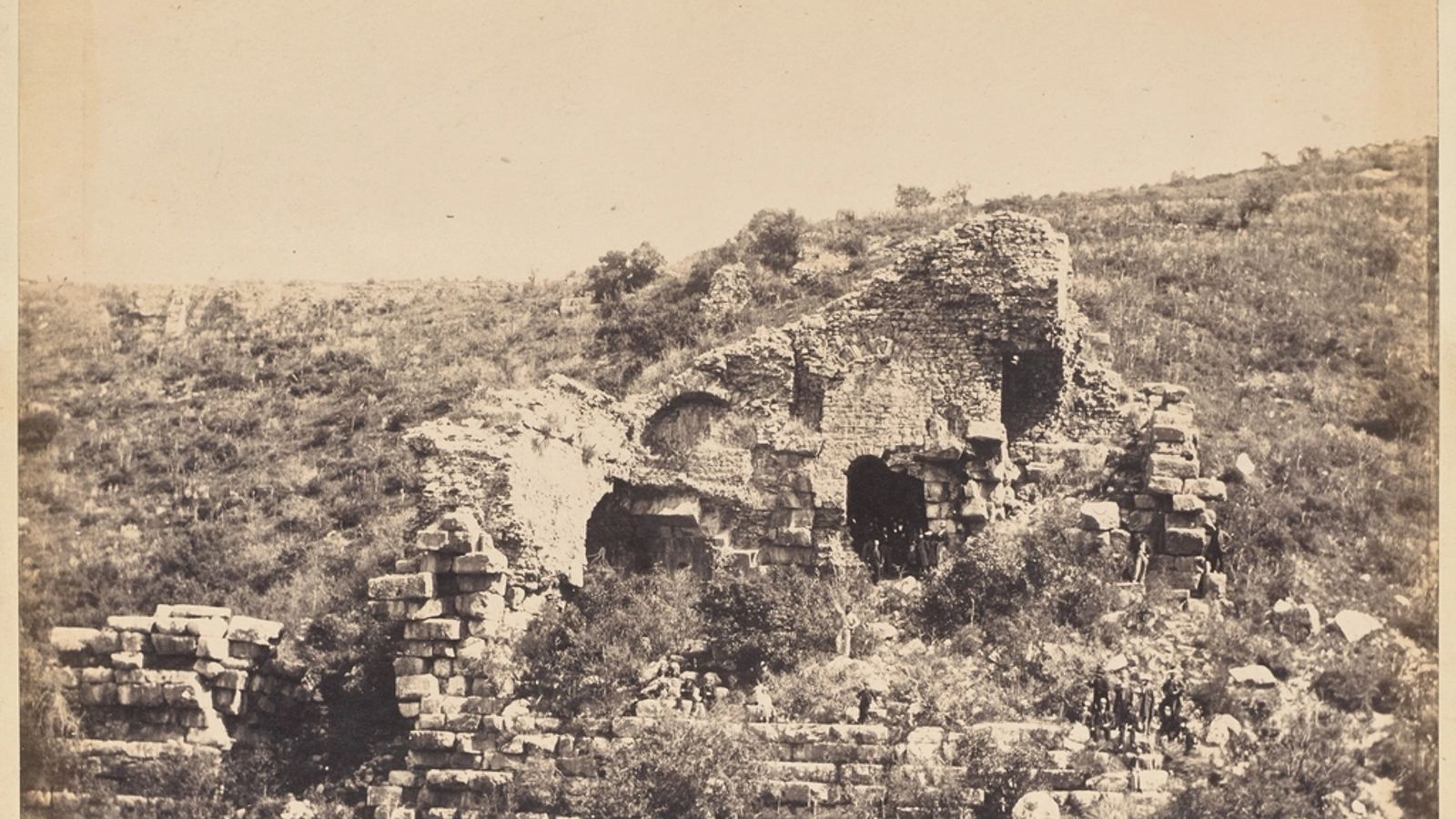
- Hero image source by thegetty / openverse, cc0.