In 1907, what became known as the Irish Crown Jewels were stolen from their safe in a part of Dublin Castle called Bedford Tower. Worth millions, these diamond-packed pieces not only had historical significance for Ireland’s Most Illustrious Order of St. Patrick—which was its real title, not a sarcastic embellishment—they would also be trotted out whenever the English monarch came over. The Order of St. Patrick itself was an extremely pro-unionist group, meaning that the jewels represented the link between Ireland and England. While this story takes place in 1907, prior to the creation of Northern Ireland as a separate entity, it was still a time of political unrest with demands for land reform and unionist and nationalist movements starting to ramp up. So while the story of the theft of the jewels plays out over this increasingly fraught historical background, politics may not be the sole reason as the motive for the crime. In addition, we have tales of hushed-up homosexual scandals, almost comic incompetency, and maybe just plain old greed. And because it’s Decoding the Unknown, there’s even a bit of a curse to consider at the end. And while you may have already guessed it from the title, this is still an active mystery as the jewels have not been recovered to this day.
The Jewels
When you hear the term “crown jewels,” you probably imagine a crown and various other fancy bits of jewellery. Calling the stolen jewels the “Irish Crown Jewels” is a tad misleading as technically, while they were in Ireland, belonged to the crown—that is, the monarch—and were jewels, they were not “crown jewels” as you might immediately imagine. The media started calling them “the Irish Crown Jewels” after the theft was discovered, and while they were known as lowercase “crown jewels” in Ireland prior to this, their reason for existing was as blinged-up new insignia for the Grand Master of the Most Illustrious Order of St.
Patrick. These particular jewel pieces were commissioned in 1830 or 1831 by King William IV, using some of his mother’s old jewels that were just lying around in a drawer somewhere. This was from Queen Charlotte’s jewel collection, and she had an absolute ton of stuff, including the Arcot diamonds.
Key Takeaways
- The Irish Crown Jewels, stolen in 1907, were significant for Ireland’s Most Illustrious Order of St. Patrick and symbolized the link between Ireland and England.
- The jewels, known as the ‘star’ and ‘badge,’ were highly valuable, with nearly 400 Brazilian diamonds, and were last seen on June 11, 1907.
- Arthur Vicars, the Ulster King of Arms, was responsible for the jewels’ security but exhibited gross negligence, leading to their theft.
- Several suspects, including Vicars’ assistants and friends, were considered, but the investigation was closed without a resolution.
- The theft remains unsolved, with theories ranging from political motives to personal scandals, and a mysterious curse affecting those involved.
Some sources have claimed that some of her jewels make up the British Crown Jewels today, but that’s not true. In fact, Queen Victoria was sued to hand back a lot of the jewels she ended up with, due to them apparently belonging to Hanover, which she was not the monarch over. She had loved some of Charlotte’s pieces so much that she had copies made, and these are what ended up in the famous uppercase Crown Jewels collection.
Anyway, the Irish pieces were known as a “star” and a “badge.” The star was an eight-pointed brooch covered in diamonds with an emerald trefoil or shamrock and a ruby cross in the centre. The badge was attached to a ribbon and was oval in shape, again set with many diamonds with the emerald trefoil and ruby cross in the centre.
Both pieces also had the motto of the order which was, perhaps somewhat ironically, “Quis Separabit” or “who will separate us?” picked out in diamonds, along with “1783”—the year the order was founded—in Roman numerals. At the top of the so-called “badge” was a harp under a crown and a loop for the ribbon to go through.
This was all set with diamonds too, naturally. In all, there were nearly 400 Brazilian diamonds on the pieces, which police posters later described as being “of the finest water,” meaning they were extremely high quality. In 1907, it was estimated that the star was worth about £14,000 and the badge was worth around £16,000, or nearly £1.8 million and just over £2 million in today’s pounds—around $2.4 million and $2.7 million respectively.
Considering that the pieces were pretty small, that’s a lot of value packed into a small package.
The “Security” Arrangements
Ordinarily, the jewels were kept in a jeweller’s in Dublin, but when the monarch was coming over or some other ceremony was taking place, the jewels would be taken out and moved to Dublin Castle. This was considered a very safe place for them to be as not only was it full of military personnel, the Dublin Metropolitan Police force was also stationed there.
In a room in a section called Bedford Tower, a man by the name of Arthur Vicars spent his days. He had an office in Bedford Tower, and to give him his full title, he was The Ulster King of Arms, Sir Arthur Vicars. This meant he was in charge of genealogy and heraldry—which seems like one of those made-up job titles that sounds impressive but doesn’t really mean very much.
But apparently it was a cushy little number where he was in charge of inheritance laws and estate claims and the like. Also tacked on to that, he was charged with the safekeeping of the Irish crown jewels, a newly added responsibility to the position. When the jewels were in Dublin Castle, they were put in a safe along with some things officially called “collars,” which were decorative neck chains like a mayor might wear, for knights of the Order of St.
Patrick to wear during ceremonies. There were two keys to this safe and Vicars had both keys: one that he kept on him at all times and one that he kept at his house somewhere. The office of the Ulster King of Arms used to be in a different tower, but when Vicars took over the role, he decided to move it to Bedford Tower and also decided to create a separate strongroom to keep the safe with the jewels in.
This went very well until the time came to move the safe into the newly fitted-out strongroom. The safe was too large to get through the door. Apparently it was too difficult or there was too much admin involved in getting a new safe, and it was too much hassle to knock down a wall of the new room, so they ended up just putting the safe in the library of Bedford Tower, ostensibly until someone worked out what to do next.
This was presumably a very strong safe as there was no hurry to construct a new one or get a replacement. Vicars himself wrote a statute for the office of the Ulster King of Arms, stating that the jewels must be kept in a safe in a strongroom, but he never actually ended up moving it.
This library was also the waiting area of Vicars’ office, meaning that people were coming and going through it quite frequently. There was a porter, also described as a sentry, stationed there to keep an eye on the jewels, but there were multiple entrances into the library and the point of the sentry seems almost entirely meaningless when you find out that he couldn’t even see the safe from where he was stationed. This begs the question as to why he didn’t move a bit closer, but that remains unknown, and to be honest, it’s just one more farcical element to the supposed security of the jewels.
The last confirmed sighting of the jewels was June 11th, 1907. It wasn’t until July 6th that it was discovered that they were missing. In between those two dates were multiple cases of incompetence and lapses in security that might leave you scratching your head and wondering how the jewels had remained in the safe for even that long.
For example, there were seven keys to the tower building and one day Vicars lost his, so had to be let in by a policeman. A cleaner had also turned up a few days later to find the main tower door unlocked. Moving inside the tower, the door to the strongroom was found to be unlocked on at least two occasions, and one of these times, Vicars’ keyring—which may or may not have had the safe key on it—was left hanging in the lock to the inner door.
The safe wasn’t actually in the strongroom, remember, but it’s hardly a dazzling display of security by Vicars. He never really gave any explanations as to why he lost and left his keys all over the place and didn’t seem overly worried about it, so the cleaner presumably just sighed and carried on as normal.
The king was also due to arrive on July 10th, meaning that Vicars was quite preoccupied with that, and as long as people were handing keys back to him, he wasn’t pursuing the matter any further. He didn’t apparently check the safe during this period, and the porter was just hanging about in his blind spot and never noticed anything amiss—which you wouldn’t if you couldn’t see what you were supposed to be guarding.
It was on July 6th that the cleaner had found the keys in the strongroom door, and later that day, a delivery of a repaired ceremonial collar arrived from the jeweller. The porter, William Stivey, got the safe key from Vicars and went to put the collar in the safe, along with the rest of the Order of St. Patrick regalia.
This was a breach of protocol in itself as Vicars was supposed to be in sole charge of the safe key and shouldn’t really have been handing it off to anyone else. When Stivey tried to unlock the safe, he had a bit of a brain-fart as the key wouldn’t turn. His confusion turned to horror as he realised that he had been trying to unlock the safe but it was already unlocked.
He ran back to tell Vicars, who rushed down to take a look and found the safe almost totally empty. According to an article on ireland-information.com by Shaun Ivory, Vicars exclaimed, perhaps rather unnecessarily: “My God, the jewels are gone!”
The Details of the Crime
What do we know about the details surrounding the crime? The word “heist” evokes many participants and some kind of flashy and elaborate plan, but we have no real idea what happened here or when it happened, so it might just have been a quick piece of opportunism. If it was a highly planned mission, we’ve never been given the benefit of the details.
We know that the jewels were last seen by Vicars and another witness on June 11th. After that, Vicars lost his key to the building at least once and left his bunch of keys out at least once again. There were only two keys to the safe, and experts later concluded that as there looked to be no damage to the lock, one of the original keys had been used to open it, as opposed to a copy or by use of force. The two keys were both in Vicars’ possession, one apparently on his person at all times and the other in a drawer at his house.
The crime had also taken at least a few minutes to be committed. While it’s a job of seconds to sweep the contents of a safe into a bag, the badge of the Order of St. Patrick was attached to a blue ribbon which was the only thing left behind in the safe. The badge was attached to the ribbon by a clasp, and the thief or thieves had actually unscrewed the clasp to remove it—a job which would have taken several minutes. Also, according to an Atlas Obscura article by Dan Nosowitz, all the paper and other cloth coverings had been folded and neatly replaced in their boxes. Clearly the thief had the time to do all this and was confident about what they were doing. The fact that the safe was housed inside a military and police department also pointed to an inside job or at least a suspect who roused no suspicion by coming or going from Bedford Tower.
Vicars informed the police, and after a week or so of getting nowhere, Scotland Yard was called. Inspector John Kane, who was Irish, incidentally, made his report and sent it to the Dublin police, naming who he thought was the perpetrator. So what did he think? We don’t know—the report was suppressed and John Kane was recalled to Scotland Yard.
Suspicious, certainly. What we do know is that Kane was sure it was an inside job. So were there any suspects to the biggest unsolved theft in the history of Ireland? There were, and they were all closely connected with the Ulster King of Arms himself, Arthur Vicars.
The Key Players
It seems to have been the set-up at the office of Arthur Vicars that you could get your pals cushy work numbers just like yours. He had three assistants or “heralds,” although this may have been a sort of honorary title as none of them were doing a 9-to-5 desk job in Bedford Tower. In fact, the positions were unpaid, so the heralds were doing it for the prestige. Boasting about being a herald could presumably get you a bit further in 1907 than it could today.
Pierce Gun O’Mahony
The first herald was Pierce Gun O’Mahony, who was also Vicars’ nephew, being the son of Vicars’ half-brother. He belonged to an incredibly rich Irish family and had actually been with Vicars at his office when the theft was discovered. With the title of “Cork Herald,” he didn’t really have to do very much but did pass a fair bit of time with Vicars at his office, perhaps excited over the novelty of technically having a job.
Maybe because he was so wealthy already, suspicion doesn’t seem to have fallen on O’Mahony, and Vicars himself stated that he wouldn’t have known anything about it. Considering the lack of theories casting suspicion on his involvement, we can pretty much count him out.
Francis Bennett-Goldney
Here’s a more suspicious character. Francis Bennett-Goldney basically flat-out asked Vicars for a job in his department shortly after meeting him in 1905. Bennett-Goldney was a wealthy antiquities collector who eventually ended up as mayor of Canterbury. He did get his wish and officially gained the archaic and bizarre title of “Athlone Pursuivant” in 1907, mere weeks before the theft of the jewels. The title is all to do with heraldry and is named after the town of Athlone.
Watch Now
Open Video
Video Briefing
The Irish Crown Jewels: The Obvious Theft that was Never Solved
Bennett-Goldney, as well as having a sharp eye for precious things, was also—allegedly—a thief. Actually, it’s not alleged, it’s a fact. After his death, missing manuscripts, other bits and bobs, and at least one valuable painting were found in his home.
So would he also have been involved in the crown jewels theft? Again, he was already a very wealthy man, which might point away from him stealing the jewels for monetary gain, but he took a trip to Amsterdam shortly after the crime, which could indicate that he sold the jewels into the hub of the European gem market. As previously mentioned, the heralds didn’t really have to do very much, and Bennett-Goldney was not around the office over the period of time the crime took place, or at least was not seen by anybody.
Francis Shackleton
Was this Shackleton related to Antarctic explorer Ernest Shackleton? They were brothers. This Shackleton, though, was known as a witty and charming socialite who had a big problem keeping hold of his money. He was also gay—which, although illegal at the time, seemed to have been a loosely kept secret as he was rich and handsome and pals with the upper classes in both England and Ireland.
In fact, he had connections to the King himself at the time, moving in the same circles as Edward VII’s brother-in-law, the Duke of Argyll. And when we say “moving in the same circles,” there were rumours that the Duke and Shackleton were lovers.
Shackleton was also friends, possibly with benefits, with Arthur Vicars and even stayed with him whenever he happened to be in Dublin. He had the title of “Dublin Herald of Arms” and not only had access to the safe key that was lying around in Vicars’ house, he even remarked that the jewels might have been stolen two days before they were discovered to have been taken. He was also in a relationship with a Captain Richard Gorges who had a scary reputation but, as a military man, would not have seemed out of place if he was spotted around Bedford Tower. Suspicion fell heavily on Shackleton at the time due to his financial difficulties and access to the keys and the safe, but he was apparently not in Dublin during the period the theft was carried out.
Arthur Vicars
Was the Ulster King of Arms himself the thief? He obviously had the time, access, and knowledge to carry out the crime. The guarding of the crown jewels was not in his official job description, and he had apparently always done it begrudgingly as his pay hadn’t been increased when the responsibility was passed on. As we’ve seen, despite the rules and regulations that he himself wrote, the safe was not held in a strongroom but was basically on public display in the library.
It later came out in stories that the “Cork Herald,” Pierce O’Mahony, told a reporter that Vicars was a total lightweight and there were often boozy parties held in his office. In some media tellings, this came out as homosexual orgies—which was embarrassing to all concerned and didn’t cast Vicars in a great light. O’Mahony denied this aspect of the parties but did say that Vicars would get so drunk he’d pass out, and then his friends would play such pranks as unlocking the safe and draping the contents on him to find when he woke up.
There was also a story that the jewels had actually been stolen before by one of Vicars’ friends and had then been posted back a couple of days later. The fact that he didn’t seem that worried about the theft this time around may point to him believing it was just another prank. It does seem unlikely that he took them, and indeed the overall feeling was that while it couldn’t be proved that he was the thief, he was guilty of gross negligence and so ultimately culpable for the disappearance of the jewels.
The official verdict was that Vicars “did not exercise due vigilance or proper care as the custodian of the regalia.” He, along with the entire Heralds office, was fired, and the investigation came to an end.
The Mysterious Motives
Why do we think this crime was carried out? A couple of different theories have sprung up over the years, but as the whole affair was turned around to hinge on Vicars’ dereliction of duty rather than solving whodunnit, there aren’t too many clues out there. In fact, one of the theories goes that because of the whiff of potentially scandalous behaviour coming from the likes of Shackleton, who could be linked—perhaps even romantically—to Lord Argyll, the King’s brother-in-law, Edward VII just shut the whole thing down rather than be publicly embarrassed.
It has also been theorised that Shackleton and Vicars were secret lovers and cooked this whole thing up between themselves, counting on the fact that it would all be hastily hushed up to avoid a royal scandal. This does make sense, although it still doesn’t help us with who actually stole the jewels, as no one was ever charged with the crime.
Was it literally a crime of opportunity by one of the heralds? We don’t know when the jewels were taken, and there was no CCTV or anything that could confirm if a shadowy figure slipped into the tower one evening. It is unknown whether the heralds themselves had keys to Bedford Tower, but as we’ve established that Vicars lost his on more than one occasion, it might not have been hard to obtain a copy.
During their late-night fun times with the contents of the safe, how difficult would it have been to also swipe a key or press it into a bar of soap to later get a copy made? All suspicions swirled around the heralds before the investigation was closed down, and the lack of damage to the lock and safe itself, along with the care taken in removing the jewels, does hint at familiarity with the whole set-up and also therefore at an inside job.
Maybe it was blackmail, Shackleton being particularly easy to pressure due to his financial straits and homosexuality. While he apparently had an alibi and was not in Dublin at the time, maybe his lover, Captain Richard Gorges, carried out the deed on Shackleton’s behalf. Shackleton mentioning “maybe the jewels have been stolen” a couple of days before the discovery is suspicious if he did actually say it. Maybe it was to hurry Vicars into finally checking on the safe so Shackleton would actually have an alibi.
The longer Vicars just didn’t bother, the more difficult it would be to confirm his timings. Of course this is all total speculation and just one reason why the crown jewels might have been taken.
Was it politically motivated, then? As mentioned at the beginning, unionist and nationalist tensions were starting to grow in Ireland, so the visit of the reigning monarch might have been a flashpoint. Maybe a nationalist group co-opted or blackmailed one of the heralds into stealing a key or even the jewels themselves in order to stick it to the monarch. Whether the jewels were then sold or just hidden somewhere remains unknown.
A reward of £1,000—which is over £128,000 today—was offered, but no good leads materialised and the jewels have never been recovered.
A Curse?
To wrap up, what happened to the Ulster King of Arms and his heralds after this whole affair went down? It seems that a mysterious curse fell over the four men, as at least three of them came to untimely ends.
Antiquarian and quiet thief Francis Bennett-Goldney died in a car accident in France during World War One. He was 53.
Pierce Gun O’Mahony died in suspicious circumstances in 1914. Apparently rowing alone across a lake to a friend’s house with a hunting shotgun in the boat, his body was found the next day with a shotgun blast to the heart. He was 36.
Francis Shackleton was declared bankrupt in 1910 and was eventually jailed for fraud a few years later. Upon his release he changed his surname, moved in with one of his sisters, and apparently opened an antiques shop in Chichester. He is buried under his changed name of “Frank Mellor.”
Arthur Vicars was left disgraced and also without his pension. He was offered it but felt such outrage in the way he had been treated that he rejected it, presumably for moral reasons. He had always been a staunch unionist and carried on supporting British soldiers in Ireland into the 1920s, despite being warned that his activities made the IRA very suspicious of him. On April 14th, 1921, he was taken from his bed by a large group of men who had broken into his home and was shot to death.
When his body was found, there was a note round his neck saying: “Spies and informers beware. The I.R.A. Never Forgets.” He was 58.
Remember Captain Richard Gorges? He fell on hard and alcoholic times after the crime and ended up killing a police officer during a drunken fight. While in jail, he tried to barter for his freedom with information about the whereabouts of the crown jewels. Nobody took any notice, but he was in the frame as a suspect, so would it have hurt to have taken a look where he was saying?
He apparently did confess more than once to being the thief, but it sounds like nobody was really interested at this point, and in 1944 he died when he fell in front of a train—again, it was unclear whether the circumstances were suicide, accident, or murder. He was 68.
And in another pointing of fingers, Vicars himself laid the blame firmly at a herald’s door. In his will, which wasn’t made public until 1976, long after his death, he accused everyone up to Edward VII of covering up the crime and named Francis Shackleton as having been responsible.
The Enduring Mystery
So what do we reckon? Was this a political move in a country brimming with unrest? Was it a brazen theft which the perpetrators knew would be swept under the rug? Or did something completely different happen? All we know for sure is that Arthur Vicars was definitely at fault, whether intentionally or not, and there is also still the possibility that the Irish crown jewels are out there somewhere, maybe in an antiques shop in Chichester, just waiting to be found.
Simon Whistler
Simon Whistler is one of YouTube's most prolific educational creators. Decoding the Unknown is his methodical investigation into the world's strangest phenomena — examined with rigour, curiosity, and a healthy dose of scepticism.
Frequently Asked Questions
What were the Irish Crown Jewels?
The Irish Crown Jewels were a set of diamond-packed pieces commissioned in 1830 or 1831 by King William IV. They included a star, an eight-pointed brooch covered in diamonds with an emerald trefoil and a ruby cross in the center, and a badge, an oval-shaped piece also set with diamonds, with the motto of the order ‘Quis Separabit’ and the year 1783 in Roman numerals.
Where were the Irish Crown Jewels stolen from?
The Irish Crown Jewels were stolen from a safe in Bedford Tower, part of Dublin Castle.
Who was responsible for the safekeeping of the Irish Crown Jewels?
Arthur Vicars, the Ulster King of Arms, was responsible for the safekeeping of the Irish Crown Jewels.
What was the estimated value of the Irish Crown Jewels in 1907?
In 1907, the star was worth about 14,000 pounds and the badge was worth around 16,000 pounds. In today’s pounds, that would be nearly 1.8 million and just over 2 million respectively.
What were the security arrangements for the Irish Crown Jewels?
The jewels were kept in a safe in the library of Bedford Tower, which was also the waiting area of Vicars’ office. There was a porter stationed there, but he couldn’t see the safe from his position. The safe was not in a strongroom as per Vicars’ own statute.
Who were the main suspects in the theft of the Irish Crown Jewels?
The main suspects were Arthur Vicars’ three assistants or ‘heralds’: Pierce Gun O’Mahony, Francis Bennett-Goldney, and Francis Shackleton. Vicars himself was also suspected of gross negligence.
What happened to Arthur Vicars after the theft?
Arthur Vicars was fired along with the entire Heralds office. He was later shot to death by a group of men who broke into his home in 1921.
What was the political climate in Ireland at the time of the theft?
The theft took place in 1907, a time of political unrest in Ireland with demands for land reform and growing unionist and nationalist movements.
What was the motto of the Order of St. Patrick?
The motto of the Order of St. Patrick was ‘Quis Separabit,’ which translates to ‘who will separate us?’
What was the reward offered for the return of the Irish Crown Jewels?
A reward of £1000, which is over £128,000 today, was offered for the return of the Irish Crown Jewels, but no good leads materialized.
Sources
- Original Decoding the Unknown video: The Irish Crown Jewels: The Obvious Theft that was Never Solved
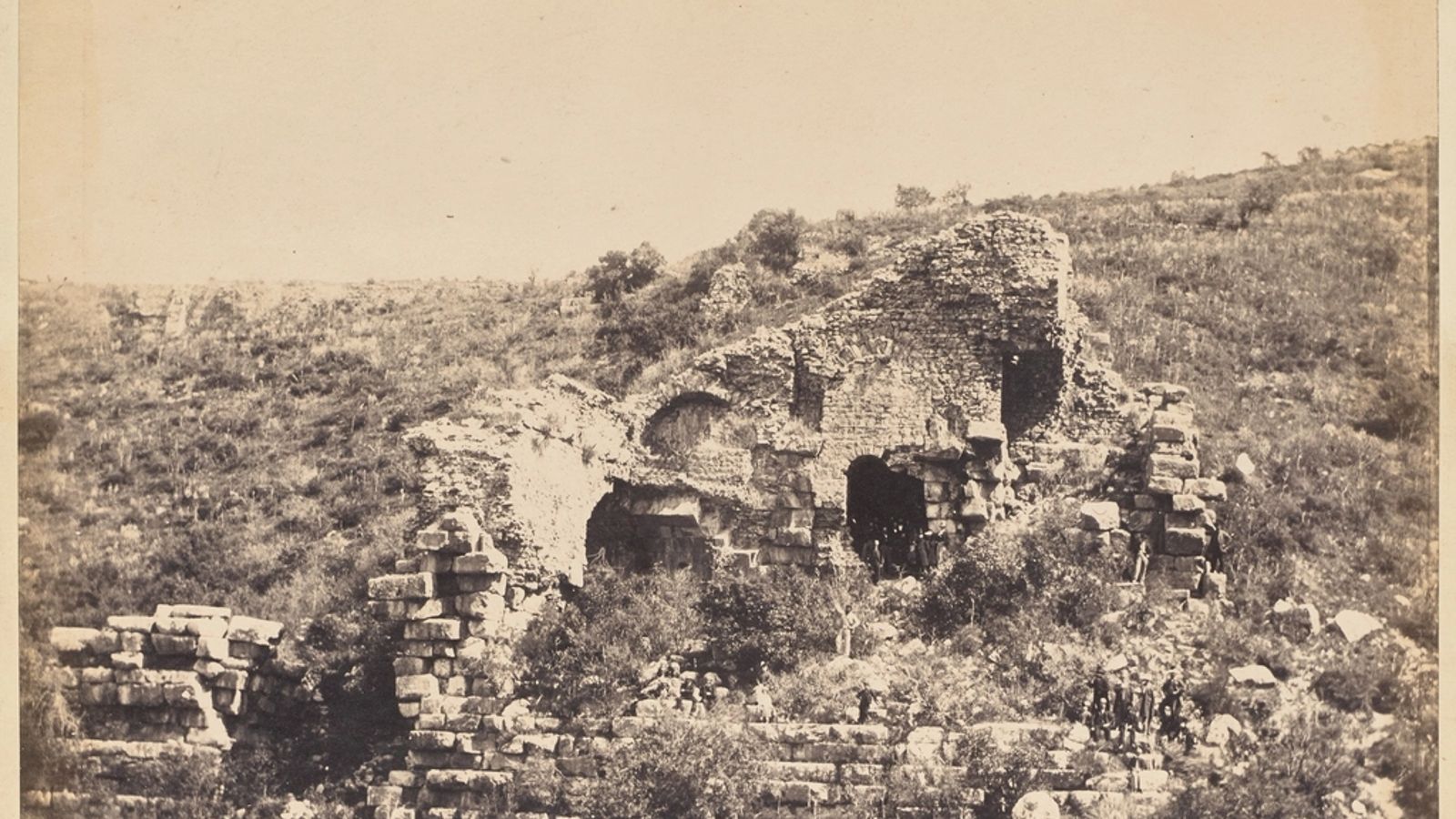
- Hero image source by thegetty / openverse, cc0.