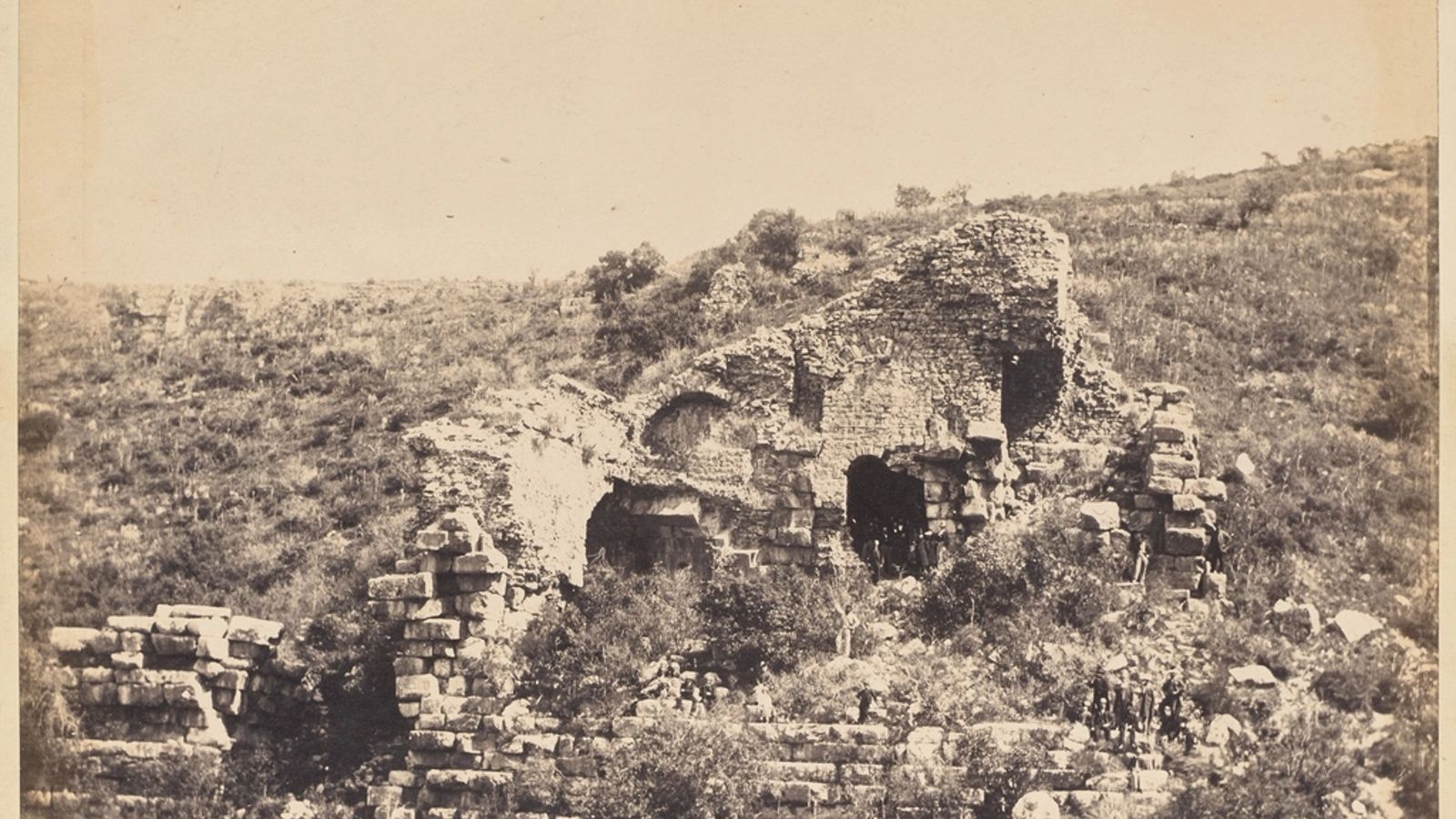
I don’t know a whole lot about Hawaii. To be honest, the only references I can really come up with are season one of “The White Lotus” and underrated Disney movie “Lilo and Stitch” and I don’t think either of those are going to be that much help with this story. This is about folklore, murder, creepy things happening and a house that you really don’t want to live in. So let’s get to the good stuff and find out all about the Kasha House of Kaimuki.
The Story of the Kasha
If you were wondering, by the way, the name of the place is pronounced “Kye moo key” but I think Simon probably nailed this one without too much effort, go Whistle Boy.
Kaimuki is a neighborhood in Honolulu, on the island of Oahu. It currently has a population of around 50,000, is apparently a bit of a foodie hub and looks pretty awesome on Google images. But, somewhere in the residential area of Harding Avenue and 2nd Avenue there lives a dangerous, restless demon, intent on dragging unclean souls into the fiery pits of hell. Let’s talk about the Kasha.
Key Takeaways
- The Kasha House in Kaimuki, Hawaii, is infamous for alleged supernatural activity involving a Japanese demon.
- The Kasha legend evolved from a fiery cart to a cat-like demon associated with multiple murders in the house.
- Historical accounts and newspaper articles provide limited, often ambiguous evidence of paranormal events.
- Recent resident Keith Mann experienced unexplained phenomena but attributed them to the land rather than the building.
- The original Kasha House was demolished in 2016, replacing it with modern duplexes, and the legend persists as an urban myth.
While Hawaii has many of its own demons and supernatural stories, the Kasha is actually a demon from Japanese folklore. I found this kind of confusing as why would a Japanese demon have set up shop in Honolulu but apparently, Japan has had a long love affair with Hawaii with Japanese people immigrating there in solid numbers since the nineteenth century so I guess the Kasha tagged along. And also who wouldn’t want to hang out in Hawaii? Seems like a sensible move to me. Anyway, about this Kasha.
If you’ve ever seen the kid’s anime show “Yo-kai Watch”, you will be familiar with the term “yokai” which is a Japanese spirit or supernatural being. Hopefully I can also pass the earworm of a theme tune onto you now. It’s one of those ones with a strong tune but lyrics that are hard to work out so if it randomly pops into my head, I only have a few words going round on a loop. If you haven’t seen Yo-Kai Watch, don’t worry, you haven’t missed much apart from one episode which features a Yokai called “Cheeksqueek” which literally has a bum for a head and farts out of its mouth.
My kids love that one. But that’s not what we’re talking about here.
“Kasha” means a burning or fiery chariot or cart and the legend has it that it would screech up to the funeral of someone who had been a bit of a wrong’un, snatch them up and drive the poor soul straight to hell. Over time, the story and name of the Kasha got a bit more fluid and started encompassing other things too, so by the time one took up residence in Kaimuki, a Kasha was generally agreed to be a demon that could take the form of a cat and was partial to the taste of fresh corpse.
It all started with a horrible murder where the father of a Japanese household killed his wife and children, hiding their corpses around the Kaimuki property and in the garden. His daughter’s body was never found. Years later, two women lived together in the house but one started having an affair with a man.
When he found out she was already in a relationship with another woman, his feelings of jealousy turned into a murderous rage and he killed both women before finally killing himself. Was it all these deaths that spawned the Kasha or did the Kasha have a hand in them in some way in order to get access to some delectable corpses? Many more stories of people fleeing the demon house and strange things occurring there were passed down through the years, eventually making the house so notorious that just referring to it as “the Kaimuki House” was enough for locals to know what you were talking about.
It isn’t just hearsay, though. In August 1942, the Honolulu Star Bulletin published a story with a headline of “Police Called to Shoo Ghost from Kaimuki”. The article goes on to detail how an unseen force was attacking a young boy and his older sisters while their mother tried frantically to ward it off. When police arrived they battled with the demon for over an hour and a half before admitting defeat and the family temporarily moved out.
In October 1972, the Star Bulletin again printed evidence of the Kasha striking. Three teenagers who were living at the haunted Kaimuki house called local police when they thought they heard something moving about in their home. Too scared to stay, they decided to drive to one of their mother’s homes with the policeman providing an escort. The girl’s car suddenly veered off and the police officer rushed up to it to find one of the girls apparently being strangled by an unseen force. He felt his arm being twisted by a huge, calloused hand and ran off to call for back-up. When another police officer arrived, they took the injured girl in their car but the engine wouldn’t start. She went back to her friend’s car and both cars then started and everyone drove off. Just a few seconds later, the door of the girls’ car flew open and the teenager was ejected into the road, again trying to fight off an unseen attacker. The situation was only resolved after one of the police officers threw water and salt from a nearby cafe over everybody which he had remembered his grandmother telling him was a way to dispel ghosts.
In 1994, historian Glen Grant published Obake: Ghost Stories in Hawaii (pronounced “oh-bah-kay”) which told stories based on the accounts of a real-life detective, Arthur McDuffie. The Kasha makes a scary and almost deadly appearance in the appropriately named “The Kasha of Kaimuki” chapter where as well as attacking the detective on more than one occasion, it seems to have gained a liking for ripping apart human bodies.
So that brings us up to the present day and you wouldn’t think the Kasha would still be hanging around, right? Wrong. Writer Keith Mann lived in the infamous Kaimuki house for a year some time in the late Twenty Teens. He had a vague awareness of the notoriety of the Kasha house but according to a piece he wrote on his website, TheOverlyOpinionated.com, it was only when he had to sit down and type out his new address multiple times to change it that it finally sunk in that he’d cheerfully moved into what was arguably the most haunted house in Hawaii.
Oopsies! Did he witness anyone being ripped limb from limb by an invisible demon or see anyone being dragged off to Hell in a fiery chariot? Heck no. Did anything weird happen to him while he was living in the Kasha house?
Heck yeah.
Keith Mann states that he’s not really a believer in the supernatural and is skeptical by nature but he had a few experiences during his year long tenure that definitely rattled his cage. He also had multiple neighbours and passers-by stopping him on the street and asking why he lived there, if he had seen the Kasha and that they were surprised he’d made it longer than the usual tenant stay of about 3 months max before fleeing in terror. So what did our man on the ground experience?
In his piece titled: “I Lived in the Most Haunted House in Hawaii (Kaimuki House)”, Mann relates that on three separate occasions he woke up at 4.33am on the dot as if he had “just been injected with adrenaline”.
I’ve just watched “The Devil’s Hour” by the way, where the main character wakes up at exactly 3.33am every night so Mann’s story definitely gave me the chills. I very much recommend The Devil’s Hour, even if it is a bit of a brain bender. Anyway, back to our Kasha tale.
After being rudely awakened, Keith Mann would realize that his room was really cold, 60 degrees fahrenheit, in fact, which is about 15 degrees centigrade. He had a portable air conditioning unit in his room which apparently was only a cheap thing and wouldn’t be able to get his room that cold. Plus he never had it set that low. He lives in Hawaii, remember so nobody wants it to be that cold at night.
Each time he had the 4.33am experience, all the smoke alarms would give off one beep together. Big whoop, maybe their batteries were running out. Au contraire, says Mann. All the alarms were separate and not centrally connected.
For them all to chirp at the same time is unlikely and for this to happen each time he had his strange experiences is downright weird as it occurred three times inside of a year.
It wasn’t just the cold and the smoke alarms that freaked him out, though. Each time he was awoken, he had the strongest feeling of there being an unseen presence in his room and felt like he had been “stabbed by a white walker. My veins were filled with ice water and I thought my life force was being drained out of me. My chest was tight, I struggled to breathe.
No matter what I told myself to calm down, the feeling crept through me like a virus until I could barely move.” A white walker is a zombie ice creature thing from Game of Thrones in case you were wondering. In these scenarios, Mann would eventually be able to run out of his room and by the next day, the aura of a pissed-off demon would have faded and because the rent was cheap and he liked his housemates, he eventually forgot about the creepy encounters until the next time it happened.
Nobody else in the house seemed to experience anything like he did, so Mann concluded that his bedroom must be over the spot where the multiple murders or other bad acts had happened. He moved out after a year and the Kasha didn’t follow. He states in his piece that he 100% believes the Kaimuki house is haunted but as his experiences weren’t that bad and stretched out over a year, he concluded with: “Overall 7/10, would get haunted again.”
Decoding the Kasha Stories
OK, we’ve heard the stories, now let’s get our Kasha on and rip them apart, piece by piece. We’ll take it right back to the start with the demon itself. As we said, the origin of the Kasha is from Japanese folklore and was apparently a fiery cart that picked up unworthy peoples’ corpses and drove them straight to Hell.
This somehow became warped and changed over time, possibly by mistranslations or by merging with other tales to become a sort of corpse-eating shapeshifting cat demon. The Kasha that reportedly set up shop in the Kaimuki house was also now some sort of violent spirit that had started attacking the living. So basically the thing in the house isn’t what the myths and legends books would really recognize as a Kasha but let’s keep calling it that for want of a better demon name.
Watch Now
Open Video
Video Briefing
The Demon of Kaimuki: A Hawaiian Horror Story
The murders near the start of the story of the dad who killed his family and then the jealous man who killed his lover and her girlfriend, while horrible, seem to be unsubstantiated rumours. I couldn’t find names, dates, details or anything about them so I guess they’re just urban legends attached to give some sort of understandable origin story to the Kasha house. Plenty of other murders have happened in Honolulu and no other location appears to have birthed a demon, though, so let’s investigate further.
The newspaper article of 1942 is kind of something of nothing. While we originally presented it as proof of the Kasha, when you read it, it doesn’t exactly make believers out of skeptics. According to the article, two police officers “found a Hawaiian boy, 10, and his two sisters, 18 and 20, shrieking on a sofa. The mother, besides shrieking, was waving ti leaves and sprinkling Hawaiian salt to ward off ghosts.
At 10pm, she said, her son had detected an odor of ghosts. Angry at being found out, the spirits first attacked him, then began repeated attempts to strangle his sisters, she said.”
Didn’t know ghosts had an odour but there you go, apparently they do and get all snippy when you sniff them out. The strangling aspect is probably the most interesting thing for me here, as it comes up again in the next example. But sticking with this one, the mother then goes on to say “My husband, who left me, is to blame.” Not sure exactly what she’s getting at here.
Is he the one merrily attacking his own kids wearing an invisibility cloak? Did he summon demons to do it for him? If demons spawned every time one partner leaves the other, I think half the population would have been strangled by ghosts by now.
Anyway, the police were not able to do much to help as the article reports: “After an one and a half hour struggle, police and family yielded the home to kahuna and retreated at 3am to the mother’s sister’s home.” Wow, an epic 90 minute struggle with the supernatural and that’s all the press it’s given? A “kahuna” means a pre-eminent person or thing, by the way, i.e. the demon was in charge of this situation.
While this story is actually documented in a newspaper, there doesn’t seem to be a lot to it and can maybe be written off as some sort of hysteria within the family or maybe Simon’s favourite carbon monoxide poisoning. Maybe ghosts actually smell like carbon monoxide and only a few people can detect it. Anyway, this small article is hardly proof of anything apart from the wife getting a jab in about her ex husband so let’s move on.
The next part of the historical record that supposedly relates to the Kaimuki House is the piece about the three young women or teenagers who were attacked by the Kasha while driving away from the house. Again, an unseen force tried to strangle one of the teens with a police officer confirming that the hands and arm he apparently felt definitely did not belong to any of the women in the car. What do we make of this story?
Again we’ve got young women being attacked and strangled, police involvement and the sprinkling of salt to dispel the spirit which worked in this case. Surely this warrants a bigger write-up than a brief mention in a local paper.
And looking into the article more, this story actually appears as one of several in a larger piece under the main heading of “Spook Stories”. Are we smelling a rat or maybe a ghost here? There are no names of police officers or the women involved given and the residence is mentioned only as “a house which the neighborhood considered haunted.” The article was written by Lois Taylor who was a popular features writer for the Honolulu Star Bulletin for over 35 years. The Spook Stories piece was published on October 31st, 1972 - Halloween! So was it just a collection of made up spooky stories to get the readership in the mood? Or was Taylor re-reporting real local spooky stories that had cropped up during the year? I’m not sure but again, one invisible strangulation story does not proof of a demon make. Maybe the girl was having an allergic reaction or asthma attack so would be clawing at her throat as she was having trouble breathing. Maybe the police officer got his arm stuck in the car window or something, or one of the girls did actually have much bigger and more calloused hands than normal and in the chaotic scene it all seemed more eerie than it was. I doubt it was spraying salt around that did anything but the other police officer also poured a glass of water over the girl which may have helped shock her out of her panicked state. If it was a totally made up story, that’s one thing, but as you can see, you can poke enough holes in it to remove anything supernatural anyway so again, it’s hardly a convincing case.
What’s the next part of the haunted house tale? Oh yes, the book that was published in 1994 by Glen Grant. Grant moved to Hawaii in his twenties and was a teacher, historian and author, being especially interested in Hawaiian folklore, myths and legends. The Kasha of the Kaimuki House appears in his Obake: Ghost Stories of Hawaii book where it takes on detective Arthur McDougal, who was based on the real life private detective Arthur McDuffie. I guess this type of tale keeps these stories alive and well in the public’s imagination as some stories in this collection are presented as true, or at least as true accounts, and some are fictionalized. Arthur McDuffie was a real investigator in Hawaii and Grant did interview him, although he states in the book that he used the character for “a series of fictional stories” that he did in a pulp noir style. He also said “Changing the surname so as to liberate him from historical fact, Art MacDougal was born, first appearing in the Honolulu Star-Bulletin.” Wait a minute! That’s where the other articles in this story were published too! Although I guess there weren’t that many different newspapers published in Honolulu at the time so it’s not that surprising, but there were at least two. Anyway, thanks to the author’s own disclosures, we can establish that the Kasha story in Grant’s book is a totally fictional account using the Kasha legend as a jumping off point.
It may also be a good time to note that while I gave the approximate location of the Kaimuki House at the start of this story, it was not specifically mentioned in any of the newspaper stories or Grant’s book. This means that we don’t even know if the newspaper examples took place in the same street, let alone the same house, but they are now forever linked to the story.
According to Lopaka Kapanui who runs a blog called “Ghosts Next Door”, he went on a tour of the area with none other than Glen Grant himself. When looking for the Kaimuki House, Kapanui writes: “he pointed to the second to the last house on the left of 2nd Avenue and Harding. He briefly mentioned that there might have been a headstone in the back of that house where the ghost of the mother-in-law in the infamous Kasha story was buried. That house according to Glen Grant was THE ‘Kasha house of Kaimuki.’”
Now, I don’t know who this mother-in-law he’s talking about is but I’m guessing it’s from the story he wrote for the Obake book which I have not read. No mother-in-law character pops up connected to the Kasha story that I’ve otherwise found but at least we have a tentative location for the house now. I’ve also seen the location given as 8th Avenue and Harding however, so it seems that the actual address is as nebulous as the Kasha itself.
EXCEPT! Hold the phone - this “Kaimuki House”, this “Kasha House” we’ve been going on about for the last however long doesn’t even exist anymore. That’s right, buildings in the whole area around the demon house were demolished in around 2016 and modern duplexes have been put up instead. This means that our next example, Keith Mann who recently lived in the house actually lived in the new construction, not the original Kaimuki House.
He already knew this but ascribed the haunting he experienced to the ground the house stood on rather than the physical construction of a building.
So now we’re saying that the Kasha wasn’t attached to murders committed in the house at all but is somehow attached to the land? It’s not an ancient burial site as far as we know and Mann freely admits that his landlord had lived in the house with no weird experiences happening, although if you were trying to rent out rooms you’re hardly likely to mention that you might be ripped apart by a fiery demon, unless he really didn’t read the small print.
So how can we explain Keith Mann’s experiences as anything other than supernatural? I’ll start with one I have personal knowledge of - the smoke alarms. Even if the battery is not dead, they can randomly chirp in the middle of the night because the temperature has dropped which can sometimes affect the battery output enough for it to trigger the low battery alert on your detector.
Mann said that the temperature had dropped to about 60 degrees fahrenheit in his room which might be cold enough to affect the alarm. He said all the alarms would sound together but if they’re all in separate rooms, how could he be sure they were all going off? It might have been just one in a specific spot that made the noise seem like it was coming from elsewhere.
I’ve been woken up by annoying battery chirps and sometimes it’s taken quite a while to find out which smoke alarm is the culprit so I just end up changing all the batteries anyway. Then there was one night when they were all going off so I changed the batteries but half an hour later they all went off again, like proper alarms, not just the chirps. We also have two that are dual smoke and carbon monoxide detectors and they were alerting us of carbon monoxide which was pretty worrying but I was sure it was all just due to battery failure and not that we were all about to die of carbon monoxide poisoning.
My husband thought we should call the fire brigade but I scoffed at his caution which thankfully I was right about otherwise we all might be dead. Did I think it was a demon? It never crossed my mind.
Was I pretty pissed off and grumpy the next day? I sure was. The answer was that the detectors were over 10 years old so I just went to the hardware store the next day and got a bunch of new ones, problem solved.
Maybe Keith Mann just woke up because the temperatures had dipped, yes this happens even in Hawaii, and he had heard the alarms chirping on the edge of his hearing and hadn’t realized what had woken him up. He then heard them go off again and put it down to a haunting as it had happened three times in a year. I can’t explain why he felt the presence or the cold internal feelings, maybe he was sick, on some sort of medication, having a panic attack or just psychologically keyed up to feel paranoid and scared upon being woken up in the middle of the night.
Who hasn’t felt creeped out from time to time even in the safety of their own bed when you know 100% that there is no possible way anything could have got into your room? I’m not trying to totally pick apart every single aspect of his experience, just trying to offer some rational explanations. As always in these stories, it’s the human experience factor that can’t be explained and no matter who you talk to, people will always believe what they want to believe, even if proof to the contrary is staring them in the face.
Let’s Cart this Kasha Home
For a place that’s supposed to have the title of the most haunted house in Hawaii, the Kaimuki House or Kasha House seems pretty tame. Apart from word of mouth stories, there is no documented evidence of anything happening there and the two small articles in the papers do not give a street address so we are not even sure if we’re all talking about the same place. Historian Glen Grant pointed out the house to Lopaka Kapanui but even if that was the correct address, the house has since been knocked down anyway. No evidence of the original murders has been found and, as previously stated, real life horrible murders have occurred in Kaimuki and surrounding areas without another house spawning a demon or vengeful ghost.
Even the description of what a Kasha is has been totally warped over time so we don’t know if whatever was lurking at the Kaimuki House was actually a kasha or some other sort of demon. Yes yes, I know demons aren’t real, but the non-canon version of this “Kasha” compared with the original Japanese yokai just adds another layer of confusion to the story. I feel confident in saying that the Kaimuki House is an urban legend and that, especially now that modern buildings have been put up in its place, nobody has anything to fear from a fiery cart or shape-shifting cat demon. But you know, if you have the misfortune to find yourself in that haunted bedroom, maybe keep some Hawaiian salt by your bed just in case.
Simon Whistler
Simon Whistler is one of YouTube's most prolific educational creators. Decoding the Unknown is his methodical investigation into the world's strangest phenomena — examined with rigour, curiosity, and a healthy dose of scepticism.
Frequently Asked Questions
What is the Kasha?
The Kasha is a demon from Japanese folklore that was originally described as a fiery chariot or cart that would take the souls of the unworthy to hell. Over time, the legend evolved, and the Kasha became associated with a cat-like demon that feeds on corpses.
Where is the Kaimuki neighborhood located?
Kaimuki is a neighborhood in Honolulu, on the island of Oahu, Hawaii.
What is the origin of the Kasha in Kaimuki?
The Kasha in Kaimuki is believed to have originated from Japanese folklore, brought to Hawaii by Japanese immigrants. The legend involves a series of murders and supernatural events in a house on Harding Avenue and 2nd Avenue in Kaimuki.
What are some of the reported incidents involving the Kasha?
Reported incidents include a 1942 newspaper article about a family being attacked by an unseen force, a 1972 article about three teenagers being attacked by a strangling force, and a 1994 book that fictionalized encounters with the Kasha. More recently, writer Keith Mann experienced strange occurrences while living in the house.
What did Keith Mann experience while living in the Kaimuki House?
Keith Mann reported waking up at 4:33 AM on three separate occasions, feeling a cold presence in his room, and experiencing a sense of dread and being drained of life force. He also noted that all the smoke alarms in the house would chirp simultaneously during these incidents.
What is the significance of the smoke alarms in Keith Mann’s story?
Keith Mann mentioned that during his strange experiences, all the smoke alarms in the house would chirp simultaneously. He attributed this to the presence of the Kasha, but it could also be explained by temperature changes affecting the alarms.
What is the current status of the Kaimuki House?
The original Kaimuki House has been demolished, and modern duplexes have been built in its place. Keith Mann, who experienced strange occurrences, lived in one of these new constructions.
What is the author’s conclusion about the Kaimuki House?
The author concludes that the Kaimuki House is likely an urban legend, with no concrete evidence of supernatural activity. The house has been demolished, and modern buildings have replaced it, suggesting that there is nothing to fear from the Kasha.
What is the author’s advice for those who might encounter the Kasha?
The author jokingly suggests keeping some Hawaiian salt by your bed just in case, but ultimately believes that the Kaimuki House is an urban legend and that there is no real threat from the Kasha.
Sources
- Original Decoding the Unknown video: The Demon of Kaimuki: A Hawaiian Horror Story
- Hero image source by thegetty / openverse, cc0.