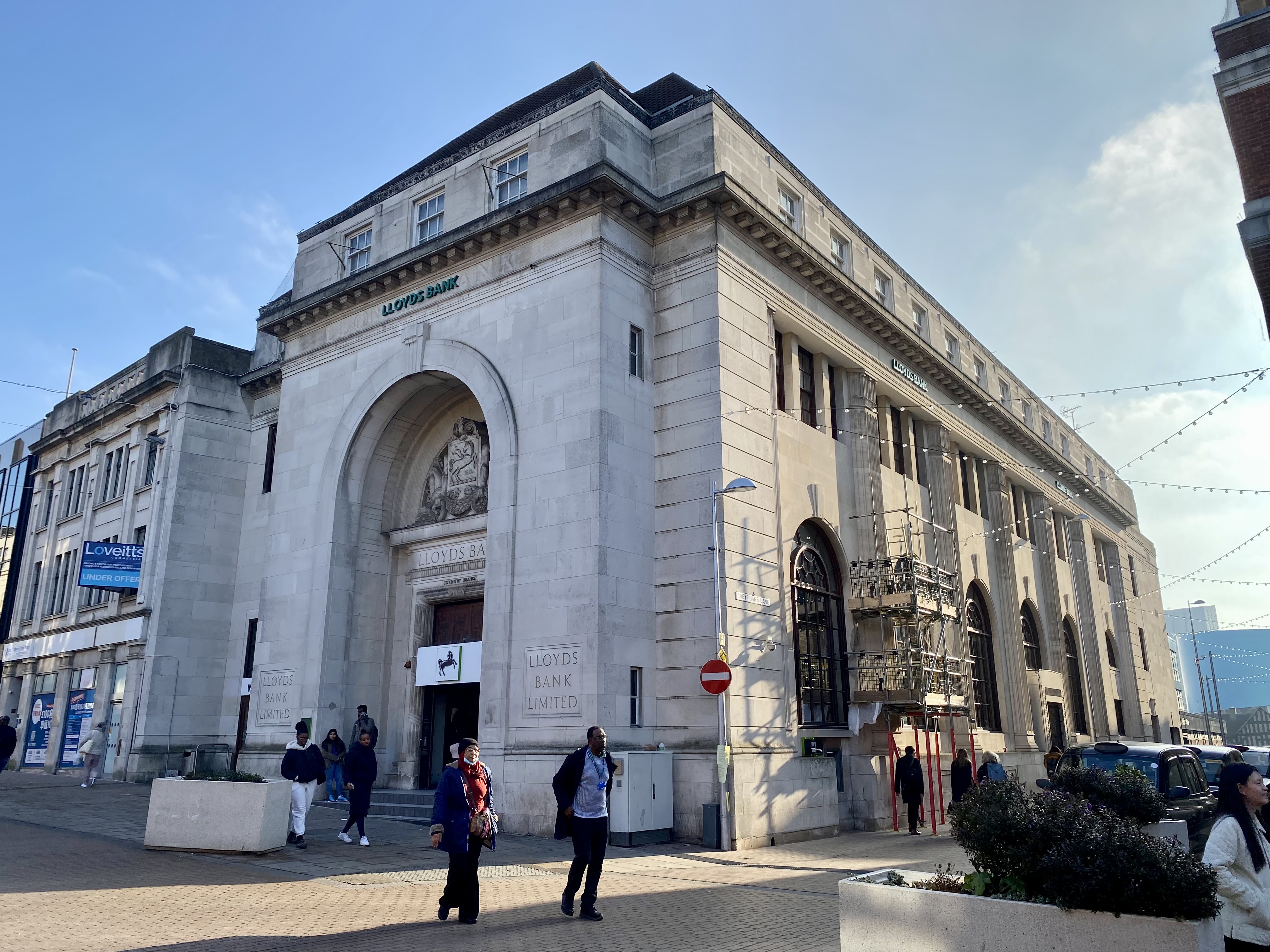
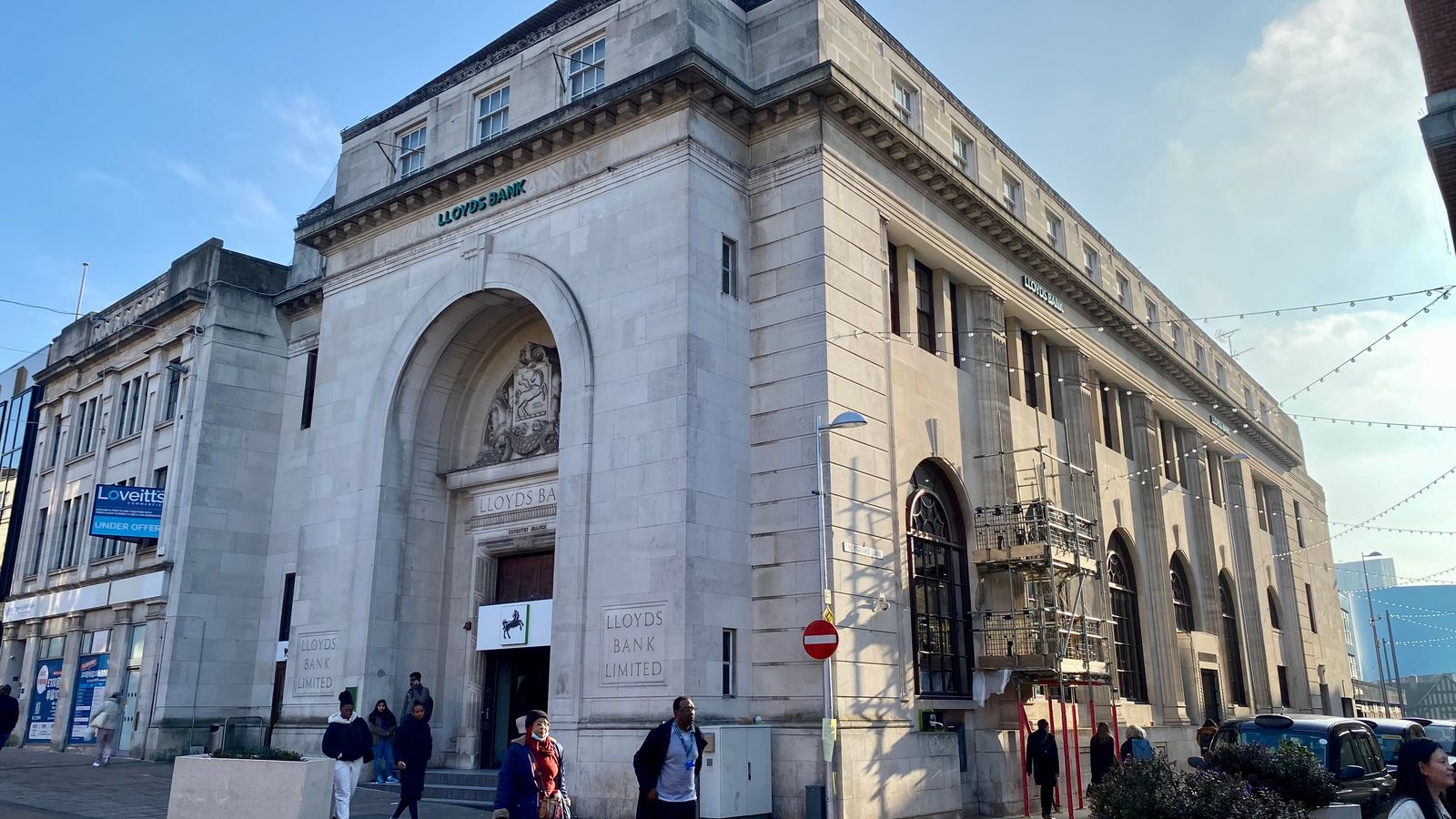
British newspapers were crammed full of the usual cheerful headlines during the weekend spanning the 10th to 12th January 1971. The IRA tarred and feathered four men in what was deemed to be a punishment attack, an unmanned Soviet lunar probe reached the moon but promptly blew up in defeat, French fashion designer Coco Chanel died at the age of 87, whilst the following Monday a 200-vehicle pile-up on the M6 motorway would claim ten lives. But there was one other newsworthy event notably missing from the front pages of the press. On the night of 11th September 1971, one of the most mysterious and indeed ridiculous raids was carried out at Lloyds Bank on Baker Street in London.
The Baker Street Robbery wasn’t technically a robbery at all as no force or threats of violence against other parties was required. If we’re being pedantic – and by crikey, I think we are – it was more of a burglary. But what a burglary.
It appeared for a while as if the thieves had got away with a massive haul right under the noses of the police, whilst some of the members of the gang – maybe even the ringleader himself – were never convicted, identified, or even looked for. The gang wandered off with loot worth up to £3 million – or over £36 million in today’s money – the vast majority of which was never recovered. And yet the thieves never even tried to crack open the bank’s safe.
Key Takeaways
- The Baker Street Robbery was a meticulously planned burglary targeting Lloyds Bank’s vault, inspired by a Sherlock Holmes story.
- The gang, led by Tony Gavin, tunneled from a nearby shop to access the vault, exploiting roadworks to avoid detection.
- A radio enthusiast, Robert Rowlands, overheard the gang’s walkie-talkie communications and alerted the police, who bungled the investigation.
- Theories suggest the gang was after a specific deposit box containing compromising photos of a royal or politician, but evidence is inconclusive.
- Police corruption is a plausible explanation for the botched investigation and unrecovered loot, with allegations of high-ranking officers’ involvement.
They were only interested in taking the booty found in the hundreds of deposit boxes which the bank kept secured in the vault on behalf of the wealthier customers in need of a good hiding spot.
And it’s possible that they were after one deposit box in particular – a box containing a photograph of a member of the Royal family which had the potential to send shockwaves throughout the UK if it was ever made public. A deposit box which was possibly worth more than the rest of the contents of the bank vault combined.
The Sherlock Holmes Connection
It’s all Sir Arthur Conan Doyle’s fault, really. He was the one who penned the 1891 Sherlock Holmes short story “The Red-Headed League” which apparently inspired the whole thing. During the course of the short story, a gang of crooks attempt to tunnel through the floor of a bank from a neighbouring shop, but the plan is foiled when they poke their heads up from the hole in the bank floor only to find clever old Sherlock Holmes and Dr Watson already waiting for them with PC Plod.
38-year-old Anthony ‘Tony’ Gavin was a big fan of Sherlock Holmes. The small-time crook hailed from North London and was supposedly the ringleader of the Baker Street heist, or at least he’s the only person in the frame that we ever got to know about. A former physical training instructor for the army, Tony was described as a “forceful personality who had the propensity to be physically threatening.”
But whilst he was certainly known to have criminal connections, Tony had up until now only been involved in reasonably small-fry stuff. The idea of copying the plot from an old Sherlock Holmes story – albeit a failed plot from an old Sherlock Holmes story – was certainly a massive leap from Tony’s usual dodgy activity.
But Tony may have wisely come to the conclusion that as Sherlock Holmes was a fictional character, he and his gang would only have the bumbling British bobbies to contend with in real life, and they were unlikely to be as sharp-witted as the world’s greatest detective. He was certainly right about that part.
However, when you hear of the exact location that Tony had decided upon as a suitable target for his own bank vault tunnelling operation, you begin to wonder just how seriously he was taking the whole thing. Of all the banks in London that he could have chosen, he decided that the perfect candidate was a branch of Lloyds located on Baker Street – the very same street on which his favourite fictional detective lived. It almost sounds as if the whole operation was just some kind of live-action tribute to classic literature, and I suspect that he briefly toyed with the idea of getting all the gang members to dress up in tweed coats and deerstalker hats whilst carrying out the raid, pausing only to inject themselves with cocaine every now and then.
But this could just have been an entirely coincidental link to the original inspiration behind the heist. Lloyds Bank on Baker Street was reportedly home to the most impregnable bank vault in the UK, complete with steel reinforced concrete walls and bomb-proof doors that weighed over five tons. That might be why it attracted the interest of uber-rich and powerful customers who were looking to rent deposit boxes in which they could confidently stash their valuables and their secrets, legal or otherwise.
Lloyds Bank on Baker Street sounded like the safest place in the country to rent such a deposit box, and so there were bound to be all manner of weird and wonderful trinkets stored in those little treasure chests. But just how impregnable was the vault from below? This was about to be put to the test, as Tony began assembling a crack team of similarly small-time crooks to tunnel through the floor of a neighbouring property and come up smiling in the vault of Lloyds Bank.
Assembling the Gang and the Tunnel
They would have to do a fair bit of tunnelling, as they couldn’t get access to the property right next door which was occupied by a branch of the fast food chain Chicken Inn. With all the will in the world, it would have been difficult to secretly start digging a giant hole in the floor of Chicken Inn without risking attracting the attention of all the customers who were just trying to enjoy a Mexicano Wrap in peace. But they had better luck when they moved just one step further down the street and came across an old leather goods shop by the name of Le Sac which had recently closed for business, leaving the property up for lease.
It’s always reported that this was just a jolly slice of good fortune for the gang, but I can’t help feeling that this was surely factored into Tony Gavin’s original decision to target Lloyds Bank in Baker Street. It maybe wasn’t just about a peculiar obsession with Sherlock Holmes – it was more to do with the fact that a property had just become available for use which was only two doors down from the bank.
Tony hooked up with a 64-year-old contact of his by the name of Benjamin Wolfe who was known for selling antiques which may have allegedly just fallen off the back of a lorry. It was Benjamin who leased the building for £10,000 on the pretext that he was preparing to open another dodgy antiques shop. But far more significantly than the sale of a few mahogany sideboards, Tony’s big tunnel now had a starting point.
Tony’s next recruit was a guy called Reg Tucker – a second-hand car salesman who was an unusual candidate to join the gang as he had no criminal history other than being a second-hand car salesman. Tony got Reg to open a new bank account in the Baker Street branch of Lloyds under a fake name, after which Reg made polite enquiries about the possibility of renting his own safety deposit box. The bank staff probably assumed that Reg was something of a high-flyer, as he turned up dressed as if he was an aristocrat whilst wielding an umbrella and speaking in super-posh BBC English. And he seemed very keen to keep a close eye on the contents of his newly rented deposit box.
Over the course of the next two months, Reg was reported to have visited the bank no less than thirteen times to spend some quality time alone in the vault with his box. I would have thought that leaving a customer alone in a bank vault for any length of time might have been considered a slight security risk, but apparently it was common practice back in the 1970s to allow the customers a bit of privacy when they were visiting their deposit box. And during these brief windows of solitude, Reg kept himself very busy.
Not with his deposit box, obviously. He probably just kept a sock puppet in there. No, Reg got busy on mentally mapping out the dimensions of the vault, noting the exact locations of the cabinets and the furniture.
And that umbrella he was wielding wasn’t just for show – he used it alongside the span of his arms to measure out every nook and cranny of the vault. During the course of those thirteen visits over two months, Reg Tucker had mapped out the precise position of where exactly the tunnellers needed to emerge. Tony’s big tunnel now had a finishing point.
Several other recruits had joined the gang by this stage, although some of them were never identified. We do know that Tony hired a lookout and a burglar-alarm expert, whilst another second-hand car salesman by the name of Thomas Stephens was in charge of sourcing the tools needed for the job. Thomas made a pretty good job of this, getting his hands on a 100-ton jack, a thermal lance, and a healthy stack of good old gelignite.
By the beginning of August 1971, this unlikely bunch of characters were all ready to start getting their hands dirty and tackling the biggest job of their lives. The plan was to dig down five feet from the starting point in the old leather goods shop now leased by Benjamin Wolfe, create a 40-foot long tunnel which ran right under the branch of Chicken Inn, and then start tunnelling back upwards when their noses sniffed the money above. But even after they had tunnelled back up through the earth towards the vault, they would still have another three feet of reinforced concrete to get through before they could emerge into the vault and start breaking into all the deposit boxes.
This quite ambitious feat of engineering took just over a month to complete, which is even more impressive when you take into account that they only worked at weekends when the bank was closed, to minimise any suspicion that might arise from the strange underground noises. It was reported that staff working at the Chicken Inn did indeed hear occasional strange noises coming from beneath their feet, and would later hear suspicious noises coming from the bank itself on the actual day of the burglary, but this was never reported to the police.
Another little slice of good fortune for the gang – or perhaps it was just very good planning – was the roadworks in the local area which had been regularly setting off the bank’s ‘trembler’ alarms installed in the vault. The Lloyds staff had soon grown tired of the constant false alarms being generated every half an hour, so they liaised with the road workers and agreed to turn off the trembler alarms whenever the roadworks crew was poised to undertake another bout of intense digging. This worked out pretty handy for the gang who were getting tipped off about the exact timings from a member of a local security company, so they could synchronise their own bouts of intense digging with the road workers and avoid any risk of activating the trembler alarm.
It was still hard and perilous work, though. The forming of the tunnel generated close to 18,000 pounds of debris which had all to be shifted back towards the shop and dumped around the back. Tony Gavin reckons that he lost two stones during the digging of the tunnel. And of course the danger was that if the tunnel should suddenly collapse on the gang, it was going to be tricky informing the paramedics that a gang of robbers had fallen into a spot of bother during an attempted bank heist.
Breaking Into the Vault
But on Friday 10th September, the goal was almost in sight. The tunnel was nearly complete, and the gang now just had to get through that three feet of reinforced concrete before they finally hit the bank vault. The tools guy Thomas Stephens whipped out the 100-ton hydraulic jack in an attempt to force a big hole in the concrete above, but the gang found that the pressure of the jack was actually just pushing the bottom of their tunnel downwards into a well deep below instead of raising the floor of the vault.
No worries. Thomas had a Plan B. He now whipped out the thermal lance in an attempt to cut right through the floor.
But this just ended up creating toxic fumes within a tiny confined space, and the gang were now in danger of passing out. No worries. Thomas had a Plan C.
He whipped out the gelignite, drilled a few holes in the concrete floor, and then stuffed the holes with gelignite, co-ordinating the subsequent explosion with the noise from the roadworks outside. This did the trick nicely, creating a 12-inch hole in the floor of the vault.
And you have to give Thomas Stephens some credit here for being remarkably well-prepared. Perhaps even curiously well-prepared for a second-hand car salesman. It seems almost a shame that the gelignite worked, as it would have been interesting to see what Thomas had in mind for Plans D, E and F.
But none of that mattered now. They were in. And as Lloyds Bank closed its doors for business on Friday evening, the gang knew that they had until the early hours of Monday morning to get busy smashing up those deposit boxes and taking as much as they could back through the tunnel to the shop.
A lookout was posted on a nearby roof, and he kept in close communication via walkie-talkies with the rest of the gang lurking in the tunnel. But here’s where the gang made what should have been a disastrous slip-up. The often fraught conversations taking place on those walkie-talkies had a slightly bigger audience than they intended.
The Radio Ham Who Nearly Foiled Everything
Robert Rowlands was an amateur CB radio ham who lived just around the corner on Wimpole Street. On that same Friday night, he settled down with a cup of Bovril and an Ian Fleming novel, and decided that he fancied tuning in to Radio Luxembourg. But after he’d fiddled around with the radio dial, he was surprised to discover that he wasn’t going to be chilling out to the hip sounds of Mungo Jerry or The Moody Blues tonight. Instead, he was picking up what appeared to be a tense conversation between a nervous lookout and a gang of thieves.
At first, Robert wondered if the local cigarette shop was being burgled, but as he listened in further, he began to realise that he was eavesdropping on a job that was much bigger in scope. So, Robert did what any good citizen would do. He phoned up the local police station and informed them that he had accidentally tuned into a suspected underground bank robbery. Sadly, the police didn’t seem to be remotely bothered about such a trivial issue.
It’s not entirely clear if they thought Robert was just a prank caller, or whether they had more important things to deal with. Things can get pretty rough in London on a late Friday night. But whatever the reason, they were largely dismissive of Robert’s call and just advised him to record the conversation before bothering them again with his trifling matters.
At this point, some of us might just have sacked the whole thing off and gone back to trying to find Radio Luxembourg whilst muttering about the state of the British police force and the country in general. But Robert Rowlands was a persevering soul. He dutifully dug out his tape recorder, slapped a blank cassette into the slot, and spent the rest of the night recording the increasingly heated conversation taking place between the lookout and the gang.
The lookout may have only had one job, but it’s clear from the tape that he wasn’t very good at it and just wanted to go home. After a while, he starts moaning to the others: “How long do you think you’re going to be in there? My eyes are so bad, they are blurred. I’ve been using bins all night.”
(I consulted with Dick Van Dyke, and it turns out that ‘bins’ is Cockney slang for spectacles or binoculars.) One of the tunnellers suggests that the lookout should be able to get some sleep soon, until somebody else interjects to point out that a sleeping lookout isn’t going to be particularly helpful during a bank heist. Several other agitated voices join in the conversation, including the voice of a woman who was never traced.
One of the tunnellers attempts to boost the motivations of the lookout: “You can’t go now, we’re almost there! We have done 90 percent of the easy ones and we now face the hard ones. We’ve got about £400,000. It’s not a bad rate of pay, is it?”
But the lookout is having none of it. “Money may be your god, but it’s not mine and I’m fucking off.” It seems that the lookout was ultimately dissuaded from ‘fucking off’ and carried on working and whingeing throughout the night. But Robert Rowlands figured that he must now surely have enough evidence to present to the police and hopefully help foil a major burglary.
He decided against phoning his local police station again as he assumed he would probably just be interrupting their darts tournament or something. This time he went straight to Scotland Yard.
The Police Blunder
The police now quickly limped into action, but after arriving at the home of Robert Rowlands and listening to the taped evidence, they made a curious decision. It seemed clear from the tape that the gang were attempting to tunnel underneath an as-yet unidentified bank vault to crack into the safety deposit boxes. The frequency range of walkie-talkies was very short back in 1971, particularly in built-up areas with houses and shops and walls and Wimpy bars.
Robert made a point of informing the police that the bank under siege couldn’t be any further than just a mile or two from his home, and this must surely have narrowed down the potential targets quite a bit. However, the police chose to completely ignore this information and opted instead to investigate every single bank within a 10-mile radius. That was a total of 750 banks to check upon.
Naturally, they were all closed during the very early hours of Saturday morning, so the police had to contact the managers and security teams of every single branch and get them out of bed to open up the banks so that the police could take a good nosy around. This ridiculously wide search obviously included the Baker Street branch of Lloyds, but it was destined to be a brief visit. After all, the police had 749 other branches to investigate, so they couldn’t hang around too long. They quickly determined that the time-locked vault hadn’t been tampered with in any way and there was no visible sign of a break-in, so they just ticked the box and moved onto the next bank.
This blunder gave the gang the rest of the weekend to leisurely crack open a reported total of 268 safety deposit boxes and carry all the contents back through the tunnel and up to the shop before eventually making their escape with the treasures well before opening time on Monday morning. And the lookout finally got to go home and rest his tired eyes, considerably richer than he was at the start of the weekend.
The Aftermath and the Missing Millions
We can’t put an exact figure on the total value of the looted safety deposit boxes, largely because even the bank itself didn’t attach a specific value to every box, and some of the box owners never even came forward to reveal the contents or claim compensation. The most conservative estimate bandied around was in the region of just under £2 million in today’s money, but it’s widely suspected that the true figure was closer to a value worth £36 million today. And the overwhelming majority of the stolen loot was never found.
It wasn’t until Lloyds opened for business again on Monday morning that the staff noticed a minor problem when one of them wandered into the bank vault. The scene was littered with smashed-up deposit boxes, walkie-talkies, a thermal lance, not to mention the slightly suspicious big hole in the floor. And there was a taunting message spray-painted on one of the walls which read: “Let’s see how Sherlock Holmes solves this one!”
Maybe this really had been just about Tony Gavin’s peculiar obsession with Sherlock Holmes all the time. And he certainly seemed to have been right in his assumption that without a heroic fictional detective on the case, the gang of thieves – now dubbed ‘The Millionaire Moles’ – were bound to get away with one of the cheekiest burglaries in history.
You would have thought that the British press would have a field day with this crazy shit, yet the reporting was strangely subdued. A brief news blackout was sensibly imposed by the police during the actual weekend of the burglary to avoid the gang getting wind that the Keystone Cops were on the case, but the cat was out of the bag by Monday morning, long after the gang had scarpered. But after just a few days of front-page headlines and fierce press criticism of the seemingly inept police, everything just fell strangely quiet again. This was highly unusual as big stories like this had the potential to run for months and months, but the Baker Street Robbery appeared to have been discreetly brushed under the carpet surprisingly quickly, almost as if it had never happened at all.
It was alleged that the British government had hastily issued a D-Notice to silence the press for some reason. A D-Notice – or Defence Notice – is not a legal demand but a formal request made by the government which asks the press to cease reporting on a story that could be considered a threat to national security. But how exactly could this slightly bumbling bank job be considered a threat to national security in any way?
And could it have been something to do with the contents of one of those deposit boxes in particular? Perhaps the only box that the gang had ever been interested in cracking open in the first place?
The Arrests and Trial
The subsequent investigation by the police was supposedly a highly complex affair which involved 120 detectives – none of them called Sherlock – and the forensic examination of over eight hundred pieces of evidence. Yet on the face of it, they really didn’t have to try too hard at all to catch key members of the gang during an investigation in which some of the suspects were practically crying out to be arrested. All they really had to do was have a word in the ear of Benjamin Wolfe, the guy who bought the lease on the old leather goods shop, who had quite staggeringly decided to use his real name when he signed the contract. You would never have caught Professor James Moriarty making such a fundamentally foolish error, and you certainly didn’t need to be Sherlock Holmes to crack this case.
Whilst Benjamin Wolfe initially denied any involvement in the burglary, the police just followed him around for a little while during which time they observed him exchanging big carrier bags of cash with certain other shifty individuals who were also rapidly placed under surveillance. And it didn’t take too long for the police to join the dots on this one, eventually arresting Benjamin Wolfe himself, along with supposed ringleader Tony Gavin, bank vault mapper Reg Tucker, and the tools guy Thomas Stephens. Although the police knew for sure that several other parties were involved – maybe even a shadowy mastermind who was really calling all the shots – nobody else was ever arrested or even identified.
It’s almost reassuring to hear that at least the lookout had managed to get away with his share of the treasure. It sounds as if the poor lamb had endured such a tough weekend trying to keep his eyes open for all that time.
The trial of four of the less fortunate Millionaire Moles got underway on 2 January 1973. All four were charged with breaking into a bank, stealing the contents of deposit boxes, and handling explosives. Tony Gavin, Reg Tucker, and Thomas Stephens all pleaded guilty, but Benjamin Wolfe was still insisting that he was an innocent victim who had just tried to open up a new business venture which had been hijacked without his knowledge by moles.
The trial lasted just nineteen days, and all four were found guilty of all charges. Tony Gavin, Reg Tucker, and Thomas Stephens were each sentenced to twelve years in prison, whereas Benjamin – despite pleading not guilty – received a lighter sentence of just eight years, apparently because the 64-year-old was considered a bit too elderly to endure a long prison sentence. The sentences of the other three were also reduced to eight years on appeal.
Watch Now
Open Video
Video Briefing
The Baker Street Heist: Britain's Most Mysterious Crime
They could possibly all have received even lighter sentences if they had revealed the identities of the other members of the gang or the location of the stolen loot, but they all kept schtum. And they continued to keep schtum for the rest of their lives. After they had all served their time, they seemed to retreat back into the shadows and were never really heard of ever again. No book deals, no movie deals, not so much as a brief interview with ‘The Jellied Eel’ local newspaper.
They just seemed to vanish without trace. Wherever they retreated to, it’s possible that they finally ended up quietly enjoying their share of the unrecovered booty they’d been waiting eight years to claim. Assuming the lookout hadn’t already spent it all on luxurious goose feather pillows.
It might have been nice if amateur CB radio ham Robert Rowlands had been given some sort of commendation for his sterling efforts in attempting to thwart the burglary, even if the police were initially disinterested in his claims and then bungled any chance of catching the criminals in the act. But no. Instead, the police considered prosecuting Robert for listening to unlicensed transmissions which was a violation of the relatively new 1967 Wireless Telegraphy Act.
It’s almost as if somebody in the police force wanted to punish poor old Robert for his clumsy interference. Thankfully, this idea was quietly dropped, and Lloyds Bank later showed a bit more appreciation for Robert’s role in this saga when they gave him a reward of £2,500.
Lloyds themselves hadn’t done as badly from the burglary as you might imagine. The biggest hit they took was to their reputation for owning the most secure bank vault in the UK. By 1977, 138 of the disgruntled owners of the 168 destroyed deposit boxes had joined forces to sue Lloyds for a total of £660,000 – or just over £3.6 million in today’s money. However, just four days into the trial, the case was adjourned with no reason given, and it was never picked up again.
This just seemed to be yet another mysterious development in a story packed full of riddles and unanswered questions.
The Conspiracy Theories Begin
It had always felt odd that a bunch of small-time crooks, antiques dealers, and second-hand car salesmen had taken such an ambitious step into a whole new league. Could it be the case that this was never just a nutty plot dreamed up entirely by Sherlock Holmes fan Tony Gavin, and that Tony was answering to a higher and more experienced authority who was more equipped to fund the entire operation, and who had a better idea of how to disable complex security devices, and where to source a thermal lance? Why did the police make the bizarre decision to expand the search radius to ten miles when they already knew that the maximum range of those walkie talkies was just two miles?
And why did the police leave the Baker Street branch of Lloyds so quickly after ascertaining that the vault door looked like it hadn’t been tampered with? They already knew from Robert Rowlands’s taped walkie-talkie conversations that the gang were tunnelling right underneath the vault rather than just attempting to break open the door with a hammer. All they had to do was open the vault door and look for any subtle signs of a giant fucking hole in the floor.
But they decided not to bother.
The Post Office later noted that the police could have asked them for help at any time, as they operated fleets of radio detector vans which could have picked up the location of the walkie-talkie conversations fairly quickly. But they didn’t hear anything about it until after the transmissions had already stopped. Why did the police also lose interest so quickly in identifying the other members of the gang?
Why were the press silenced by an alleged D-Notice on the grounds of a threat to national security? And why are 800 pages of information relating to the case under embargo at The National Archives where they will remain sealed until 2071? Could it be that The Baker Street Robbery was always about something potentially far more important and valuable and secretive than a few million pounds worth of shiny little trinkets?
The Paedophile Ring Theory
One theory is that the gang unwittingly stumbled upon something inside one of the deposit boxes which they never intended or wanted to see: Photographs depicting an unnamed Conservative cabinet minister sexually abusing young children. It’s a theory which gained more traction four decades later following the Hatton Garden Safe Deposit Burglary of 2015. This was a remarkably similar heist carried out by a bunch of six pensioners who spent a fun Easter weekend breaking into an underground safe deposit facility in Hatton Garden, London, and making off with jewellery worth around £14 million.
In this case, all six men were caught and sentenced to prison, whilst most if not quite all of the stolen loot was eventually recovered by the police. It was a story which certainly garnered a lot more attention in the UK press than the forgotten Baker Street Robbery. And in fact, local jewellers later reported a big boost in business thanks to all the publicity it generated.
Some have suggested that the Hatton Garden Heist was directly inspired by the Baker Street Robbery, but it’s also been alleged that the connection runs much deeper than that. One of the men convicted for the Hatton Garden Heist, Brian Reader, was suspected of being one of the unidentified members of the Millionaire Moles gang some 44 years earlier, although he always denied this and was never charged. But in the aftermath of the Hatton Garden trial, an old friend of Brian Reader began blabbing to the press about what his mate and his gang had supposedly found by accident during the Baker Street Robbery.
He reckoned that the gang cracked open one of the safety deposit boxes and came across sickening photographs of a top Tory politician molesting young children. He told the press: “It was a shock for them when they found photographs of a famous politician abusing children. The gang were disgusted and left them lying on the floor of the vault for the police to find, but nothing was ever done.”
Why exactly such photographs would be located inside a bank vault is up for debate, but the theory goes that they had ended up in the hands of a blackmailer who was waiting patiently for his payday. It could have been the case that when British intelligence discovered such photographs were now scattered around the floor of a bank vault, they sprang into action to clamp down on any further press coverage which could have exposed a paedophile ring at the very heart of Westminster and potentially toppled the UK government. It’s an interesting conspiracy theory – and I’m fascinated by the idea that the same man could have been involved in two distinctive underground heists separated by 44 years – but we can’t really give it too much credence as the story hinges entirely on a single unnamed source who seemed keen to tell the newspapers that he used to hang around with some proper villains back in the good old days.
The Princess Margaret Theory
However, a far more popular and widespread theory is that one of the deposit boxes contained somewhat compromising pictures of a senior member of the Royal family – and this is what the gang had been chasing all along.
Prince Harry was by no means the first to rock the royal boat, and it could be argued that in many ways, Princess Margaret was just as much a ‘Spare’ several decades earlier. Admittedly, she didn’t quite go as far as to write a warts-and-all book or give an interview to Oprah Winfrey. But the younger sister of Queen Elizabeth II still had a few reasons to feel aggrieved after Big Sis ascended the throne and bathed in all the glory, whilst her own duties within the Royal family gradually diminished as she slipped ever further down the line of succession to the throne.
Princess Margaret was also a bit of a wild party animal by all accounts. But just how wild did these parties get? Could it be true that she popped up in a series of sexually explicit photographs in which she is seen to be enjoying intimate moments with a convicted criminal and other parties – perhaps all at the same time?
Princess Margaret had originally hoped to marry RAF officer Peter Townsend in the 1950s but as Townsend was a divorced man, this idea didn’t go down well with certain members of the government, certain corners of the press, a big chunk of the public, and the Archbishop of Canterbury who point-blank refused to countenance her marriage to a divorced man. Margaret later gave the impression that the idea of marrying Peter Townsend had been made impossible by all concerned, but that doesn’t sound quite the whole story. It’s now believed that older sister Liz was sympathetic to her plight and was planning to request that the government amend the hideously outdated laws which were standing in the way. But it seems that the relentless and protracted strain of the controversy led to Margaret and Townsend conceding defeat and parting ways.
A disgruntled Princess Margaret later married photographer Antony Armstrong-Jones in 1960, but it was destined to be an unhappy marriage with both parties indulging in long lists of extra-marital affairs whilst alleviating the strain with cocktails of booze and pills. Things had gotten so bad that Antony had resorted to writing little notes labelled “Things I Hate About You” and leaving them sandwiched in the middle of whatever book his wife was reading at the time as an unexpected plot twist.
By the time we get to the 1971 Baker Street Robbery, the couple had been practically living separate lives for years, although the divorce wasn’t finalised until 1978. Margaret regularly popped up in the newspapers whenever she was snapped attending yet another lavish party with yet another guy, and much of the publicity was negative. One tabloid described her as “Spoilt and ill-mannered.
Over the years, she has drunk enough whiskey to open a distillery,” whilst even some Labour MPs described her as “Royal parasite” and a “Floozie.” It’s little wonder that Margaret had taken to escaping the UK to spend quality time on the Caribbean island of Mustique which had effectively become her second home by the early 1970s.
She seemed to be spending a lot of this time with a landscape gardener by the name of Roddy Llewellyn who was 17 years younger. And whenever the press managed to get a sneaky snapshot of Margaret and Roddy together, it was usually accompanied by malicious copy which portrayed Margaret as a predatory older woman taking advantage of a toyboy lover. You know, I sometimes think that being a member of the Royal family isn’t quite all it’s cracked up to be.
But during one of these many visits to Mustique, Princess Margaret was also snapped alongside John Bindon – an occasional actor and former gangster who had connections with the Kray twins and who was once believed to be running protection rackets in West London. Although he had apparently turned his back on crime during the period when he was posing with Princess Margaret on Mustique, he did find himself back in the dock later in 1978 when he was accused of the murder of London gangster John Darke who was stabbed nine times during a fight with John Bindon. However, Bindon was acquitted of murder when it was ruled that he acted in self-defence.
Still, considering that the Archbishop of Canterbury couldn’t quite get along with the idea of a princess marrying a divorced RAF officer, he must have been coming out in boils at the prospect of a still legally married princess getting cosy with a former gangster. Perhaps the Archbishop of Canterbury would have been a bit more impressed if he’d ever been given the opportunity to see John Bindon’s notorious party trick. Or maybe not. This apparently involved John lifting five half pint glasses with his penis, a trick which he is alleged to have shown off in the presence of an enthralled Princess Margaret.
And yeah, I know what you’re thinking. Only half-pint glasses? What a bloody amateur.
John Bindon would later boast about his close friendship with Princess Margaret to the media, but Margaret herself never spoke about any such thing. And the only evidence we have that they even met is a single photograph taken on Mustique which was later circulated to the media. But there were rumours that this wasn’t the only photograph ever taken of Princess Margaret and John Bindon.
Michael X and the Blackmail Plot
It was alleged that images of a far more explicit nature depicted Margaret, John Bindon, and other individuals engaging in sexual activity. And one or more of these photographs had ended up in a safety deposit box in the vault of the Baker Street branch of Lloyd Bank. A safety deposit box which belonged to an individual by the name of Michael X. A safety deposit box which others were now keen to get their hands on by any means necessary.
Michael X – born Michael de Freitas – was a black revolutionary and civil rights activist from Trinidad and Tobago who moved to London and became a leading figure of the Black Power movement in the 1960s. John Lennon was one of his most ardent supporters, although not everyone was such a big fan as Michael X was also a former London gangster who would later be convicted of murder. In 1969, Michael X became the self-appointed leader of a Black Power commune in North London which was known as ‘The Black House’.
Less than a year later, a businessman named Marvin Brown was enticed into the Black House where he was attacked and forced to wear a slave collar around his neck as Michael X and others extorted money from him under the threat of further violence. Michael X was arrested and charged with extortion, but John Lennon was such a big admirer that he paid Michael’s bail.
Very shortly afterwards, The Black House burned down under mysterious circumstances, and Michael X fled back to Trinidad and Tobago where he got busy setting up another Black House. But he didn’t seem to have much luck with these Black Houses. This one also burned down under equally mysterious circumstances around a year later – and this time the bodies of two former members of the commune were found at the site, having been hacked to death and then buried in shallow graves.
Michael X was found guilty of ordering the killings. And whilst John Lennon had been happy to dip into his expansive pockets yet again to hire a good lawyer – imagine trying to do that with no possessions – it wasn’t enough to save Michael X from getting hanged in 1975.
If we rewind back just a few years to when Michael X was still in London, the theory goes that he had somehow acquired these explicit photographs of Princess Margaret, John Lindon and others, and alerted the authorities that he possessed them, whilst secretly stashing the originals in the vault of Lloyds Bank. His plan was to use them as insurance to persuade Scotland Yard to turn a blind eye to any activities he got up to in the name of activism which may not be considered strictly legal by some of the more pedantic police officers – you know, stuff like torture, extortion, and murder. This could explain why Michael X was “allowed” to flee to Trinidad and Tobago after being charged with extortion. Or perhaps Michael X was only charged with extortion in the first place after MI5 had already located and retrieved the photographs, eliminating any capacity for blackmail after Michael X had been arrested.
MI5 would never have been entirely happy with the idea of Michael X having Scotland Yard in his pocket. So it could be that they finally figured out where he was stashing the photographs, and then orchestrated the entire Baker Street Robbery to make it look as if the contents of his box just went missing in a random burglary. They may have then silenced the press with a D-Notice to avoid any further digging into the story and any risk of exposing both the embarrassing blackmail scheme and the embarrassing photographs themselves.
It’s a theory which generated even more attention following the release of the 2008 movie ‘The Bank Job’ written by British comedy legends Dick Clement and Ian La Frenais. It’s important to note that this was presented as a work of fiction, and the gang of robbers depicted on screen – some of which are portrayed by Saffron Burrows and Jason Statham – are all given fresh identities. But there’s no denying that the plot is based very closely on this theory, as we witness a gang of robbers tunnelling under the Baker Street branch of Lloyds Bank under orders from MI5 to retrieve a safety box belonging to Michael X which contains sensitive photographs of a member of the Royal family participating in a threesome on Mustique. Whilst Princess Margaret is never named, the film certainly delivers enough clues.
The writers have indicated that even though the film had to be presented as a fictionalised account of events, they weren’t just making this all up from scratch. The script was based on extensive conversations with an informer – later identified as man by the name of George McIndoe – who claimed to have learned all the juicy details of the true story behind the MI5 cover-up after befriending two of the original members of The Millionaire Moles who were never caught.
One further interesting point here is that MI5’s file on Michael X is locked away from public view until the year 2054. The former gangster may have had an extremely dodgy biography peppered with extortion and violence and murder, but what did he do that is still not fit for public consumption, nearly fifty years after his death? His own widow later claimed that she knew absolutely nothing about a plot to blackmail MI5, but also conceded that this didn’t necessarily mean it wasn’t true.
So can this theory be completely ruled out? And is this the real reason why a bank robbery overseen by MI5 just completely disappeared from the newspapers so quickly?
Debunking the D-Notice
Well, let’s start with that D-Notice. Almost every article or feature on the Baker Street Robbery states it as a fact that a D-Notice was issued to the press just a few days after the flurry of initial headlines. As recently as February 2023, The History Channel looked back on the robbery for an episode of “Pierce Brosnan’s Greatest Heists” which, by the way, sounds like something of a fall from grace for the former James Bond.
During this episode, it was yet again stated that the press most definitely fell silent in response to a D-Notice. But the truth is that there is not a scrap of evidence to suggest that a D-Notice was ever issued at all.
It all largely seems to stem from a later claim by CB radio ham Robert Rowlands that shortly after he alerted Scotland Yard to the walkie-talkie conversations he was picking up, his equipment was seized and he was aggressively warned not to speak to the media as a D-Notice was already in place. It could be the case that Robert was either mistaken or was concocting fancy tales to inflate his role in a conspiracy theory and impress the readers of his later interviews. But it’s not out of the question that he was just being lied to by the police, or at least that a misinformed officer had given him the wrong details.
I mean, the police had hardly treated Robert Rowlands with much respect at any stage, and this was probably around the same time they were considering prosecuting him for picking up unlicensed transmissions. I’m surprised they didn’t just beat him to death on the spot with a truncheon.
It’s certainly true that there was a very brief press embargo whilst the burglary was still believed to be taking place, and this was for perfectly logical reasons. But this brief press blackout appears to have got mashed up with an inaccurate claim by Robert Rowlands which then evolved into widespread reporting of a D-Notice that was almost certainly never issued. It kind of seems a bit pointless anyway to issue a D-Notice after the press had already been allowed to report on the story for a few days.
And whilst it seems quite odd that the story just seemed to quickly fall off the radar soon afterwards, it didn’t completely disappear from the pages of the press. ‘The Times’ was one paper which continued to follow up on the story for a few months afterwards, although after those four members of the gang were swiftly arrested, there was rarely any particularly exciting new development to report on anyway.
Debunking the MI5 Theory
It could be the case that MI5 had nothing to cover-up with a D-Notice in the first place. It seems a little far-fetched to think that the intelligence agency would have chosen to orchestrate a covert operation in such a haphazard manner. Let’s just say that they had indeed located the whereabouts of a deposit box in a bank vault which they needed to discreetly acquire for whatever reason.
Would MI5 really have concluded that the best possible strategy was to hire a group of small-time crooks and second-hand car salesmen to carry out that operation on their behalf? A strategy that included getting the gang to use walkie-talkies which could be easily intercepted by any CB enthusiast who was just trying to tune into Radio Luxembourg? And a gang that included a man who signed the lease for the vital nearby premises under his own name, and a lookout who clearly wasn’t very good at handling the pressure of looking out?
It’s not entirely inconceivable that the gang were set up to be caught later on, or they perhaps even agreed beforehand to do the time and then get the payout when they were released from prison. But I wouldn’t really fancy an eight-year stint in prison for the sake of a few million quid. Besides, the taped conversations of the burglary taking place seems to point to a gang who were very keen not to get caught at all rather than a gang who were preparing to fight over who gets top bunk in Wormwood Scrubs.
And it just seems unlikely that MI5 wouldn’t have adopted a slightly more subtle method to retrieve a deposit box from a bank vault without attracting quite so much long-winded drama. They’re MI5. They probably could have just asked Lloyds Bank to open the damn box.
Debunking the Princess Margaret Photographs
But would there really have been anything salacious found in the deposit box to begin with? And from where exactly did the Princess Margaret rumours spring? There’s only one photograph containing both Princess Margaret and John Bindon that we know about for sure.
Taken in Mustique, it’s a fairly incongruous image which shows Margaret and Bindon sitting next to each other on deck chairs. Only one other person is visible, but there could easily be a whole bunch of other people out of shot enjoying cocktails in the sun with them. The most controversial element of the image is that John Bindon is wearing an ‘Enjoy Cocaine’ t-shirt featuring a cheeky retooling of the Coca Cola logo.
There’s absolutely nothing in the image that suggests that Margaret and Bindon were either romantically linked or even particularly close friends. It looks as if they just happened to be sitting next to each other during a lively gathering on the beach.
Leaving John Bindon aside for just a moment, several different sources have claimed that other photographs from Mustique exist which do indeed contain both Princess Margaret and nudity – but it’s not the princess herself who is disrobed. The story goes that Margaret was hanging around on the beach with her alleged younger lover Roddy Llewelyn and several other friends who all decided to take a spontaneous skinny dip in the ocean. All except Princess Margaret.
She probably knew that this wouldn’t have been the best idea with so many gutter press photographers no doubt lurking in the palm trees. We don’t know for certain if such photographs really exist, and of course there would be nothing remotely wrong with them if they did. Yes, it might have been viewed as slightly controversial if a senior Royal had been snapped with her bits out in public, but I don’t think it would have overthrown the British monarchy.
And that was never implied anyway, as each account of the story insists that she kept her clothes on whilst her friends got on with whatever floated their boats.
But it sounds to me as if this was another conflation of two entirely separate incidents to create something far more scandalous but entirely fictional: Princess Margaret just happened to have been snapped with former gangster John Bindon on Mustique. Princess Margaret may also have been photographed with other people in the nude on the same island. So this gradually evolves into Princess Margaret herself appearing nude in a series of photographs with John Bindon – which then evolves further into Princess Margaret and John Bindon getting snapped whilst participating in a threesome.
Of course, even if such photographs had existed, it could be argued that whatever consensual activity Margaret got up to her in her spare time is nobody else’s business. But I suppose it’s easy to see why Queen Elizabeth II might not have been mad keen on the idea of their publication, and why government agencies might have acted to suppress them if they ended up in the wrong sticky hands. But that seems to be a largely academic point, as such photographs were almost certainly not taken of such incidents that never happened.
The most compelling evidence we have that the Millionaire Moles were never chasing one safety deposit box in particular is those walkie-talkie conversations which make several references to how much loot they’re gradually uncovering, but not a single mention of any attempt or need to locate one specific box. The conspiracy theories relating to both Princess Margaret and the involvement of Michael X were well and truly brought back into focus with that 2008 film ‘The Bank Job’. But it was a work of fiction, albeit a work of fiction inspired by conversations with the ‘informer’ George McIndoe who claimed to have made friends with unnamed members of the gang.
We only have George’s word to go on here. And it’s interesting to note that George’s name is also listed in the film’s credits as a producer of the film. It’s almost as if he had been just purely interested in making a good movie all along.
I’m sure that MI5 do have a big file on Michael X and there may well be good reasons why it’s locked away until 2054. The guy led a pretty colourful life. But aside from the word of a movie producer, there’s nothing else which conclusively links Michael X to either Princess Margaret or the Baker Street Robbery in general. It sounds more like somebody with a fairly creative mind considered who might have taken possession of a scandalous photograph to use as a blackmail tool against Scotland Yard – and then figured that the perfect candidate would be the guy who once made headlines for using extortion tactics.
I feel pretty convinced that Tony Gavin and his chums were never on a mission to steal a photograph that was never taken, and they were only ever interested in the general loot to be found in as many deposit boxes as they could smash open before the lookout fell asleep again. But that doesn’t mean there wasn’t something else very dodgy going on here. I mean, a bank heist is a pretty dodgy situation in itself. But we’re still left with a few unanswered questions relating to who was really pulling the strings and why the subsequent lame police investigation appeared to leave so many loose ends…
The Real Conspiracy: Police Corruption
It’s still something of a mystery as to why a total of 800 pages of information relating to the Baker Street Robbery will not be available to view until 2071. What exactly is it that the UK government still doesn’t want us to see about a group of burglars nicking some trinkets from a bank vault? One theory which I find far more plausible than anything else we’ve covered so far is that there was indeed a ‘Mr Big’ who was the real mastermind and bankroller of the whole operation. And that ‘Mr Big’ was a corrupt high-ranking police officer.
There have been several allegations over the years that the reason the loot was never recovered is because it was taken by the bent police officer who oversaw the job from behind the scenes and ensured that it could never be found. One name that often gets thrown into any discussion of corrupt British police officers is the late Scotland Yard Detective Inspector Alec Eist. Which is a bit weird as he was never once found guilty of any offences, and was acquitted during the only corruption charges he ever faced in 1977. In fact, he was awarded a whole clutch of medals and commendations during his high-flying career at Scotland Yard, although it’s interesting to note that he’d been quietly downgraded to monitoring traffic wardens during his final years in service.
But not everyone was in a rush to give Alec Eist another medal. The Guardian journalist Paul Lashmar observed that Eist was “by reputation the most corrupt Yard officer of the 1950s to mid-1970s which was no small achievement in such a packed field.” It was alleged that he forged a close relationship with criminals, often getting them off the hook in return for bribes, and that he was a master at making crucial evidence disappear into thin air.
Some former convicts have even claimed that Inspector Alec Eist actively participated in armed robberies, allowing his chosen gang of villains to get off scot-free in return for his share of the stolen loot. It’s a name which understandably bubbles to the surface when discussing the possible identity of the real ‘Mr Big’ behind the Baker Street Robbery as it does sound like a job that would have been right up his street. I’m obviously making no such allegations myself.
And I’m sure that Alec Eist was brilliant at monitoring traffic wardens. I hope he got a medal for that.
But even if The Bakery Street Robbery in no way involved Alec Eist, it could still have potentially involved other police officers, and this would have made sense in so many ways. Over the years, several criminals have come forward to allege that members of the police force were heavily involved in the heist, and whilst you might be tempted to take the testimony of convicted criminals with several pinches of salt, one such allegation is particularly noteworthy.
James Humphreys was a pornographer and strip club owner from Soho who managed to forge a hugely successful career back in the 60s and 70s by working jolly hard and bribing police officers whenever he needed a quick favour. Amongst many other things, Humphreys regularly paid police officers to repeatedly raid other sex shops whilst leaving his own shop well alone, until his competitors eventually gave up and closed down their businesses. In 1977, Humphreys was sentenced to eight years in prison after being found guilty of inflicting grievous bodily harm on his wife’s former lover.
But he only ended up serving just over three years of these, after reaching a deal in which he agreed to hand over his diaries which contained extensive information on all the dodgy deals he’d cooked up with corrupt police officers during his successful career. This led to the arrest and imprisonment of no less than thirteen bent members of the Obscene Publications Branch of the Metropolitan Police who had been accepting bribes from Humphreys for years.
Whilst Humphreys was singing like a canary, he also made allegations that corrupt police officers had been in on the Baker Street Robbery and had ended up walking away with millions of pounds worth of the unrecovered loot. This particular allegation never led to any charges, but considering that so many of James Humphrey’s other allegations had been bang on the money and led to the imprisonment of thirteen police officers, you have to wonder if there may have been more than just a grain of truth in his claims.
Incidentally, it’s good to hear that James Humphreys got back on the straight and narrow following his early prison release, opening a greyhound-breeding business in County Limerick, Ireland. No, wait, scrap that. The greyhound-breeding business was just a front for an illegal amphetamine factory.
Humphreys was later cheated out of his investment in a drug-smuggling operation based in the US, before he was sent to prison again for running three brothels in London. But the point is that if Humphrey’s allegations were true, it would solve a few of the more curious elements of the inaccurately-named Baker Street Robbery.
I’m not pointing the finger at anyone in particular, but if a Scotland Yard Detective Inspector with close connections to the criminal underbelly of London was pulling the strings all along, this could explain why an operation conducted by small-fry crooks was so well funded and organised. It could explain why the police were deliberately sent on a wild goose chase spanning ten miles after that meddlesome Robert Rowlands nearly wrecked the whole thing, and why the police officers checking in on the Baker Street branch didn’t seem very interested in looking for the tunnellers that they were meant to be catching. It could explain why not much effort was invested in tracking down the other unidentified members of the gang, as the British police are notoriously slow when it comes to arresting themselves. And it’s not out of the question that Tony Gavin, Benjamin Wolfe, Reg Tucker and Thomas Stephens all disappeared into complete obscurity after their release because the bent police officers had bought their complete silence with a particularly generous slice of the bounty which the police had been keeping warm throughout those long eight years.
It may be a long time before we know for sure. But if you think you’ve got the patience to hang on just a little while, please join us again on ‘Decoding the Unknown’ in forty-eight years for our follow-up video in which we’ll be exploring those 800 pages of information still sealed in The National Archives. In the meantime, I just feel there might be something quite plausible about the idea of diverting attention away from a genuine conspiracy of police corruption and greed by turning it into an outlandish fake conspiracy theory involving Royal family members and blackmail plots which everyone starts chasing instead.
Is that remarkably cunning or alarmingly simple? It’s elementary, my dear Whistler.
Simon Whistler
Simon Whistler is one of YouTube's most prolific educational creators. Decoding the Unknown is his methodical investigation into the world's strangest phenomena — examined with rigour, curiosity, and a healthy dose of scepticism.
Frequently Asked Questions
When did the Baker Street Heist take place?
The Baker Street Heist took place on the night of 11th September 1971.
What was the estimated value of the loot stolen in the Baker Street Heist?
The estimated value of the loot stolen was up to £3 million at the time, which is over £36 million in today’s money.
Why was the Baker Street Heist initially not reported in the press?
The press was initially shy to report on the Baker Street Heist due to a brief news blackout imposed by the police during the actual weekend of the burglary to avoid the gang getting wind that the police were on the case.
What was the significance of the deposit box that the gang might have been targeting?
The gang might have been targeting a deposit box containing a photograph of a member of the Royal family, which had the potential to send shockwaves throughout the UK if made public.
Who was the alleged ringleader of the Baker Street Heist?
The alleged ringleader of the Baker Street Heist was 38-year-old Anthony ‘Tony’ Gavin, a small-time crook from North London.
How did the gang gain access to the bank vault?
The gang tunnelled through the floor of a neighbouring property, Le Sac, which was an old leather goods shop, to gain access to the bank vault.
What role did Robert Rowlands play in the Baker Street Heist?
Robert Rowlands, an amateur CB radio ham, accidentally tuned into the gang’s walkie-talkie conversations and alerted the police, providing them with evidence of the burglary.
Why did the police initially dismiss Robert Rowlands’ information?
The police initially dismissed Robert Rowlands’ information because they thought he might be a prank caller or had more important things to deal with on a late Friday night.
What was the outcome of the trial for the four convicted members of the gang?
Tony Gavin, Reg Tucker, and Thomas Stephens were each sentenced to twelve years in prison, but their sentences were reduced to eight years on appeal. Benjamin Wolfe received a lighter sentence of eight years.
What was the theory involving Princess Margaret and the Baker Street Heist?
One theory suggests that the gang was after a deposit box containing compromising photographs of Princess Margaret, which could have caused a scandal if made public.
Sources
- Original Decoding the Unknown video: The Baker Street Heist: Britain’s Most Mysterious Crime
- Hero image source by No Swan So Fine / openverse, by-sa.