When writing on topics like this in the past, I’ve had to make decisions as to whether to preserve some sort of “yes, but could it be real?” aspect to the story. Well, we’ve been through enough of these together now to not have to worry about playing it so coy.
I don’t believe that anyone reading this truly thinks that werewolves are real, so instead of trying to drag some scraps of that narrative over the finish line, let’s instead accept it as read and just have a really nice, informative deep dive into the history and lore of this because it is still a topic worth investigating. Is this the first time a writer has debunked the topic before the main content? Probably not, that’s usually done in pre-intro intros, but at least we’re all going into this on the same page so let’s sink our sharp teeth into it.
I’m sure most people have looked up at a full moon and had some thoughts about werewolves. They’ve become synonymous—a perfect, glowing circle in the sky and the transformation of a human into a snarling, bloodthirsty wolf-thing. This idea of a human transforming into a wolf has roots that go back longer than you might think but how has this story endured? Why were people accused of being able to shapeshift into animals?
Key Takeaways
- The werewolf myth has ancient roots, with the earliest recorded example in The Epic of Gilgamesh.
- Historical werewolf trials often involved accusations of Satan worship and brutal punishments.
- Clinical lycanthropy is a rare psychiatric condition where individuals believe they can transform into animals.
- Medical conditions like hypertrichosis and rabies may have contributed to werewolf beliefs in the past.
- Werewolves remain popular in modern media, often depicted with varying degrees of control over their transformations.
What’s the moon got to do with anything? Let’s delve into the lupine legend and decode these questions and probably some more along the way.
When-wolves: The Myth of the Werewolf
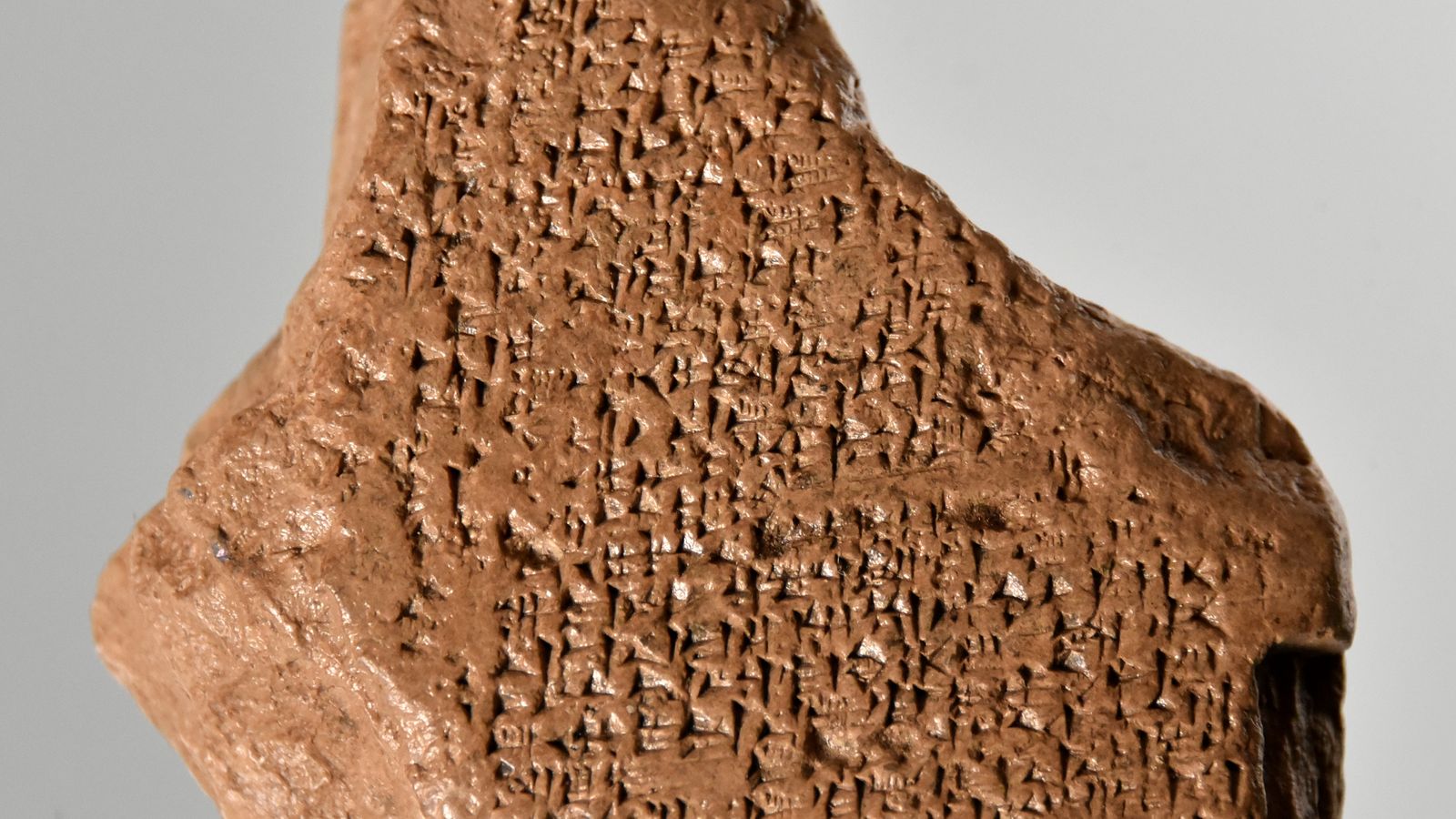
Werewolves are part of the supernatural monster canon along with sometimes literal fellow housemates; vampires, ghosts, witches etc. They could be said to represent an interesting duality of human nature, the controlled person by day and a raging beast by night. The stories of the transformation of a human into an animal go back as far as storytelling goes but apparently, the first recorded example of a human turning into a wolf is in The Epic of Gilgamesh, a poem, obviously an epic one, written sometime between 2000 BCE and around 1200 BCE. It comes from ancient Mesopotamia and is basically about Gilgamesh’s quest for immortality. In the poem, there is a goddess called Ishtar who wants to sleep with our main man Gilgamesh, but he finds out that she had turned a previous lover into a wolf after she got bored of him and he was then torn apart by his own hunting dogs so he decides against it. While this isn’t really what we think of when we think of werewolves, it does repeatedly come up as the earliest written example and if we hadn’t mentioned it, I’m sure there’d be lots of lovely comments about it.
The name “werewolf” comes from Old English as the word “wer” meant “man”, and I guess “wolf” meant “wolf”, so put them together and you get Man-wolf.
There are some differences in the way werewolves are depicted but generally speaking, folklore has it that a person, usually a man, transforms under the influence of a full moon into either a full-on wolf, or some sort of large human-wolf hybrid. These werewolves are bloodthirsty with the mind of an aggressive animal and will hunt for prey, be it animal or human. When the sun comes up, they transform back into their human form, usually with no memory of the night’s activities but maybe with injuries or bloody reminders of what they might have got up to.
Other variations include having superhuman strength while in wolf mode and also, the rules aren’t set on transformation. Sometimes they only transform under the full moon and in other cases they can transform whenever they want but are also forced to do it on the full moon.
In some circles there is also a difference between werewolves and lycanthropes, or lycans, but this is usually in genre fiction and I don’t know if we need to get into the nitty-gritty of the differences between supernatural human-wolf transformations but we’ll see how it goes.
Traditionally, silver objects, usually in the form of bullets, are how people go about killing werewolves, along with the staples that will reliably dispatch most living things—fire, cutting out their hearts and/or decapitation. You may have heard of a plant called “wolfsbane” which sounds like it would be the bane of wolves, and indeed it’s poisonous and was actually used to kill wolves and other carnivores when left in raw meat as bait. If you remember anything from Potions class, you may recall that wolfsbane is also known as monkshood and aconite. Either way, it is also sometimes used against werewolves.
There is more than one way to become a werewolf, too. The traditional way is to be attacked by one, so being bitten or scratched while the aggressor is in wolf form. There are also things such as if you drink downstream from one or drink rainwater out of a werewolf’s paw print you’ll become a werewolf—if you don’t die of dysentery first. There are also children born from werewolves who carry the curse genetically and in some stories, doing something as simple as slinging a wolf’s skin over yourself could be enough.
The ability of a human to turn into a werewolf is known as “lycanthropy” but this is also a psychiatric condition in which a human believes they can turn into a wolf, more of which later.
Who-wolves: Historical Werewolves
While there is a mythology behind the werewolf story, there are also countless historical and literary examples we can point to that either added to the myth or were directly influenced by it so let’s go over some of the more well-known ones. As well as the Epic of Gilgamesh that we mentioned earlier, the term “lycanthropy” itself links nicely to King Lycaon of Greek mythology fame. The Greek word “lykos” means wolf and “anthrōpos” means human being or man, so this time the translation is wolf-man. A guy named “King Lycaon” winds up becoming a wolf. What are the odds? Well, he wasn’t a real person, he was made up so that probably explains it. He turns up in a couple of ancient texts, one of which is Ovid’s Metamorphoses. In Book One of this epic poem, written around the year 8 CE, Lycaon kills a hostage and tries to get Zeus, the king of the gods, to eat them, but Zeus doesn’t fall for it and destroys Lycaon’s house and turns him into a wolf. One translation of this part from PoetryInTranslation.com says this about Lycaon’s transformation:
He himself ran in terror, and reaching the silent fields howled aloud, frustrated of speech. Foaming at the mouth, and greedy as ever for killing, he turned against the sheep, still delighting in blood. His clothes became bristling hair, his arms became legs. He was a wolf, but kept some vestige of his former shape. There were the same grey hairs, the same violent face, the same glittering eyes, the same savage image.
Here’s another translation found in The Book of Were-Wolves by Sabine Baring-Gould:
In vain he attempted to speak; from that very instant His jaws were bespluttered with foam, and only he thirsted For blood, as he raged amongst flocks and panted for slaughter. His vesture was changed into hair, his limbs became crooked; A wolf,—he retains yet large trace of his ancient expression, Hoary he is as afore, his countenance rabid, His eyes glitter savagely still, the picture of fury.
This element of maintaining some kind of recognizable characteristic has also been kept in the werewolf canon. We know that people come in all shapes, sizes and looks, but, in medieval times in Europe especially, if you had a unibrow, were excessively hairy, had low-set ears or had long, sharp fingernails, your chances of being pegged as a werewolf went up exponentially. Another supposed tell was that a person would have hair or bristles under their tongue but come on, for one thing that’s really gross and also, I don’t think anyone’s ever had hair growing under their tongue so how did this even become a sign?
Moving on, there are links to wolves in the creation of Rome story too. Twin boys were born who were the grand nephews of the current ruler, King Amulius, who had usurped their grandfather. Seeing them as a threat, he ordered them to be killed and they were left by a river which doesn’t seem a very sure-fire way of doing it. Indeed it wasn’t, and they were cared for by a she-wolf who even suckled them with her very own wolf milk.
They were eventually found and raised by humans and were named Romulus and Remus. Long story short, Romulus killed Remus and founded the city of Rome. This worked out because his name was already pretty similar to “Rome”, so it would have been a bit awkward if Remus had won.
The drinking of the wolf’s milk detail is an iconic part of this story and you’ve probably seen images of statues depicting it. Romulus and Remus stayed in a cave with the wolf which became known as the “Lupercal” and was located at the bottom of the hill on which Rome was supposedly founded. This also became the location for the Ancient Roman festival of Lupercalia which sounds like it must have something to do with wolves but opinion remains split as to its significance.
It seems to have involved the sacrifice of goats and dogs and then the leaders chasing everyone around almost naked, waving strips of the animals’ flayed skin. Being hit by one of these bloody strips of “shaggy thongs” as a translation of something Plutarch wrote called them, was supposed to aid your fertility journey.
Some scholars say that Lupercalia was held in honour of the Roman god Lupercus, protector of sheep from wolves, but apparently this is not necessarily the origin of the festival.
There isn’t really anything that obvious about the werewolf myth in this story but seeing as the stand-out image of the founding of Rome involves two young children and a wolf, I thought it was worth mentioning.
Technically, a werewolf is a human that transforms into a wolf temporarily, then changes back into a human. Staying in the ancient times for a bit longer, the Guinness Book of World Records gives the title of “Earliest Description of a Werewolf” to Greek historian, Herodotus, writing in his “Histories” in about 430 BCE. In book 4, he makes mention of the Neuri people, who lived near the border of the Scythian people. They had apparently had to flee their original homeland due to an infestation of snakes but also had the ability to shapeshift.
The Guinness website gives this quote from the “Histories”:
It may be that these people are wizards; for the Scythians, and the Greeks settled in Scythia, say that once a year every one of the Neuri becomes a wolf for a few days and changes back again to his former shape.
So it isn’t just one person doing it, it’s the whole Neuri population! While he included it in his book, Herodotus does point out that he didn’t witness this and doesn’t actually believe this story himself, saying: “I do not believe this tale; but all the same, they tell it, and even swear to the truth of it.”
This reminds me of Tommy Lee Jones’s line in “No Country For Old Men” when he says “a true story? I couldn’t swear to every detail but it’s certainly true that it’s a story.”
Werewolf lore also has roots in Shamanism as shapeshifting is one of its best-known features. The shapeshifting could mean either a complete physical transformation into an animal, or the shaman taking on the characteristics of an animal. Shamans are very in tune with the natural world and as some wolves were hanging around humans many thousands of years ago and ended up becoming domesticated, the link between them runs quite deep.
A piece of art from the upper paleolithic period found in Cave of the Trois-Frères in France in 1914 has been described as showing a shaman in various forms of animal transformation. It’s called “The Sorcerer” and in a sketch made of the original artwork by Henri Breuil, you can see a mixture of human arms and legs, an owl’s head, antlers, and what looks like a horse’s body and tail. There is also a little genital thing going on but I wouldn’t want to hazard a guess at where that came from.
The only thing about this sketch is that it isn’t necessarily a faithful representation of what was actually in the cave as some people have said that Breuil drew antlers that were really just cracks in the wall, etc. A photograph of what is left of the original artwork is somewhat less impressive.
Wolves even have a backstory in the life of Mongolian warlord, Genghis Khan. According to The Secret History of the Mongols which is the oldest surviving Mongolian literary work, Khan is literally descended from a wolf. The book starts:
At the beginning there was a blue-grey wolf, born with his destiny ordained by Heaven Above. His wife was a fallow doe. They came crossing the Tenggis. After they had settled at the source of the Onan River on Mount Burqan Qaldun, Batačiqan was born to them.
This family line eventually gets to Genghis Khan and as we all know that 1 in 200 or 0.5% of the male population still carries his genes, that’s a lot of wolf ancestry going on. Except that it’s symbolic and not literal, of course.
Another historical link to werewolves is that of the Berserkers and some historians think that this is where the European versions of the werewolf legend came from. Famously aggressive in battle, these Viking warriors wore bear or wolf skins which were said to help them channel the ferocity of these animals into their fights. Icelandic historian Snorri Sturluson wrote of them in 1225: “His own men went to battle without coats of mail and acted like mad dogs or wolves. They bit their shields and were as strong as bears or bulls.
They killed people, and neither fire nor iron affected them. This is called berserker rage.”
The name “Berserker” itself apparently comes from an old Norse word meaning “wolf-coat” so we can definitely draw a thread connecting these warriors covered in wolf skins to people transforming into wolves and becoming mindless, violent killing machines.
Wolves are also framed as the bad guys in stories many of us know from our childhoods. There’s the Big Bad Wolf who swallows Grandma and tries to trick Little Red Riding Hood before being cut open by a woodcutter, drowning from a stomach full of stones or just running off, depending on which version you’re reading. There’s also the Big Bad Wolf who blows down the Little Pigs’ houses before meeting his end by falling into a pot of boiling water, and the Big Bad Wolf who tricks and eats six out of seven baby goats before drowning from a stomach full of stones. Again. The Big Bad Wolf trope has survived for centuries, and still crops up in modern day entertainment such as Doctor Who and the children’s books and movie series, The Bad Guys.
Basically, as an animal that’s shared space with humans for millennia, the wolf is an enduring and popular totem or symbol in many cultures around the world. It can be a useful member of a pack, it can survive on its own, it can be aggressive, it can be docile, it’s intelligent and it’s wild so it’s no real wonder that the major shapeshifting supernatural storyline that persists to this day is that of a human turning into a wolf.
What-wolves: Werewolf-specific Mythology
So let’s get back into the meat of this and explore some of the details of the werewolf legend, starting with the moon. According to popular lore, when the moon is full, anyone afflicted with the curse of the werewolf will turn into one whether they want to or not. But what’s the link, if there even is one at all? It seems that while the image of a man transforming into a beast under the light of a full moon has been popularised by 20th century monster movies such as 1943’s Frankenstein Meets the Wolf Man, there are some historical folkloric examples to back the idea up. In 1865, Sabine Baring-Gould wrote The Book of Were-Wolves: Being an Account of Terrible Superstition which handily compiles lots of stories into one book. Here are some examples of the moon playing a role in the transformation process.
Petronius, a first century CE Roman novelist wrote this story about a man accompanied by a soldier: “We set out about cockcrow, and the moon shone bright as day, when, coming among some monuments, my man began to converse with the stars, whilst I jogged along singing and counting them. Presently I looked back after him, and saw him strip and lay his clothes by the side of the road. My heart was in my mouth in an instant, I stood like a corpse; when, in a crack, he was turned into a wolf. Don’t think I’m joking: I would not tell you a lie for the finest fortune in the world.”
Baring-Gould writes later in chapter 8, Folk-lore relating to Were-wolves:
If traditions of were-wolves are scanty in England, it is quite the reverse if we cross the water.
In the south of France, it is still believed that fate has destined certain men to be lycanthropists—that they are transformed into wolves at full moon. The desire to run comes upon them at night. They leave their beds, jump out of a window, and plunge into a fountain. After the bath, they come out covered with dense fur, walking on all fours, and commence a raid over fields and meadows, through woods and villages, biting all beasts and human beings that come in their way.
At the approach of dawn, they return to the spring, plunge into it, lose their furry skins, and regain their deserted beds.
This book was published in 1865 so presumably that means that belief in werewolves was still alive and well in the late 19th century but it also nails down the full moon thing decades before any monster movie did. Baring-Gould goes on to note: “In the Périgord, the were-wolf is called louléerou. Certain men, especially bastards, are obliged at each full moon to transform themselves into these diabolic beasts.”
Poor bastards, it’s not their fault!
There are other references to moons being prominent when it comes to transformations but generally they were only mentioned to show that it was night time and werewolves are unilaterally described as having forced transformations at night. I began to wonder if the moon specifically was a trigger for transformations, regardless of what stage it was in and found this question on Quora.com: “Will a werewolf change if it is inside and has no exposure to the moon light?”
At first I thought: “hmm! Interesting question!” but then I realised that if it was that easy to block the transformation, every werewolf would just stay inside with the curtains drawn once a month. Then I saw an answer that said: “You realize that werewolves are fiction. So it largely depends on the demands of the plot.” So yes, maybe I was overthinking it.
There’s also no link between real wolves howling at the moon either. We’ve all seen Amazon’s favourite t-shirt of the Three Wolf Moon, a full moon surrounded by three howling wolf heads, which led to some of the best online reviews you’ll ever read, however, the full moon doesn’t really have any effect on normal wolves. You might hear them howling when the moon is full but that’s because it means it’s night time and everything’s quieter and you’re therefore more likely to hear them. If you hear a wolf howling, it could be for a variety of reasons but it’s not because of or directed at the moon.
There must be some link between werewolves and the lunar cycle though, surely? Some people swear that lunar cycles and menstrual cycles are in some way connected so couldn’t that also affect werewolf transformations or behaviour? It seems silly to debunk something that’s fiction to begin with, but here goes.
One, lunar and menstrual cycles aren’t linked, regardless of how much you may believe they are and I’ve known at least one person who was very into this theory. The fact is that an average menstrual cycle happens every 28 days and lasts 3 to 5 days. Apparently the length of a total lunar cycle from new moon to new moon is 29.5 days.
There are going to be some times when this syncs up, just as how, if there is more than one menstruating person in a household, there is going to be some frequent overlap seeing as how you’re basically doing this for the best part of a week a month, every month for at least three decades. But I digress. Historically, the vast majority of werewolf examples have been men so this lunar theory doesn’t even affect them.
If the moon had any effect on men’s bodies, we’d never hear the end of it so I think we can close the book on if the moon affects real life wolves or werewolves.
The instances of a full moon being mentioned in past literature in conjunction with werewolf transformation is minimal and not specifically called as a trigger for transformation. It appears more to be something done for creative effect in later films which then caught on and became part of the lore as we know it. While the moon does make appearances in past mentions of werewolves, it’s probably just to highlight the fact that these changes take place at night and if it’s nighttime, you generally mention the moon.
In the passage from Baring-Gould that we just heard, he mentions a man jumping into a fountain to become a werewolf, then jumping into it again to turn back. This element of the story hasn’t stuck at all but it makes about the same amount of sense as the moon triggering a transformation.
In werewolf lore, it’s also the case that a transformation under the full moon is involuntary i.e. it will happen whether the person wants to transform or not. It’s also usually portrayed as being very painful. Some branches of the myth have this as the only time that a transformation will occur, but others say that a werewolf can also transform at will. In Eclogue 8 by the Roman poet Virgil, there is a reference to someone turning into a wolf. Here’s a translation from 1934 of the relevant passage by J.W. MacKail:
These herbs, and these poisons gathered in Pontus, Moeris himself gave me; in Pontus they grow thickest. By their might I have often seen Moeris become a wolf and plunge into the forest, often seen him call up souls from their deep graves, and transplant the harvests to where they were not sown.
This could refer to Moeris turning into a wolf just by eating these herbs, but is more likely a reference to being under the influence of said herbs and doing a whole lot of hallucinating.
Another thing intrinsic to the werewolf legend is the power of silver over them. They can be killed or warded away with silver objects and they can be held in chains of silver to stop them running around killing everyone. A silver bullet is usually the first thing you think of as a way to kill a werewolf but where has this link to this specific metal come from and what did people use to kill them before guns were invented?
Traditionally, silver is seen as a “pure” substance i.e. linked to holiness, and since ancient times it has been used to denote purity, used for protection and has been known for its antibacterial properties. This means it would work very well against the forces of evil and as a counter to a curse. In alchemy, seven metals were tied to seven planets or, rather, astronomical bodies. Silver was associated with the moon so I suppose that’s a pretty solid link in the werewolf lore chain.
Watch Now
Open Video
Video Briefing
Lycanthropes: Are Werewolves Real?
Before bullets and guns, silver could still be worked into things like daggers and swords, or used to tip things such as arrows and canes, which is how the Wolf Man of the 1941 film of the same name meets his demise, as he gets whacked over the head with a silver-topped walking stick. If you think about it, the whole “silver” aspect seems redundant as bludgeoning anything on the head with a heavy object will probably do it damage, or shooting anything with any bullet might spell a death, but that’s why werewolf lore has also got either supernatural regenerative abilities or just imperviousness to most normal weapons built in. Which is pretty cool.
I also saw on Britannica.com that this part of the legend might have come from a real life example of a French farmer killing a beast using silver bullets in 1767. This rang a bell and, indeed, former topic The Beast of Gévauden was killed in 1767 with what has been described as a silver bullet. Is this the origin of the pseudo fact we all know that silver bullets kill werewolves? Well, not really, because silver was already used as a protective metal before 1767 so if it was used in this case, it was because of its already known properties.
A letter from a local French woman in 1765 to a relative talking about the beast said: “We tried to shoot him with bullets of iron, lead, silver. Nothing can penetrate. We must hope that in the end we will overcome it.”
So the silver bullet aspect didn’t originate here because it didn’t apparently work. Also, a detail of the story has it that a medal of the Virgin Mary was used to create the bullet that killed the beast, making it extra holy as well as silver, however, this has been disputed by critics as “literary invention” or “a distorted detail.” As a final point, reports of the beast of Gévauden from the time make no mention that anyone thought it was a werewolf so we can’t point to this as the nexus point of the trope.
I think what we can gather is that silver as a known protective charm was fashioned into weapons long before bullets were invented, but when they were, it was used in bullets too. Eventually these bullets were shot at wolves, real or imaginary, and gradually the things got linked together, especially in more modern times where seeing things in films helps to cement them into the narrative.
And speaking of films, nowadays, modern movies have taken it to new levels with the Underworld series, for example, having silver bullets for any type of automatic weapon, silver grenades and silver shurikens to lob at the lupine foe. And what did these poor sods do to deserve it? Actually, the Lycans in the Underworld series aren’t traditional werewolves as per the popular lore but we’ll probably circle back to these differences nearer the end. I say “probably” because, to be honest, it might not be that interesting. We’ll see how it goes.
The curse of being a werewolf is usually linked to something bad that the person did and is being punished for, therefore, the involuntary transformation is part and parcel of the curse. If you could turn into a werewolf whenever you wanted, that would be a pretty cool superpower and not the intended outcome for the person who was cursed. It seems that, in the past at least, having done something monstrous led to you becoming a monster, so the transformation into a wolf was reserved for people like King Lycaon who had killed someone and tried to trick Zeus into eating them.
As time went on, people in medieval Europe, for example, would equate physical characteristics with a possible animalistic nature of the suspect, a topic that we’ll dive into shortly. Turning into a raging beast was seen as undesirable, so it was undesirable people that it happened to. Modern depictions of werewolves in film and tv haven’t necessarily bought into the “already looks like a werewolf so must be a werewolf” line of thinking though, so centuries-old pointers of things to look out for such as the unibrow, low ears or hairy tongue have largely died out, as that’s not what a teenage girl is going to pay for to see at the movies.
These days, anyone can be a werewolf and actually, the sexier and more ripped they are in human form, allegedly, the more likely they are to be one. But that’s only been the case in very recent times. Let’s go back to the past to a time where people thought werewolves were real and look at some historical examples of lycanthropy.
Why-wolves: Trials of the Lycanthropes
This is the interesting part for me, the times where people have either been accused of being werewolves or have admitted to being them. We said at the start that “lycanthropy” has two meanings: that of the supernatural act of turning into a wolf and also the mental illness where people think they are turning into wolves. From our lofty modern post, we can clearly see that anyone accused of being a werewolf in the past was either suffering from a delusion or was being persecuted for having a unibrow but the people of the past, while sometimes acknowledging that the so-called werewolf might have been mentally unwell, generally weren’t all that interested in the whys and wherefores of their behaviour and just wanted to get to the punishing part. Let’s take a look at some historical examples that made such an impression, we can still read about them today.
Forget about witch trials, there were many werewolf trials carried out in parts of Europe throughout the 14th to 17th centuries. In fact, according to the website BizarroBazar.com, over 100,000 people were executed on werewolf charges in Europe over this time period. That’s a lot of shape-shifting. They also were generally thought to be worshippers of Satan, which didn’t exactly help their cause.
One of the most well-known was that of Peter Stubb, also called Peter Stumpf or Stumpp because it’s hard to keep names straight when literacy is low and the language is a complete shambles. In Bedburg Germany in 1589, he was allegedly witnessed turning into a wolf and ended up being blamed for multiple murders over the span of 25 years. How was he doing this? Why, under interrogation and threat of torture he confessed to having a magic belt or girdle given to him by the Devil himself.
When he put it on, he turned into a wolf and went on to kill to his heart’s content. If this belt could be found, it would be concrete proof in the werewolf story, but, perhaps not surprisingly, this magic shape-shifter girdle was never located. According to George Bores who wrote an article called “The Damnable Life and Death of Stubbe Peeter” in 1590:
at his apprehension he confessed he cast it off in a certain valley and there left it, which, when the magistrates heard, they sent to the valley for it, but at their coming found nothing at all, for it may be supposed that it was gone to the Devil from whence it came, so that it was not to be found.
So yeah, it wasn’t that this girdle never existed and was a made-up product of a mind and body under torture, the Devil must have taken it.
I don’t know if Stubb was responsible for any murders but it was the werewolf aspect to the story that grabbed everyone’s attention. Well, that and the fact that this dude appears to have been the most disgusting specimen of any species to ever walk the earth. We are told in lurid detail about his incestuous relationship with his own daughter, then George Bores relates this snippet:
in the shape and likeness of a wolf he encountered his own son and there most cruelly slew him, which done, he presently ate the brains out of his head as a most savory and dainty delicious mean to staunch his greedy appetite: the most monstrous act that ever man heard of, for never was known a wretch from nature so far degenerate.
Again, I have no clue if he actually did kill his own son or not, but if he did, it wasn’t in the form of a wolf. The witnesses to his alleged metamorphosis appear to have been witnesses to just that, not to any of the actual murders. And the metamorphosis as told by George Bores who wasn’t there at the time is pretty open to criticism.
He says that a group of hunters were chasing a wolf and it disappeared and where it should have been, there was a man walking instead and this was Peter Stubb. I mean, is it not more likely that they were chasing a wolf and it got away and poor old Peter just came out of the bushes at the wrong time?
Here’s what ended up happening to him as per George Bores:
Stubbe Peeter as principal malefactor, was judged first to have his body laid on a wheel, and with red hot burning pincers in ten several places to have the flesh pulled off from the bones, after that, his legs and arms to be broken with a wooden ax or hatchet, afterward to have his head struck from his body, then to have his carcass burned to ashes. After the execution, there was by the advice of the magistrates of the town of Bedbur a high pole set up and strongly framed, which first went through the wheel whereon he was broken,(…) after that a little above the wheel the likeness of a wolf was framed in wood, to show unto all men the shape wherein he executed those cruelties. Over that on the top of the stake the sorcerer’s head itself was set up, and round about the wheel there hung (…) sixteen pieces of wood about a yard in length which represented the sixteen persons that was perfectly known to be murdered by him.
Yowch. His poor daughter and someone else referred to as “his gossip Katherine Trompin” which I assume to be his girlfriend, were also put to death for being accomplices although they were saved the ignominy of being pulled apart and beheaded and were just burned to death instead.
The supernatural element of this case was what seems to have done for Peter Stubb. I don’t have a clue if he was responsible for any actual murders or not but because he was seen as undesirable, the rumours got piled on until they literally broke him. Of course he didn’t have a magic belt that turned him into a wolf. This was either an excuse for his crimes, the product of a deluded mind or a totally false confession made up under torture.
The region had been hit by a series of especially bloody murders and this seemed to be a nice neat way of dealing with them. It seems that in this case, if you will pardon the mixed metaphors, Stubb was a scapegoat in wolf’s clothing. Punish him for abusing his daughter, punish him for murdering multiple people but please, oh please, don’t hang this weird werewolf explanation around his neck.
A few years later in 1598, another example of the crime of lycanthropy cropped up, this time in Angers, France. Here’s the beginning of the story from Sabine Baring-Gould’s book, The Book of Werewolves:
In a wild and unfrequented spot near Caude, some countrymen came one day upon the corpse of a boy of fifteen, horribly mutilated and bespattered with blood. As the men approached, two wolves, which had been rending the body, bounded away into the thicket. The men gave chase immediately, following their bloody tracks till they lost them; when suddenly crouching among the bushes, his teeth chattering with fear, they found a man half naked, with long hair and beard, and with his hands dyed in blood. His nails were long as claws, and were clotted with fresh gore, and shreds of human flesh.
During his trial, the man, whose name was Jacques Roulet, confessed to having killed the boy and said he could transform into a wolf by rubbing on an ointment or salve his parents had given him. He also claimed that the two wolves the witnesses had seen were his brother and cousin, John and Julien, and they had used the wolf salve too. John and Julien were able to prove that they were nowhere near the scene of the crime at the time and Roulet’s testimony does seem pretty shaky at least according to Baring-Gould’s description, with him at times confirming that parts of him literally turned into wolf parts and other times making it seem merely metaphorical. Here’s a piece of the trial as per Baring-Gould:
When rubbed with this ointment do you become a wolf?”
“No; but for all that, I killed and ate the child (…): I was a wolf.”
“Were you dressed as a wolf?”
“I was dressed as I am now. I had my hands and my face bloody, because I had been eating the flesh of the said child.”
“Do your hands and feet become paws of a wolf?”
“Yes, they do.
In this instance, it seems that some sort of sense prevailed as Roulet, after initially being sentenced to death for murder, lycanthropy and cannibalism was, on appeal, given “two years’ imprisonment in a madhouse”. I mean, two years isn’t much for killing and trying to eat someone else but I suppose they realised he wasn’t fully mentally aware of what he was doing.
It seems that a lot of the lycanthropy crimes were happening in France and Germany and has been put down to a moral panic, or a collective fear, the likes of which can still be seen today with things like the Satanic Panic epidemic of the 1980s, or “the late nineteen hundreds” as my daughter likes to call it. It’s just one of those things that catches on and spreads but is usually found to be pretty much baseless, or at least, about 1% as fanciful as the stories people are telling about it.
A slightly different example comes from Ansbach in Germany in the year 1685 and if you think everyone was being a bit hysterical over the transformations from men into wolves, that wasn’t always the case. As we alluded to the scapewolfing of Peter Stubb in the late 1500s, BizarroBazar.com states in a post titled “The Werewolf of Ansbach”: “werewolf trials sometimes involved stratified levels of meaning which were far from being unintentional.”
What could this mean? Don’t worry, we’re going to tell you now. This is kind of a reverse werewolf story, almost a meta werewolf story. In 1685, Michael Leicht, the Burgermeister of Ansbach died.
A Burgermeister, or burgomaster, means “master of the citizens” and is like a powerful mayor type figure. Anyway, everyone hated him and he was apparently a pretty awful person. Around the same time, a wolf started attacking local livestock, ramped up to attacking humans, and eventually killed several small children. Because of this unusually aggressive behaviour, word started spreading that this was a werewolf and not only that it was a werewolf, but that it was none other than dead burgermeister Michael Leicht himself, who had managed to transfer his spirit into a wolf’s body to continue his reign of terror on the people of Ansbach.
A trap was dug for the wolf which fell in and was dispatched with relative ease. That wasn’t the end of it though. To fully exorcise the Burgermeister’s spirit from the city, the wolf was skinned and dressed up in a cloak with a wig on its head. Its muzzle was cut off and a mask of Leicht’s face was put on over it. Dressed in this bizarre and, frankly, ghoulish attire, it was strung up on a hill so everyone could see it.
A translation of a poem written at the time about this reads in part:
Ah! You damned spirit who entered the wolf, You now swing from the gallows disguised as a man This is your fair compensation, the gift you have earned; This you deserve, a gibbet is your grave. Take this reward, because you have devoured the sons of men Like a fierce and ferocious beast, a real child eater.
As you can see, there is more than one thing going on here. We can go back to Bizarro Bazar to explain this as follows:
On the one hand, depriving the wolf of his fur and replacing it with human clothes meant showing Satan himself that his tricks did not work. The townspeople of Ansbach were able to recognize the man concealing under the fur; this was therefore a warning, addressed to the Devil himself — this is how your evil servants end up, around here! (…) On the other hand, there was an undeniable political aspect. This was a “by proxy” execution of the former ruler; the commoners, who had failed to overthrow their oppressor while he was alive, did so post-mortem.(
…)
In any case, the political message was clear, even for those who did not believe in werewolves: this act was meant to mark the end of a dark era.
There are many, many more examples we could give of people being accused of being werewolves but they all boil down to the same thing—someone has committed some horrible murders or has been accused of committing horrible murders. They either confess to being a werewolf because they have a mental illness, because they are pretending to have a mental illness or because they have been railroaded into it. They are then either executed or sent to some kind of asylum, bringing that particular werewolf case to a close.
I think we can also bring this chapter to a close and move on to other things that might cause people to think werewolves are real. It’s time to get medical.
How-wolves: Debunking the Myth
OK, we’ve had stories of people acting in a wolflike way and even admitting that they’re werewolves, so let’s take a clinical look at it and go into the unfortunately real delusion that you can turn into an animal, known as clinical lycanthropy. While we’re talking about wolves in particular, the term “clinical lycanthropy” acts as an umbrella term to mean other sorts of animals too, not just wolves. There have been cases, for example, of people thinking they have turned into bees.
An article by Rajeet Shrestha MD on psychiatryonline.org states:
Clinical lycanthropy is a rare form of reverse inter-metamorphosis wherein patients believe that they are undergoing transformation or have transformed into a non-human animal. A case of such a delusional misidentification involving the Self is presented here.
Maybe some of the many thousands of people killed for being werewolves in the past did actually suffer from this psychiatric issue but if you think that cases of lycanthropy have been relegated to the distant past, think again. In 2016, Florida student, Austin Harrouff, murdered a random couple in cold blood following an argument with his family. He was found on top of the male victim, growling and chewing on his face. A toxicology report ruled out any drugs that might have tipped him over the edge and in 2019, forensic psychologist Dr. Phillip Resnick produced a report saying that Harrouff had believed he was “half-dog, half-man” at the time of the attacks. According to the Palm Beach Post, his professional diagnosis was that: “Harrouff suffered from ‘severe mental disease,’ in particular bipolar disorder and acute manic episodes with psychotic features and ‘clinical lycanthropy delusions,’ also known as werewolf syndrome.”
In 2022, he was found not guilty of the murders by reason of insanity and was sent to a mental hospital instead.
In his article titled “Clinical Lycanthropy: Delusional Misidentification of the ‘Self’”, published in 2014, Rajeet Shrestha presents another case of a 20 year old man who started sporadically acting like an animal, running on all fours, crawling around and howling. This unnamed man later claimed to be a werewolf and said that he had had visions of the Devil and heard voices. He was put on an antipsychotic drug which eventually caused his animal episodes to stop.
We can see in both these recent cases that there is definitely some already existing mental illness happening before the lycanthropy rears its head. Austin Harrouff’s father has said there was schizophrenia on his side of the family and the unnamed 20 year old also had a family history of bipolar disorder. As per Wikipedia:
Clinical lycanthropy is a very rare condition and is largely considered to be an idiosyncratic expression of a psychotic or dissociative episode caused by another condition such as dissociative identity disorder, schizophrenia, bipolar disorder, or clinical depression.
This means that if anybody does start showing signs that they think they are becoming an animal, it is usually effectively treated with antipsychotics or mood stabilizers.
Another medical condition that might make people think werewolves are real is a condition called hypertrichosis or Ambras syndrome, which is basically when someone is very, very, very hairy. You can either be born with it, which is very rare, or possibly acquire it later in life through a side effect of a drug, a hormonal or metabolic imbalance, or from certain forms of cancer. There are various forms of hypertrichosis, meaning that certain areas of your body are covered in fine hair, thicker hair or hair like the hair on your head.
In the most extreme cases, the whole face and body are covered in thick, pigmented hair. This is known as Congenital terminal hypertrichosis and as if that wasn’t bad enough, it can also come with a side of gingival hyperplasia which means that your gums grow larger in certain areas, making your teeth look more pointed and potentially animal-like. I think we can put these two things together and see why it’s also known as “werewolf syndrome”.
There have been fewer than 100 cases of Congenital terminal hypertrichosis since the first recorded case of Petrus Gonsalvus in 1537 but because it’s a genetic mutation, there are still people being born with it now.
Back in the day, some people with hypertrichosis ended up joining circuses to at least try and make some money and gain some level of fame for their unfortunate conditions. Fedor Jeftichew was one of the most well-known. Russian-born in 1868, he inherited hypertrichosis from his father who had been performing under the name “the Wild Man from the Kostroma Forest”. Jeftichew became known as “Jo-Jo the Dog-Faced Boy” when he joined P.T.
Barnum’s circus in 1884 and when he grew up a bit, he was called “Jo-Jo the Dog-Faced Man.”
If you see pictures of him, he indeed has long hair all over his face, covering his forehead, cheeks and everything but his eyes and mouth. He actually looked a bit like Chewbacca in the picture I saw, and his last name was Jeftichew—coincidence? I briefly looked into Chewbacca’s naming story to see if it came from Jeftichew but apparently the Russian word for “dog” sounds like “sobaka” and it came out of that. But there was a dog-faced boy with a “chew” in his name before everyone’s favourite wookie so there you go.
Unfortunately for Fedor, Barnum really played up the “dog” part of the act, ostensibly making him act like one to match his hairy appearance when, obviously, he had no more natural animal instincts than anybody else does. He died very early from pneumonia at the age of 36 but his legacy lived on in references in shows like Buffy the Vampire Slayer, The X-Files and in the movie The Greatest Showman.
The title of “world’s hairiest child” was given to Supatra Sasuphan, an 11-year-old girl from Thailand in 2011. A representative from Guinness World Records measured the amount of hair on various areas of her body before giving her the crown. Sasuphan told Guinness: “Being hairy makes me special. This is the happiest day of my life!”
She soon got sick of it, though, as by 2018 the then-17-year-old had shaved it all off and had also got married, presumably relegating her world record-breaking hairiness to the second happiest day of her life.
You may have also heard of the Aceves family (Aa-séh-ves) from Mexico who carry the genetic mutation leading to hypertrichosis. Jesus Aceves was born in 1968 with the condition which is believed to have originated with his great grandmother. Now, about 30 members of the Aceves family have hypertrichosis to varying degrees.
The mutation is linked to an X chromosome, meaning that if a father has it, his daughters will also have it but not his sons. If a mother has it, her children have a 50% chance of inheriting the mutation. You may be wondering if anything can be done about it and the answer is mixed.
While the gene has been identified, nothing has really been made of it and it can’t yet be turned on or off. It has also not been particularly useful in providing cures for baldness, hair loss or alopecia. If you don’t want to have a hair-covered face, there are things you can do such as shaving, but this is time consuming and the hair still grows back.
Some of the Aceves family even have hair on their eyelids, making it practically impossible to get rid of all of it. Laser treatment or electrolysis would take far too long and is too expensive for the family for the amount of sessions necessary and the results may not be permanent anyway.
To bring it back to our actual subject matter, people with “werewolf syndrome” are merely very hairy and sometimes have bizarre gum lines. They are not in any other way animalistic, aggressive or have shape shifting abilities. It doesn’t take a genius to realise, though, that should a stranger with hypertrichosis have wandered into town in France or Germany in the 15th or 16th century, they probably wouldn’t have been welcomed with open arms.
As a side note, a drug specifically for the treatment of hair loss was accidentally given to a batch of at least 17 young children and babies when it was somehow mixed up with a gastric reflux medication. This happened in Spain in 2019 and caused hypertrichosis all over the bodies of the patients. I believe the condition subsided when they stopped taking the medicine but for a brief period of time there was an outbreak of “werewolf syndrome” in various parts of Spain. While it appeared to be very effective, the exact drug involved in the mix-up has since been withdrawn.
Another possible werewolf imposter is rabies. Remember the King Lycaon who was turned into a wolf by Zeus? In Ovid’s Metamorphoses, the final lines about it said:
A wolf,—he retains yet large trace of his ancient expression, Hoary he is as afore, his countenance rabid, His eyes glitter savagely still, the picture of fury.
Rabies is a viral disease that humans can get via bites or scratches from infected animals. Many animals can carry rabies including dogs, bats, foxes, skunks, raccoons and more rarely, sheep, goats and small rodents like mice and rats. Wolves can also carry the disease although they are more likely to become infected by it from contact with other wild animals.
Cases of rabies in humans are rare nowadays but will be fatal if left untreated after the initial exposure. Early signs include irritation at the site of the wound, fever and other flu-like symptoms. The virus then travels to the brain and causes hallucinations and confusion.
Add to this the classic sign of foaming at the mouth and behavioural abnormalities such as yelling and an increase in aggression and you can see why people might have come to the conclusion that this person was half-man, half-beast or was somebody in the process of turning into a wild animal. They would also become more wild in appearance as they wouldn’t be able to look after themselves, and might develop a fear of water so are unlikely to want to pop into the shower. This type of rabies is actually called “furious rabies”, with about two thirds of rabies sufferers getting this variant.
The other third get “paralytic rabies” and become weaker and less able to move as the disease progresses. The Cleveland Clinic estimates that while fewer than three people die of rabies per year in the US, there are about 59,000 deaths from rabies worldwide annually.
Another potential disease that could have misidentified someone as a werewolf is Porphyria which is a possible contributor to vampire lore too. Porphyria is a blood disorder that causes build up of porphyrins which are related to red blood cells. According to Scientific American:
These porphyrins accumulate in the skin and other organs before being excreted in feces and urine (which may turn a port-wine color). Exposed to light, the porphyrins can turn caustic and destroy surrounding tissue.
This means that in some cases, sunlight can cause blistering on the skin, hence the link to vampires being destroyed by the sun. There are different forms of porphyria, but one includes a strain that can cause excess hair to grow on a person’s face and even discolour their teeth. Along with the photosensitivity, that could add up to more potential werewolf accusations.
The last possible real-life werewolf thing we’re going to talk about briefly is feral children. I saw a documentary on this once and will never forget a Ukrainian girl called Oxana barking and bounding about on all fours. She was basically raised by dogs after her parents abandoned her in the yard as a toddler and spent at least five years living, sleeping, eating, communicating and playing with a group of them.
I started to search up her name and only had to type “Oxana” into Google for it to bring her back as the first result so I guess I’m not the only person she left an impression on. In times past, these children may have been abandoned in the woods due to medical or developmental conditions, meaning that along with animal behaviours they learned by copying what was around them, they also failed to develop language, making them even more of a mystery to anyone who came across them. Where this factors into our tale, is that feral children have been a thing for a while so a wild child or older teen encountered in a forest may look and behave like what some people may associate with a werewolf.
Where-wolves: What are Werewolves up to These Days?
Despite the obvious holes we can poke in the werewolf story, they still remain popular folk monsters today and are an especial staple in the tv and movie world. Just this year in 2025, a movie called Wolf Man was released and we’ve had multiple tv and movie versions of the Teen Wolf story. I’m not a particular fan of the werewolf genre but even I off the top of my head can list Wolf, Ginger Snaps, Dog Soldiers, the Underworld films and An American Werewolf in London as containing werewolves as a main plot point.
While they often play second fiddle to vampires, usually coming across as their intellectual inferiors, werewolves have also popped up in such tv shows as True Blood, What We Do in the Shadows, Buffy the Vampire Slayer, and of course, Being Human. There’s also a show called Hemlock Grove which I haven’t seen, but apparently the werewolves’ transformation is by having a wolf literally emerge from inside the body of the human, starting off through the mouth. It then eats the skin it’s burst out of. If this sounds like a one-way transformation, it isn’t—the human eventually reemerges from inside the wolf. Gross.
I haven’t mentioned them much because they sucked, but the Twilight books and subsequent films also had a strong werewolf contingent and I believe that the idea of werewolves imprinting on humans, whether they’ve even been born yet or not stems from this franchise. I wasn’t able to find any earlier examples online or, indeed, hardly any examples at all that didn’t mention Jacob and/or the appallingly named Renesmee. If this doesn’t make any sense to you, don’t worry, you’re better off not knowing. I was talking about this topic to my friend Julian online and his succinct summary was: “God those movies are so weird.”
Imprinting does seem to have made its way into the paranormal romance genre, however, and werewolf romance is a big thing as I found out when I idly looked at a job ad for a staff writer for said genre. How hard could it be? I thought. Well, the ad said:
The ideal candidate is a seasoned writer with deep experience writing Werewolf Romance stories in screenplay, novel, web fiction, or audio format.” and “Must have demonstrable experience in the Werewolf Romance genre with samples or online portfolio available for review.
Well, I don’t have any of that so had to let that one go by but werewolf romance is a popular subcategory in paranormal romance. I guess I can kind of see the appeal when the werewolves are all hot and sexy in human form but the undercurrent of bestiality? Not so much. I’ve never read one of these, though, so don’t know if that’s the path it goes down or whether it tends to steer away from that fairly troubling aspect.
I suppose we should mention the differences between lycans and werewolves now if we’re doing this properly. This is totally arbitrary as there weren’t such distinctions drawn in the early days of werewolf lore and basically anybody can make up their own rules for supernatural creatures anyway, see, for example, sparkling-skin-vampires in Twilight instead of crumbling-to-dust-vampires when they see the sun.
I believe that the distinction between lycans and werewolves was mainly a product of the Underworld franchise but it’s kind of seeped out further than that now so, for the uninitiated, here are the main differences:
- Lycans maintain more of a human appearance after transformation while werewolves become almost totally animal.
- Lycans keep better control over their intelligence and behaviour as opposed to poor old dumb werewolves who just can’t help themselves and run amok everywhere.
- Lycans are more likely to be able to transform at will, whereas werewolves need a trigger such as the moon or being in a heightened emotional state.
Reading app Galatea has plenty of werewolf romance stories to choose from, including, apparently, the “number one bestselling werewolf romance series ‘The Millennium Wolves’”.
According to a post titled: “Lycans Versus Werewolves: 6 Differences You Did Not Know About”, which actually only really contained 2 differences said in three different ways: “In romance books, especially in contemporary romance, lycans are usually shown as smart, calm, in control of their emotions. Even when they’re in their wolf form, they can still think like a human, which helps them interact with people and form strong, meaningful connections. This makes them more steady and dependable as romantic partners.”
I mean, if you really want a shapeshifter as a romantic partner.
Conversely, if you want to get it on with a werewolf, here’s what you need to know: “Werewolves tend to follow their instincts more, especially when they transform. They might be driven by strong emotions like anger, desire, or fear, which makes them less predictable and a bit more dangerous. Their struggle to balance their human and wolf sides adds extra tension to their relationships.
Werewolf romances tend to be more about wild, passionate love. The tension comes from their struggle to keep their human side in check, and their relationships often face more challenges — like the danger they might pose to their partner or the fear of losing control.”
Err, yeah, I think if there was a danger my partner might rip me to pieces at any given second, that would actually put me off the whole idea, not make it extra hot. But that’s just me. Thankfully, this whole issue of maybe accidentally falling for a werewolf is moot because they’re not real.
Well, we started off with the historical and ended with the somewhat silly but hopefully it’s been an entertaining ride. I think the most important lessons to come out of this are: don’t be suspicious in Middle Ages Europe and if you have a close encounter with a wild animal, please go and get a rabies shot.
Simon Whistler
Simon Whistler is one of YouTube's most prolific educational creators. Decoding the Unknown is his methodical investigation into the world's strangest phenomena — examined with rigour, curiosity, and a healthy dose of scepticism.
Frequently Asked Questions
What is the origin of the term ‘werewolf’?
The term ‘werewolf’ comes from Old English, where ‘wer’ meant ‘man’ and ‘wolf’ meant ‘wolf’.
What is the earliest recorded example of a human turning into a wolf?
The earliest recorded example of a human turning into a wolf is in The Epic of Gilgamesh, written between 2000 BCE and 1200 BCE.
What are the traditional methods to kill a werewolf?
Traditionally, silver objects, usually in the form of bullets, are used to kill werewolves. Other methods include fire, cutting out their hearts, and decapitation.
What are some ways a person can become a werewolf?
A person can become a werewolf by being attacked by one, drinking water from a werewolf’s paw print, or being born from werewolf parents. Additionally, slinging a wolf’s skin over oneself could also be enough.
What is the difference between werewolves and lycanthropes?
In some circles, there is a difference between werewolves and lycanthropes, or lycans, but this is usually in genre fiction. The distinctions are not clearly defined in traditional folklore.
What is the significance of the full moon in werewolf lore?
The full moon is often depicted as a trigger for werewolf transformations, although this is more prevalent in modern films and literature than in historical folklore.
What is clinical lycanthropy?
Clinical lycanthropy is a psychiatric condition in which a person believes they can transform into an animal, often a wolf. It is considered a delusional misidentification of the self.
What is hypertrichosis and how is it related to werewolf lore?
Hypertrichosis, also known as ‘werewolf syndrome,’ is a condition characterized by excessive hair growth. People with this condition were sometimes accused of being werewolves in the past.
What are some historical examples of werewolf trials?
Historical examples include the trial of Peter Stubb in Bedburg, Germany in 1589, and Jacques Roulet in Angers, France in 1598. Both were accused of being werewolves and committing murders.
What is the difference between lycans and werewolves in modern fiction?
Lycans are often depicted as maintaining more human characteristics and control after transformation, while werewolves become more animalistic and less predictable. Lycans can also transform at will, whereas werewolves often need a trigger like the full moon.
Sources
- Original Decoding the Unknown video: Lycanthropes: Are Werewolves Real?
- Hero image source by Osama Shukir Muhammed Amin FRCP(Glasg) / openverse, by-sa.