If you’re between the ages of 15 and 50, there is a 66.67% chance that you’ve experienced déjà vu before, otherwise known as ‘the feeling that one has lived through the present situation in the past’.
Greek philosophers like Plato and Pythagoras thought that the sense of familiarity you feel in the middle of a ‘déjà vu experience’ is proof of reincarnation. Fifty years ago, the only people who seemed to take the phenomenon of déjà vu seriously were the same people who covered themselves in healing crystals, lazed around in clouds of ‘giggle smoke’, and preached about how we should ‘make love, not war’. But for centuries now, people have believed that déjà vu provides you with a glimpse into a parallel world, or that it is a sign that the person is either psychic or has the gift of premonition.
So, have humans had the ability to predict the future all along, or is there a more reasonable explanation behind the feeling that you’ve watched this episode before?
Key Takeaways
- Déjà vu is a common experience, with a 66.67% chance for those aged 15-50.
- Historical theories link déjà vu to reincarnation, precognition, or parallel universes.
- Scientific theories suggest déjà vu results from forgotten experiences or dual consciousness.
- Gestalt Familiarity Theory explains déjà vu through pattern recognition and familiarity.
- Researchers have developed a VR-based déjà vu generator to study and induce the phenomenon.
What is Déjà vu?
Let’s set the scene (which totally isn’t based on real-life events):
You’re sitting next to a kitchen table. Across from you sits another person. It’s either a friend or a family member, and you’re just having a normal, everyday conversation. Then, all of a sudden, you recognise the setting.
The room, the table, the person sitting in front of you, the way the sun slants into the room, the topic you’re discussing. Even the pile of unwashed dishes in the sink looks familiar. And you have the oddest feeling that you’ve experienced that exact same moment before. You might even feel certain that you know what’s coming next, but for some reason, you can’t quite remember what’s going to happen, and if you’re anything like me, you might even start to panic a little.
Then the feeling fades, and you return to your conversation. You might even smile bashfully at your confused-looking companion and explain that –
“Sorry, I just had déjà vu.”
I can’t say that I’ve ever really wondered why we experience déjà vu. To me, it was just some weird thing our brains did, like how we see shapes and faces in the clouds, or how new moms hear their babies cry when they’re away from them for more than a minute – even though said baby is most likely still fast asleep.
But that’s not to say that more curious minds than my own haven’t spent YEARS trying to explain what exactly déjà vu is, and the internet is filled with articles like “Can Science Explain Déjà vu?”, “Déjà vu: It’s Meaning and Why We Experience It”, or “Déjà vu: What It Is and Why It Happens”. Of course, it wouldn’t be an episode of Decoding the Unknown if we didn’t cover at least one batshit-crazy theory, so I had to purposefully go and look for the most irrational explanations behind the phenomenon. And here they are:
Memories from Christmas Past, Present, and Future
Most cultures around the world believe in some form of reincarnation, or as the ancient Greek philosopher Plato called it, “the transmigration of souls”. He even rationalised that déjà vu occurs when your soul recognises a situation it had been in, a place it had visited, or a person that it had met in a past life. An example of this would be when you meet someone and the two of you just seem to ‘click’. A related theory suggests that déjà vu occurs when your soul remembers a similar situation occurring in one of your past lives, which leads to you reliving that memory.
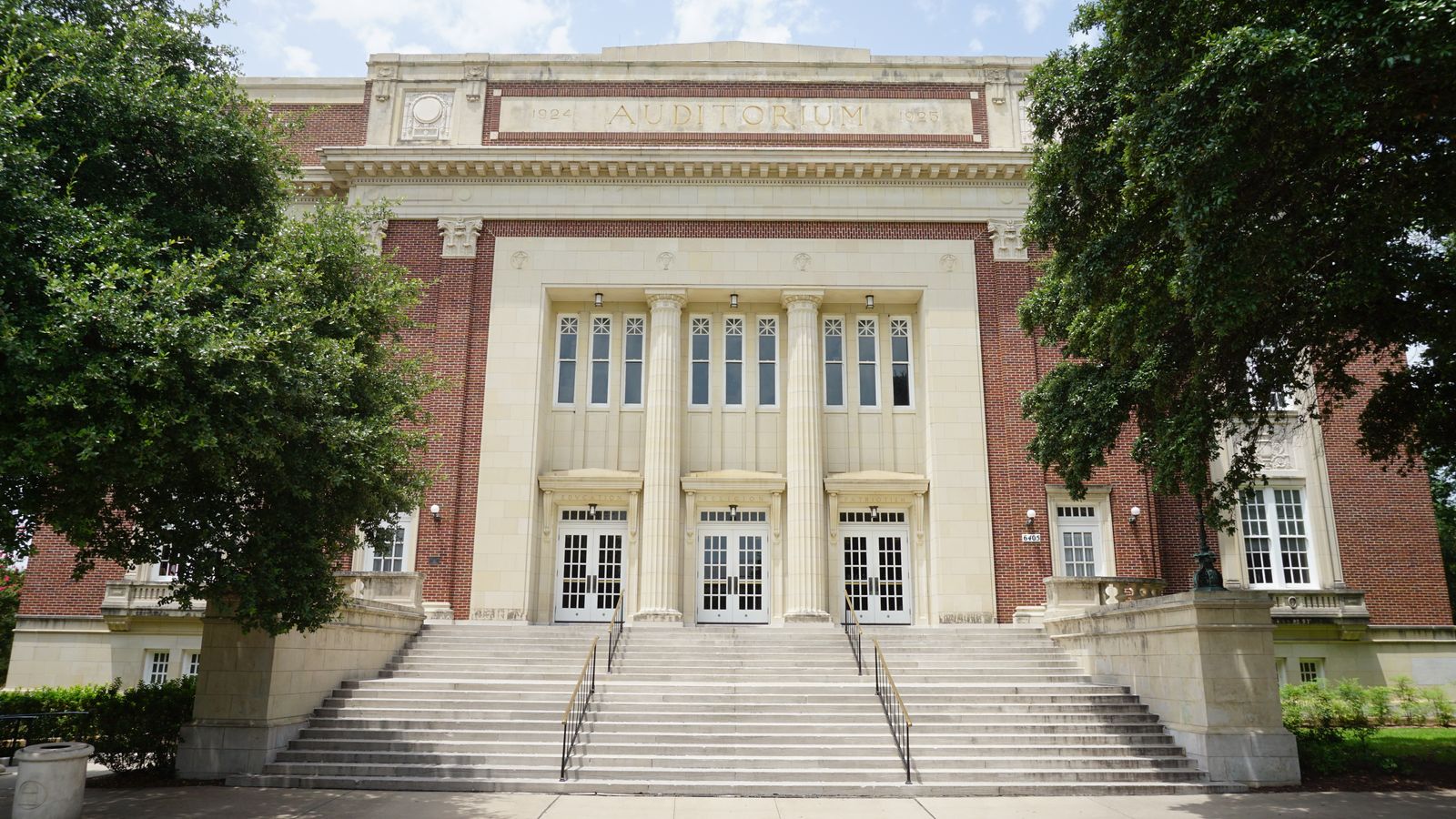
Alan Brown, a Professor of Psychology at the Southern Methodist University (or SMU) in Texas, has been studying the phenomenon of déjà vu since the 1990s. In 1994, he wanted to find out what triggered instances of déjà vu, so he conducted a survey on 353 Introduction to Psychology students at SMU and the University of Texas, and asked them a series of questions regarding any déjà vu experiences that they might have had. He then compared their answers with the answers of another survey that was conducted on 57 students at the University of Iowa around the same time, and noted that all of the students provided similar responses.
The students were asked to think of a particular instance when they’d experienced déjà vu, and then identify what had triggered the feeling – the physical setting they were in, the words that were spoken, the activity they were engaged in, or an object they encountered.
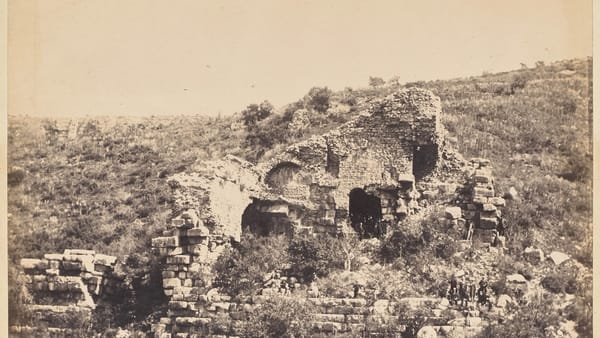
54% of the students who had been surveyed at SMU explained that their most recent déjà vu experiences had been triggered by a place that they’d visited. 88% of the students from the University of Iowa said the same, and at the University of Texas, 52% of the students made similar claims. In his book ‘The Déjà vu Experience: Essays in Cognitive Psychology’, Professor Brown explains that similar studies that had been performed in the UK back in the late 1880s noted that some of the places that seemed to trigger the most incidents of déjà vu were castles and other historic buildings. Professor Brown then concluded that –
“Perhaps the distinctiveness of the castle, or the excitement of confronting such a grand edifice, heightens one’s sense of awareness concerning any incongruous sense of familiarity. Given the importance of physical setting in triggering déjà vu experiences, perhaps a castle presents a uniquely imposing, all-encompassing, and emotionally provocative setting ideal for eliciting a déjà vu.”
Of course, the reincarnation theory would suggest that these people had visited those castles in one of their past lives, or had even been unfortunate enough to live in or around those castles. And I say unfortunate, because if our souls really do reincarnate, the odds that they’d been mere peasants in a past life are far greater than the odds that they had been the lords or ladies who’d lived within those castles.
Anyway, Ernst von Feuchtersleben, a 19th-century Austrian physician and poet, scoffed at the theory that people experiencing déjà vu were reliving a memory from a past life. In a book he published way back in 1845, he reasons that if that were true, you’d find yourself wearing old-timey outfits or working in the fields when you experienced déjà vu, and that back in the Middle Ages -
“…it is unlikely that we sat together dressed in lace clothes [and] kid gloves in salons [having tea].”
The third theory relating to déjà vu is perhaps the most popular one: that déjà vu is a symptom of the gift of precognition – aka, the ability to predict the future. More specifically, that you experience déjà vu when you remember a dream you’d had about that specific moment.
And honestly, I’ve had that same feeling, that I was living a moment that I’d dreamt about at some point in time. Some of the articles regarding déjà vu and prophetic dreams that I came across suggested that déjà vu might be life’s way of letting you know that you’re on the right track. That you’re following some divine being’s plan for your life. That you’re well on your way to reaching whatever end fate has in stall for you.
Anyway, there’s no way to prove that humans are capable of predicting the future, or that ‘prophetic dreams’ aren’t just based on pure coincidence. So, let’s move on to the fourth theory – every time you experience déjà vu, you are somehow experiencing a similar event that is taking place in a parallel universe.
Honestly, that’s all there is to that theory. The people who believe in it can’t explain how it would be possible to connect with our alternate selves in a parallel universe, or whether we’d experience déjà vu because we’d synched up with our alternate selves, or we’re about to make the same decision, or alter a decision that had already been made in another universe.
And then there is the fact that the multiverse theory is based on the idea that every decision we make results in the creation of a separate timeline or universe. So, if there are thousands or millions of versions of you out there, and even just a small handful of your alternate selves follow the same set of decisions on a set day, wouldn’t you be flooded by several sets of déjà vu experiences right before you all have to make a decision that leads to the creation of thousands of new timelines?
No one knows. So, let’s move on to the theories that have more reasonable explanations.
The Familiarity Theorem
There are four scientific theories that have been developed over the course of a century that try to explain the phenomenon of déjà vu.
One of the oldest ones is known as “The Forgotten Experiences” theory. Ernst von Feuchtersleben and other 19th-century scholars believed that déjà vu might have a more reasonable explanation than reincarnation. Instead of your soul recognising a situation or memory from a past life, they reasoned that it was more likely that you were remembering something that had happened to you as a child.
In his book, Inquiries Concerning the Intellectual Powers, and the Investigation of Truth, which was published back in 1859, John Abercrombie, a Scottish physician, author, philosopher and philanthropist, reasoned that déjà vu occurs when you unknowingly walk past someone you’d known growing up, or when you enter a room that you’d last been in as a child, more specifically, between the time you were born and the age of three or four.
“The feelings thus produced may be so vivid as even to overpower present emotions, to excite pleasure amid circumstances of pain or depression, and to produce depressing and painful emotions, when all present circumstances are calculated to give satisfaction.”
Dr Abercrombie then goes on to provide several examples. One of these told the story of a young woman who entered a hospital room. She immediately experienced a sense of familiarity, sadness and grief, but couldn’t explain why. It wasn’t until later that she realised that she had visited her dying mother in that same room when she was a child.
Another example I’ve come across is of a college professor who met a colleague at their house for a meeting. When the professor entered the house, she had the immediate feeling that she’d been there before, and was even able to explain that the kitchen window looked out over a rose garden. When she told her host about the odd sense of familiarity she felt, it turned out that she’d attended a wedding in that very same house as a college student.
These days, we know that these incidents of déjà vu are caused by something called sensory memory recognition. Basically, your senses remember a place or life event better than your conscious memory does, and when you come across something that triggers a specific sensory memory, you experience a sense of familiarity that is similar to déjà vu. Another example would be how the smell of freshly mown grass reminds you of playing sports at school, or how sunblock and chlorine pools smell like summer holidays. But sensory memory recognition isn’t déjà vu, since you aren’t experiencing a completely new event, or visiting a place you’ve never been to before.
The second theory is the Dual Consciousness or Split Minds theory, and it shares some similarities with the Forgotten Experiences theory. It explains that humans essentially have two ‘minds’, and depending on the field of study, there are multiple explanations for exactly what each ‘mind’ is responsible for. In this case, we have an active mind that deals with day-to-day life (aka, our consciousness) and an inactive mind that monitors everything else (aka, our subconscious).
According to this theory, déjà vu happens when we’re tired, anxious, or distracted and not paying attention to the world around us, but our subconscious is paying attention and fills in the gaps in our memory that our consciousness missed. So, say you walk into a room while playing on your phone, and you just glance around for a second. Your consciousness might pick up on the fact that there’s no one in the room, that it’s warm, and that there are plants and furniture standing around. But your subconscious picks up on the sound of people talking and a phone ringing, and the scent of an air freshener.
Watch Now
Open Video
Video Briefing
Déjà vu: Have We Been Here Before?
The next time you walk into the room, you’re paying attention, and at first glance, nothing has changed. But then a phone rings and you pick up on the scent of the air freshener, and boom, you experience déjà vu because your subconscious remembers those exact same things happening before, even though you don’t.
Another version of the dual consciousness theory suggests that a kind of ‘misfire’ happens in your brain while you’re looking at something, like, for example, when you experience a petit mal seizure or you’re daydreaming. Your brain doesn’t process the image at first, but a part of your mind remembers seeing it. So, the next time you see it, it seems familiar, even though you can’t remember why.
The third theory is the Spillover Theory. This theory is based on the idea that humans are creatures of habit and that people fall into the habit of following a certain script while completing a task. For example, someone who travels regularly will enter an airport, check in, wait at the gate, show their ticket, board the plane, and then settle into their seat. And then one day, they just happen to follow the same set of steps while boarding yet another plane when they experience a sense that they’d done that exact same thing before – because they had.
But so far, all of these theories are based on the idea that a person had been in the same place or situation before. So why would someone who’d never been to, say, Dudley Castle in the UK, experience a sense of familiarity when they visit it?
And this is where the Gestalt Familiarity Theory comes in, which kind of combines the other three theories.
The Gestalt theory is based on the Gestalt principle and explains that humans are excellent at pattern recognition, but that when we see something, we see it as a whole, not separate parts. So, say we see a painting of a galloping horse that looks similar to another painting of a horse that we’ve seen before, we immediately associate it with the first painting we saw. For example, take this painting of sunflowers by Vincent van Gogh.
These are two of the five paintings of sunflowers that Vincent van Gogh had created. If you view these two paintings separately, they appear to be the same painting, but when viewed side by side, the differences between the two are obvious.
The Gestalt theory reasons that pattern recognition is responsible for triggering déjà vu experiences. Basically, when humans encounter a place or situation that is similar but not exactly like a place or situation that they’d been in or seen before, there is a high likelihood that they will experience déjà vu. Which is why some places immediately trigger a feeling that you’ve been there before, because you’d previously been in a place that looks and feels similar.
Remember that – it becomes quite significant later on in this article.
When Professor Alan Brown published the first edition of his book, The Déjà vu Experience, in 2004, he explained that –
“What makes déjà vu unique among metacognitive phenomena is that the experience has no clearly identifiable cause, and no objective behaviors against which it can be verified. In other words, the experience is purely a mental conflagration between diametrically opposed evaluations of a momentary experience, with no way to objectively resolve or evaluate the accuracy of this conflict.”
Which is a very professor-y way of saying that there wasn’t a test that they could do to confirm their theories, since they had no way of triggering a déjà vu experience.
Professor Brown continued to explain that by the start of the 20th century, scientists had kind of given up on the idea of solving the phenomenon of déjà vu. Instead, they started focusing on behaviourism, since it was easier to teach a dog to salivate at the sound of a ringing bell than to figure out whether our dreams could actually predict the future.
So, for the next 70 years or so, déjà vu was categorised under the field of parapsychology, and studies around it just assumed that if you believed in déjà vu, you probably wore a tin hat, went ghost hunting on the weekends, and believed in the existence of fairies and the Loch Ness monster. Which also meant that most people no longer took the results of those studies seriously.
But in the second edition of The Déjà vu Experience, which was published in 2022, Professor Brown and his colleague, Anne M. Cleary, who is a Professor of Psychology at Colorado State University, explain that after Professor Brown had published his book back in 2004, psychologists and neurologists alike started to realise that maybe, just maybe, there was an actual, scientific explanation behind the phenomenon of déjà vu. And just like that, more and more of them started to study it.
And wouldn’t you know – it turns out that déjà vu isn’t just caused by one thing, but many.
A Glitch in the Matrix
For a few decades now, neurologists have known that one of the symptoms of epilepsy is recurring episodes of déjà vu. In fact, the correlation between déjà vu and epilepsy was made way back in the 1880s by Dr John Hughlings Jackson, an English neurologist.
He explained that right before someone with epilepsy suffered an epileptic episode, they entered a ‘dreamy’ state in which they reported feeling that they were living the same moment over and over, or felt that they were having psychic visions or were experiencing hallucinations. This has since been classified as one of the known symptoms of Medial Temporal Lobe Epilepsy, and studies suggest that once the patient receives treatment, they stop experiencing déjà vu.
But is it possible to study an episode of déjà vu in real time, and see what impact it has on the brain?
In 2013, a group of Russian neurologists tried to answer that question. They got a group of 43 people together and continually monitored their brainwaves for 24 hours. 23 of these people had been diagnosed with epilepsy, and the remaining 20 people had reported that they frequently experienced déjà vu.
During the study, three of the people with epilepsy reported that they were experiencing déjà vu, but one of the 20 non-epileptic patients had also reported experiencing déjà vu. When they compared his results with the epileptic patients, they noted that the patterns on his EEG report matched the ones belonging to the epileptic patients, specifically the ones that indicated that he might be having a petit mal seizure – so that study didn’t really prove anything. Similar studies also haven’t been able to distinguish between an epileptic seizure and déjà vu. All they know is that the episode of déjà vu usually occurs before a person suffers a seizure.
Another set of scientists tried to force the brain to experience déjà vu, and approached several epileptic patients who’d had probes implanted into their brains. These probes help the patient to regulate their brain’s electrical currents and prevent seizures from happening, like a pacemaker for their brains, and it’s known as either Responsive Neurostimulation or Deep Brain Stimulation. These probes can also help neurologists to monitor which areas of the brain are active during a seizure, and help to map brain activity in their patients.
However, the neurologists conducting the study were also able to use these probes to stimulate the medial temporal lobe, and wouldn’t you know, their patients all reported that they’d experienced déjà vu. But they also experienced all the other symptoms that usually accompanied a seizure, like nausea and light-headedness, so they weren’t able to determine whether they’d actually induced a state of déjà vu, or just another seizure.
However, epilepsy isn’t the only disorder that is linked to déjà vu. People who suffer from schizophrenia have also reported that they regularly experience instances of déjà vu, and studies indicate that if you regularly experience episodes of déjà vu (and by regular, we mean once or twice a week to multiple times a day), you have a high risk of developing schizophrenia or psychosis. Other disorders that lead to people experiencing regular episodes of déjà vu are people with anxiety, bi-polar disorder, and depression, but in all of these cases, repeated episodes of déjà vu are just a result of their brain chemistry being a bit off.
BUT, then Professor Anne Cleary and her team came up with a way to trigger a real episode of déjà vu, and just like that, they had a way to test all of the theories they had regarding the mysterious phenomenon.
The Déjà Vu Generator
Like all good things in life, figuring out the secrets behind the phenomenon of déjà vu took TIME.
First, they had to figure out what a typical person who regularly experiences déjà vu looks like. Professor Cleary and her team read up on dozens of studies that spanned more than a hundred years, and were then able to determine that their ideal test subject was between the ages of 15 and 50, was well educated, engaged their brains by doing creative work on an almost daily basis, regularly went on trips abroad or visited new places, reported that they often remembered what they’d dreamt, and loved watching movies (that last one will make sense later, I promise).
Then they took all of the theories regarding déjà vu that didn’t involve reincarnation or parallel worlds, and figured out a way to test them – by creating actual memories. Professor Cleary asked one of her old students, Dr. Ben Sawyer, to help her build a déjà vu generator in VR so that they could have a group of people experiencing the same events. Dr. Sawyer is an applied neuroscientist and human factors engineer, and according to a tweet he sent back in 2017 –
“You say yes to a thing like that.”
Prof Cleary explains that they applied the principles of the Gestalt theory, and then set up a series of scenarios for their test subjects to experience using a computer game that you might be familiar with - The Sims 2. They set up virtual tours of rooms that had a similar layout or structure, but had different purposes. For example, they built an aquarium with large windows and two lone standing fish tanks in the centre of the floor (aka, Scenario A), and a reception area with large windows and chairs in the centre of the floor (Scenario B). Or a bedroom with a canopied bed, bedside tables and a dresser, and a shop with a large display in the middle, two smaller ones on the side, a painting above the large display, and a till point where the dresser was in the bedroom.
According to Professor Cleary –
“…we attempted to create that seemingly inexplicable juxtaposition between intense familiarity and newness that is characteristic of déjà vu.”
They then had their test subjects walk into the different rooms, and made sure that the rooms in Scenario A were spaced far enough apart from the corresponding Scenario B room so that their test subjects had time to ‘forget’ seeing the first scenario. They then noted how many of their test subjects reported feeling a sense of déjà vu when they entered the second scenario, and would later report that people were 27% more likely to experience a sense of déjà vu if they entered a room that resembled a room that they’d been in before. However, they also found that people were 54% more likely to experience déjà vu if they followed the same route through the room, and all of their senses experienced a similar input (like what is described in the Dual Consciousness theory). They managed to establish this by having their test subjects follow the same route through both scenarios while playing the same music and using similar light placements.
They performed a similar test by showing their test subjects 3D tours of seemingly random places from all over the world, and noted how many of them experienced déjà vu. Professor Cleary explains that those places were regularly used in various movies and television shows, so people visiting those places would feel a sense of familiarity because they’d already ‘seen’ those places, or places a lot like it, before. Which explains why people who travel a lot, or visit a lot of castles, would report experiencing a sense of déjà vu.
Dr. Cleary and her team were even able to induce that sense of precognition that so many people experienced. They gathered up a new team of test subjects and showed them the same scenarios that they’d shown to the first group. But this time, they’d added a new test.
They would walk their test subjects through scenario A, and at a certain point, they’d have their test subject turn left. When the test subject was led through scenario B, they’d stop the walkthrough just before the test subjects were supposed to make a turn. When their test subjects reported feeling a sense of déjà vu, they asked them if they were experiencing a sense of precognition, and also asked them to try and guess what was going to happen next, whether they’d experienced a sense of déjà vu or not.
And the result of the test was that 75% of the people who’d experienced a sense of déjà vu while doing a walkthrough of the second scene, confirmed that they felt they knew what had to happen next, while 42% of the people who didn’t experience déjà vu, had the exact same feeling. Which proved that people can’t actually predict the future – it’s just an illusion.
According to Professor Cleary –
“When you’re faced with that juxtaposition of familiarity and novelty that is difficult to explain, if that familiarity is really intense, it can lead to an illusion of precognition like you’re right about to predict [what’s going to happen next]. And as the scene unfolds [in the way you expected] it can lead to an illusion of having known it all along. So in short, déjà vu doesn’t lead to precognition. It leads to illusionary precognition.”
And just like that, Professor Cleary and her team managed to prove four of the theories that we’d discussed and helped significantly to demystify the phenomenon of déjà vu. She’s since published numerous papers on the tests she’d performed, co-wrote the second edition of “The déjà vu experience” with Professor Alan Brown, and regularly attends conferences and TedTalks where she explains her findings.
In the closing chapter of “The déjà vu experience”, Professor Brown explains that it took more than 80 studies and 135 years for us humans to finally understand déjà vu. But they still have several questions they’re trying to answer, and they’re still actively researching the phenomenon.
And maybe one day someone else will finally be able to prove that reincarnation IS real, or that parallel universes do exist. You never know.
Simon Whistler
Simon Whistler is one of YouTube's most prolific educational creators. Decoding the Unknown is his methodical investigation into the world's strangest phenomena — examined with rigour, curiosity, and a healthy dose of scepticism.
Frequently Asked Questions
What is déjà vu?
Déjà vu is the feeling that one has lived through the present situation in the past. It is often described as a sense of familiarity with something that shouldn’t be familiar at all.
What percentage of people between the ages of 15 and 50 have experienced déjà vu?
There is a 66.67% chance that people between the ages of 15 and 50 have experienced déjà vu.
What are some historical beliefs about déjà vu?
Historical beliefs about déjà vu include the idea that it is proof of reincarnation, a glimpse into a parallel world, or a sign of psychic abilities or premonition.
What did Greek philosophers like Plato and Pythagoras believe about déjà vu?
Greek philosophers like Plato and Pythagoras thought that déjà vu was proof of reincarnation, where the soul recognizes a situation from a past life.
What are some scientific theories about déjà vu?
Scientific theories about déjà vu include the Forgotten Experiences theory, the Dual Consciousness theory, the Spillover Theory, and the Gestalt Familiarity Theory.
How did Professor Alan Brown study déjà vu?
Professor Alan Brown conducted surveys on students to identify triggers for déjà vu experiences, such as physical settings, words spoken, activities engaged in, or objects encountered.
What is the Gestalt Familiarity Theory?
The Gestalt Familiarity Theory suggests that déjà vu occurs when a person encounters a place or situation that is similar but not exactly like one they have been in or seen before, triggering a sense of familiarity.
What did Professor Anne Cleary and her team discover about déjà vu?
Professor Anne Cleary and her team discovered that people are more likely to experience déjà vu if they enter a room that resembles one they have been in before, and even more so if they follow the same route and experience similar sensory inputs.
What is the connection between déjà vu and epilepsy?
People with epilepsy often experience déjà vu as a symptom, particularly before an epileptic episode. Studies have shown that the brain activity during déjà vu can resemble that of a petit mal seizure.
Can déjà vu predict the future?
No, déjà vu does not predict the future. It can create an illusion of precognition, but it is not a genuine ability to foresee events.
Sources
- Original Decoding the Unknown video: Déjà vu: Have We Been Here Before?
- Hero image source by Michael Barera / openverse, by-sa.